
On-Demand · May 13, 2025
Justice Seen: Arbitrator Transparency & Disclosure Ethics (What Neutrals Need to Know About Conflicts, Obligations, and Gray Areas Presented by the Federal Bar Association Alternative Dispute Resolution Section)
Examines arbitrator disclosure obligations across major frameworks, addressing gray areas, tracking methods, and real-world scenarios for ethical transparency.
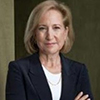


 Hon. Suzanne H. Segal (Ret.) Signature ResolutionMark J. Heley, Partner Heley, Duncan & Melander, PLLPTina Patterson, Principal Jade Solutions, LLCModerator, Jo Colbert Stanley Stanley Legal Services
About this program


Course Overview
Mastering Arbitrator Disclosure Obligations
Participants will learn to navigate disclosure requirements across major institutional frameworks and identify gray areas that require professional judgment. These skills help arbitrators produce defensible awards while maintaining public confidence in arbitration.
- Disclosure Frameworks Compare AAA/ABA, JAMS, IBA, and CPR standards.
- Gray Areas Recognize situations requiring disclosure despite uncertainty.
- Conflict Tracking Build systems to monitor parties and counsel.
- California Requirements Apply heightened state-specific disclosure obligations correctly.
Why Attend
Understanding arbitrator disclosure ethics is critical for legal practitioners to prevent vacated awards, avoid challenges to neutrality, and maintain public confidence in the integrity of the arbitration process.
- 67% Of practitioners surveyed favor increased transparency in commercial arbitrations involving States or state-owned entities.
- 39% Of prospective arbitrators made disclosures prior to ICC confirmation or appointment in 2024, up from 31% in 2020, reflecting heightened disclosure practices.
- 47% Of international arbitration users cite balancing confidentiality and transparency as the most significant challenge in disputes involving public interest issues.
- 23% Of international arbitration awards were vacated by national courts in an empirical study, with courts overwhelmingly refusing to set aside awards on substantive grounds.
Key Topics
- Disclosure Foundations Why full disclosure preserves trust, enables party assessment, and produces defensible awards.
- Legal Frameworks AAA/ABA, JAMS, IBA, and CPR standards governing arbitrator disclosure requirements.
- California Requirements Heightened California disclosure obligations under Code of Civil Procedure Section 1281.9.
- Gray Areas Navigating social connections, repeat appointments, and professional relationships requiring disclosure.
- Conflict Tracking Building effective systems to track parties, witnesses, lawyers, and case outcomes.
- Framing Disclosures How to frame disclosures with facts to inform parties without inflaming them.
What You Will Learn and Gain
What you will learn
Attorneys will learn arbitrator disclosure obligations under AAA/ABA, JAMS, IBA, and CPR frameworks, including gray areas, conflict tracking methods, and real-world scenarios.
What you will gain
Attorneys will gain practical skills to navigate conflicts of interest, frame appropriate disclosures, and uphold transparency while protecting award defensibility.
Speakers
Hon. Suzanne H. Segal (Ret.)
Signature Resolution
Distinguished neutral with a robust arbitration and mediation practice, drawing on nearly two decades of judicial experience. She handles complex commercial, insurance, employment, intellectual property, and class action disputes.
Full profile
Experience
Served as a U.S. Magistrate Judge for the Central District of California from 2002 to 2020, including four years as Chief Magistrate Judge.Recognition
Member of the National Academy of Distinguished Neutrals and a Fellow of the American Bar Foundation.Professional involvement
Longtime leader in the Federal Bar Association, served on the Executive Boards of both the Los Angeles Chapter and the Federal Litigation Section. Mark J. Heley, Partner
Heley, Duncan & Melander, PLLP
Tina Patterson, Principal
Jade Solutions, LLC
Moderator, Jo Colbert Stanley
Stanley Legal Services
Agenda
-
Arbitrator Ethics and Transparency in Public Trust
This session explores why disclosure obligations matter for arbitrators, parties, and the arbitration process itself. Panelists examine how full transparency produces defensible awards, maintains public confidence in arbitration, and serves as valuable self-reflection for neutrals.
Hon. Suzanne H. Segal (Ret.), Mark J. Heley, Partner, Tina Patterson, Principal, Moderator, Jo Colbert Stanley
-
Legal Frameworks: AAA/ABA, JAMS, and IBA Standards
This session surveys the key sources of disclosure obligations including laws, institutional rules, ethical standards, and professional guidelines. Participants will learn how frameworks like the Revised Uniform Arbitration Act and California’s heightened requirements shape arbitrator conduct.
Hon. Suzanne H. Segal (Ret.), Mark J. Heley, Partner, Tina Patterson, Principal, Moderator, Jo Colbert Stanley
-
Navigating Gray Areas and Continuing Disclosure Duties
Panelists address practical dilemmas including social versus professional connections, repeat appointments, and temporal considerations in disclosure decisions. The session emphasizes that disclosure is an ongoing obligation throughout the case and explores the principle that when in doubt, arbitrators should disclose.
Hon. Suzanne H. Segal (Ret.), Mark J. Heley, Partner, Tina Patterson, Principal, Moderator, Jo Colbert Stanley
-
Conflict Tracking, Framing Disclosures, and Managing Objections
This session provides practical guidance on building effective conflict tracking systems and framing disclosures to inform rather than inflame. Key case law including Commonwealth Coatings and Monster Energy illustrates how courts evaluate disclosure failures and evident partiality claims.
Hon. Suzanne H. Segal (Ret.), Mark J. Heley, Partner, Tina Patterson, Principal, Moderator, Jo Colbert Stanley
-
Real-World Hypotheticals and Audience Q&A Session
Participants engage with realistic disclosure scenarios and explore whether national uniform standards should replace regional variations. The session concludes with core takeaways emphasizing that disclosure does not equal disqualification and transparency protects arbitration integrity.
Hon. Suzanne H. Segal (Ret.), Mark J. Heley, Partner, Tina Patterson, Principal, Moderator, Jo Colbert Stanley
MCLE Credits
-
Alabama
Pending CLE Approval
1 Ethics
-
Alaska
Approved for Self-Study Credits
1 Ethics
Our programs are CLE-eligible through Alaska’s recognition of multi-jurisdictional reciprocity.
-
Arizona
Approved for CLE Credits
1 Professional Responsibility/Ethics
-
Arkansas
Approved for CLE Credits
1 Ethics
-
California
Approved for CLE Credits
1 Ethics
-
Colorado
Pending CLE Approval
1 Ethics / Professionalism
-
Connecticut
Approved for CLE Credits
1 Ethics / Professionalism
-
Delaware
Pending CLE Approval
1 Enhanced Ethics
-
District of Columbia
No MCLE Required
1 CLE Hour(s)
-
Florida
Approved for CLE Credits
1 Ethics
-
Georgia
Approved for CLE Credits
1 Ethics
-
Hawaii
Approved for CLE Credits
1 Ethics / Professionalism
-
Idaho
Pending CLE Approval
1 Ethics / Professionalism
-
Illinois
Approved for Self-Study Credits
1 Ethics
-
Indiana
Pending CLE Approval
1 Ethics
-
Iowa
Pending CLE Approval
1 Ethics
-
Kansas
Pending CLE Approval
1 Ethics / Professionalism
-
Kentucky
Pending CLE Approval
1 Ethics
-
Louisiana
Pending CLE Approval
1 Ethics
-
Maine
Pending CLE Approval
1 Ethics / Professionalism
-
Maryland
No MCLE Required
1 CLE Hour(s)
-
Massachusetts
No MCLE Required
1 CLE Hour(s)
-
Michigan
No MCLE Required
1 CLE Hour(s)
-
Minnesota
Approved for Self-Study Credits
1 Ethics
-
Mississippi
Pending CLE Approval
1 Other (Ethics / Professionalism)
-
Missouri
Approved for Self-Study Credits
1.2 Ethics
-
Montana
Pending CLE Approval
1 Professional Fitness and Integrity
-
Nebraska
Pending CLE Approval
1 Professional Responsibility
myLawCLE reports attendance to Nebraska on each attorney’s behalf for all programs. Please do not self-report.
-
Nevada
Pending CLE Approval
1 Ethics / Professionalism
-
New Hampshire
Approved for CLE Credits
60 Ethics / Professionalism minutes
As of July 1, 2014, the NHMCLE Board no longer provides pre- or post-approval of courses. Attendees must self-determine whether a program is eligible for credit, and self-report their attendance online at www.nhbar.org, based on qualification provisions of Rule 53.
-
New Jersey
Approved for CLE Credits
1 Ethics / Professionalism
Our programs are CLE-eligible through New Jersey’s recognition of multi-jurisdictional reciprocity, except for the courses required under BCLE Reg. 201:2
-
New Mexico
Approved for Self-Study Credits
1 Ethics
-
New York
Approved for CLE Credits
1 Ethics / Professionalism
Our programs are CLE-eligible through New York’s Approved Jurisdiction Group “B”.
-
North Carolina
Pending CLE Approval
1 Ethics
-
North Dakota
Approved for CLE Credits
1 Ethics
Our programs are CLE-eligible through North Dakota’s recognition of multi-jurisdictional reciprocity. Section 1, Policy 1.14
-
Ohio
Approved for Self-Study Credits
1 Professional Conduct
-
Oklahoma
Pending CLE Approval
1 Ethics / Professionalism
-
Oregon
Approved for Self-Study Credits
1 General
-
Pennsylvania
Approved for Self-Study Credits
1 Ethics
-
Rhode Island
Pending CLE Approval
1 Ethics / Professionalism
-
South Carolina
Pending CLE Approval
1 Ethics / Professionalism
-
South Dakota
No MCLE Required
1 CLE Hour(s)
-
Tennessee
Pending CLE Approval
1 Dual
-
Texas
Pending CLE Approval
1 Ethics
-
Utah
Pending CLE Approval
1 Ethics / Professionalism
-
Vermont
Approved for CLE Credits
1 Ethics
-
Virginia
Not Eligible
1 Ethics / Professionalism Hours
-
Washington
Approved via Attorney Submission
1 Ethics Hours
Receive CLE credit in Washington via Attorney Submission. myLawCLE will supply Washington state attorneys with instructions on how to gain credit.
-
West Virginia
Pending CLE Approval
1.2 Ethics / Professionalism
-
Wisconsin
Approved for Self-Study Credits
1 General
-
Wyoming
Pending CLE Approval
1 Ethics / Professionalism
No state matches.