


On-Demand · January 20, 2026

The Critical Screening Choice: How to Assess Civil-Rights Cases Before You Commit Hundreds of Hours and Costs

Screening and litigating civil rights cases involving police misconduct, prisoner abuse, and municipal liability under Section 1983.

Sarah Gelsomino Friedman, Gilbert + GerhardsteinFlint Taylor Peoples’s Law Office

About this program

Course Overview

Litigating Civil Rights Claims Against Government Actors

Participants will learn to screen, develop, and litigate Section 1983 claims involving police misconduct and prisoner abuse. Essential strategies address immunities, Monell liability, and damages recovery.

  • Claim Identification Map factual scenarios to constitutional violations.
  • Immunity Navigation Overcome qualified and absolute immunity defenses.
  • Monell Strategy Establish municipal liability through pattern evidence.
  • Evidence Preservation Secure critical documentation before spoliation occurs.

Why Attend

Mastering civil rights litigation is essential because practitioners must navigate complex constitutional standards, qualified immunity defenses, and PLRA restrictions to effectively vindicate victims' rights.

  • $3.2B Total police misconduct settlements paid by 25 largest U.S. police departments over the past decade.
  • 3.9% Percentage of Section 1983 cases against law enforcement dismissed on qualified immunity grounds across five federal districts studied.
  • 7.6% Percentage of incarcerated civil rights plaintiffs who had legal representation in 2020, compared to 89.8% in non-prisoner civil cases.
  • 99.9% Percentage of civil rights settlement dollars paid by governments rather than individual police officers in misconduct cases.

Key Topics

  • Constitutional Claims Fourth, Eighth, and Fourteenth Amendment standards for police and prisoner cases.
  • Qualified Immunity Understanding the two-prong test and clearly established law requirements.
  • Monell Liability Pattern, practice, and policy claims against municipalities for constitutional violations.
  • Prisoner Litigation PLRA requirements including administrative exhaustion and physical injury standards.
  • Evidence Preservation Immediate demands for body camera footage, records, and spoliation risk management.
  • Client Relations Trauma-informed advocacy and understanding non-linear storytelling from traumatized clients.

What You Will Learn and Gain

What you will learn

Attorneys will learn a comprehensive framework for screening and litigating civil rights cases involving police violence, unconstitutional conditions of confinement, prisoner abuse, and supervisory/municipal liability.

What you will gain

Attorneys will gain practical knowledge of claim identification, intake procedures, litigation strategies, evidence preservation, immunity defenses, and the economic realities of civil rights practice.

Speakers

Sarah Gelsomino | Friedman, Gilbert + Gerhardstein

Sarah Gelsomino is a partner and trial lawyer at FG+G, Ohio’s preeminent civil rights and criminal defense law firm. Sarah has dedicated her career to advocating for those whom the criminal legal system abuses and disregards. Sarah and her team work hard to shed light on injustice and empower victimized people to speak truth to power. She has secured tens of millions of dollars in verdicts and settlements for her clients, freed wrongfully convicted people from prison, and successfully defended people charged with crimes ranging from misdemeanors to domestic terrorism.

Sarah’s civil rights practice focuses on police and government misconduct, representing people who have been killed, brutalized, sexually assaulted, illegally searched, or wrongfully arrested by police and prison officials. She also represents First Amendment demonstrators, criminal defendants, and wrongfully imprisoned people in post-conviction proceedings. Sarah frequently represents trans and queer individuals who face discrimination in the criminal legal system.

After graduating cum laude from DePaul University Law School in Chicago, Sarah practiced for many years at one of the nation’s top civil rights firms (People’s Law Office). There she worked with some of the nation’s most successful civil rights lawyers. This broad base of experience positioned her to come home to Cleveland in 2016 to continue her work for justice.

Sarah has appeared in many national and international media outlets, including the New York Times, CNN, the Boston Globe, the Los Angeles Times, The Guardian, USA Today, and The Independent (London). She regularly appears in local news outlets related to her victories and to comment on breaking news. She has received numerous awards for her work, including the Ohio Families Against Police Brutality Community Hero Award; Ohio Association of Justice Optimist Award; Pi Sigma Alpha National Political Science Honorary Society, DePaul University Chapter, Distinguished Alumni Honoree; and National Lawyers Guild, Chicago Chapter, Arthur Kinoy People’s Law Award.

Sarah is a leader in the legal community, serving on the Board of Directors of the Ohio Association of Justice (Civil Rights Section Chair), the Cleveland Academy of Trial Attorneys, and the William K Thomas Inn of Court.

Sarah is also a dedicated Board Member of the Northeast Coalition for Homeless.
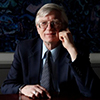
 

Flint Taylor | Peoples’s Law Office

As a student and lawyer, he has been dedicated to litigating against police violence and racism for more than 54 years. Among the landmark cases that Mr. Taylor has been a lead lawyer are the Fred Hampton Black Panther case; the Greensboro, North Carolina case against the Ku Klux Klan and Nazis; the Ford Heights Four case; and a series of cases arising from a pattern and practice of police torture and cover-up by former Chicago police commander Jon Burge, former Mayor Richard M. Daley, former State’s Attorney Richard Devine, and numerous other police and government officials. He and his PLO co-counsel obtained a multi-million-dollar settlement for a seven year old boy who was falsely accused by the Chicago Police of the murder of 11 year old Ryan Harris and Taylor has represented, and continues to represent, numerous wrongfully convicted persons who have spent decades in prison and on death row, including more than a dozen Burge torture survivors. He and sister PLO lawyer Jan Susler also represented the first woman jailhouse lawyer in Illinois, Maxine Smith, winning her freedom from segregation and a large jury verdict.

Taylor’s and his fellow PLO lawyers’ work in fighting against police torture in Chicago for more than 35 years has been instrumental in obtaining the conviction and imprisonment of police torture ringleader Jon Burge and the precedent setting decision that upheld the inclusion of former Mayor Richard M. Daley as a co-conspiring defendant in the Michael Tillman and Alonzo Smith civil rights cases. He also worked with the movement to obtain reparations for 60 survivors of Chicago police torture and recently won the freedom and exoneration of police torture survivor Jackie Wilson after 36 years of wrongful imprisonment. He was also one of the lead lawyers representing Nanci Koschman in her case against the CPD and SAO for covering up the truth about the death of her son in order to protect the Daley family and in obtaining a multi-million-dollar settlement for 74 victims of illegal strip and body cavity searches by the Milwaukee Police Department. He was part of the legal team that obtained the largest settlement of its kind for the family of an African American man who was fatally shot by a Little Rock police officer and represented three victims of torture and abuse at the CPD’s secret interrogation site, known as Homan Square. He and fellow PLO lawyer Ben Elson obtained a multi-million-dollar settlement for the family of a Milwaukee man who suffocated to death in the back of a Milwaukee police car. Most recently, he and Elson successfully litigated the Marcus Deon Smith case in Greensboro that exposed a pattern and practice of racially and sexually discriminatory police hogtying and obtained a multi-million-dollar settlement for Smith’s family that included a memorial in honor of Marcus.

Taylor also played a major role in the George Jones “street files” case that uncovered the unlawful Chicago police practice of keeping one set of files to be produced to defense lawyers while maintaining another secret set of files that often-contained exculpatory evidence. This case dramatically changed the criminal discovery process in Cook County and also led to the groundbreaking wrongful prosecution verdict in Jones v. City of Chicago. As a police brutality litigator, he has been instrumental in pioneering and litigating Monell pattern and practice claims against municipalities, particularly in the areas of repeater cops, police discipline, the police code of silence, and torture and domestic violence by police officers. Taylor also played a key role in major litigation brought against the Marion Federal Penitentiary, Stateville and Pontiac prisons in the areas of unconstitutional segregation, cruel and unusual conditions of confinement, and behavior modification.

Mr. Taylor is also an accomplished appellate advocate and successfully argued the civil rights cases of Cleavinger v. Saxner and Buckley v. Fitzsimmons before the United States Supreme Court, as well as numerous cases before the Seventh Circuit Court of Appeals, the Illinois Supreme Court, and the Illinois Appellate Court.

Agenda

  1. Session 1 · 1:00 pm - 1:10 pm

    Why Civil Rights Cases Matter and Initial Framework

    This opening session establishes why civil rights litigation differs fundamentally from personal injury work, exploring the profound impact when government actors violate constitutional rights. Participants will learn the foundational legal framework including Fourth, Fourteenth, First, and Eighth Amendment claims, plus key intake considerations for rapid issue spotting.

    Jim Koford

  2. Session 2 · 1:10 pm - 1:20 pm

    Police Claims Under Fourth and Fourteenth Amendments

    This session maps factual scenarios to legal claims including excessive force, illegal stops, arrests, searches, and malicious prosecution. Participants will examine the objective reasonableness standard from Graham v. Connor and Tennessee v. Garner, along with critical intake considerations like statutes of limitations and the Heck v. Humphrey bar.

    Jim Koford

  3. Session 3 · 1:20 pm - 1:30 pm

    Navigating Prisoner Litigation and PLRA Requirements

    This session addresses the unique challenges of prisoner litigation, including the Prison Litigation Reform Act’s exhaustion requirements and physical injury limitations. Participants will learn constitutional standards for jail versus prison claims, including suicide cases, use of force, failure to protect, and medical care access claims.

    Jim Koford

  4. Session 4 · 1:30 pm - 1:40 pm

    Monell Claims and Municipal Supervisory Liability Strategies

    This session explores how to hold municipalities accountable when constitutional violations flow from patterns, practices, or policies under Monell v. Department of Social Services. Participants will examine modes of municipal liability including failure to train, discipline, and supervise, plus strategies for developing theories that survive dispositive motions.

    Jim Koford

  5. Session 5 · 1:40 pm - 1:50 pm

    Selecting and Using Experts Effectively in Litigation

    This session covers why expert selection matters and how to find the right experts for police practices, damages, and Monell claims. Participants will learn to engage experts early in case development and understand how their analysis helps formulate trial theory and craft effective deposition questions.

    Jim Koford

  6. Session 6 · 1:50 pm - 2:00 pm

    Federal Claims Under Bivens and FTCA Frameworks

    This session examines claims against federal agents, including the Supreme Court’s severe limitations on Bivens claims and when FTCA provides an alternative avenue. Participants will learn about choosing defendants, administrative exhaustion requirements, and how these cases are being litigated in current federal enforcement contexts.

    Jim Koford

  7. Break · 2:00 pm - 2:10 pm

    Scheduled Break for Session Participants

    A brief intermission allowing participants to refresh before the remaining sessions. Use this time to review notes and prepare questions for upcoming topics.

    Jim Koford

  8. Session 7 · 2:10 pm - 2:20 pm

    Understanding Immunities and Early Dismissal Threats

    This session tackles qualified immunity’s two-prong test and the clearly established standard that presents significant barriers to civil rights claims. Participants will also examine absolute prosecutorial and judicial immunities, state law immunity variations, and strategies for surviving interlocutory appeals.

    Jim Koford

  9. Session 8 · 2:20 pm - 2:30 pm

    Damages, Remedies, and Settlement Strategy Development

    This session covers economic and non-economic damages, punitive damages against individual defendants, and injunctive relief options in civil rights cases. Participants will learn when to budget for medical and psychological experts, plus strategies for settlement negotiations and sanity-checking prior verdicts.

    Jim Koford

  10. Session 9 · 2:30 pm - 2:40 pm

    Case Cost Management and Fee Strategy Planning

    This session addresses the economic realities of civil rights practice, including Section 1988 fee-shifting, lodestar calculations, and budgeting for experts and discovery. Participants will learn triage strategies for small firms and solo practitioners, plus options for co-counsel arrangements and litigation funding.

    Jim Koford

  11. Session 10 · 2:40 pm - 2:50 pm

    Client Relationships and Trauma-Informed Advocacy Approach

    This session emphasizes trauma-informed practice, recognizing that clients harmed by government actors require sensitive handling throughout litigation. Participants will learn to navigate memory limitations, capture initial narratives effectively, and balance the retraumatizing aspects of litigation against the vindication clients seek.

    Jim Koford

  12. Session 11 · 2:50 pm - 3:00 pm

    Evidence Triage, Preservation, and Witness Management Essentials

    This session covers immediate evidence demands including body-worn camera footage, surveillance video, and dispatch logs that must be preserved within 24-48 hours. Participants will learn spoliation risk management, drafting preservation letters, and strategies for witness triage and handling reluctant witnesses.

    Jim Koford

  13. Session 12 · 3:00 pm - 3:10 pm

    Forecasting Defense Strategy and Criminal Case Overlap

    This final session prepares participants to anticipate defense motions targeting immunities and Monell claims at every litigation stage. Participants will examine how ongoing criminal prosecutions and plea bargains affect civil claims, plus strategies for managing media exposure and narrative framing.

    Jim Koford

MCLE Credits

  • Alabama

    Approved for Self-Study Credits

    2 General

  • Alaska

    Approved for CLE Credits

    2 General

    Our programs are CLE-eligible through Alaska’s recognition of multi-jurisdictional reciprocity.

  • Arizona

    Approved for CLE Credits

    2 General

  • Arkansas

    Approved for CLE Credits

    2 General

  • California

    Approved for CLE Credits

    2 General

  • Colorado

    Pending CLE Approval

    2 General

  • Connecticut

    Approved for CLE Credits

    2 Ethics / Professionalism

  • Delaware

    Pending CLE Approval

    2 General

  • District of Columbia

    No MCLE Required

    No MCLE Required

  • Florida

    Pending CLE Approval

    2 General Hours

    Receive CLE credit in Florida via Attorney Submission.

  • Georgia

    Approved for CLE Credits

    2 General

  • Hawaii

    Approved for CLE Credits

    2 General

  • Idaho

    Pending CLE Approval

    2 General

  • Illinois

    Approved for Self-Study Credits

    2 General

  • Indiana

    Approved For On-Demand Credits

    2 General

  • Iowa

    Pending CLE Approval

    2 General

  • Kansas

    Pending CLE Approval

    2 Law Practice Management

  • Kentucky

    Pending CLE Approval

    2 General

  • Louisiana

    Pending CLE Approval

    2 Law Office Management

  • Maine

    Pending CLE Approval

    2 General

  • Maryland

    No MCLE Required

    2 CLE Hour(s)

  • Massachusetts

    No MCLE Required

    2 CLE Hour(s)

  • Michigan

    No MCLE Required

    2 CLE Hour(s)

  • Minnesota

    Approved for Self-Study Credits

    2 General

  • Mississippi

    Pending CLE Approval

    2 General

  • Missouri

    Approved for Self-Study Credits

    2.4 General

  • Montana

    Approved for Self-Study Credits

    2 General

  • Nebraska

    Pending CLE Approval

    2 General

    myLawCLE reports attendance to Nebraska on each attorney’s behalf for all programs. Please do not self-report.

  • Nevada

    Approved for Self-Study Credits

    2 General

  • New Hampshire

    Approved for CLE Credits

    120 Ethics / Professionalism minutes

    As of July 1, 2014, the NHMCLE Board no longer provides pre- or post-approval of courses. Attendees must self-determine whether a program is eligible for credit, and self-report their attendance online at www.nhbar.org, based on qualification provisions of Rule 53.

  • New Jersey

    Approved for CLE Credits

    2 General

    Our programs are CLE-eligible through New Jersey’s recognition of multi-jurisdictional reciprocity, except for the courses required under BCLE Reg. 201:2

  • New Mexico

    Approved for Self-Study Credits

    2 General

  • New York

    Approved for CLE Credits

    2 General

    Our programs are CLE-eligible through New York’s Approved Jurisdiction Group “B”.

  • North Carolina

    Pending CLE Approval

    2 General

  • North Dakota

    Approved for CLE Credits

    2 General

    Our programs are CLE-eligible through North Dakota’s recognition of multi-jurisdictional reciprocity. Section 1, Policy 1.14

  • Ohio

    Approved for Self-Study Credits

    2 General

  • Oklahoma

    Pending CLE Approval

    2.5 General

  • Oregon

    Approved for Self-Study Credits

    2 General

  • Pennsylvania

    Approved for Self-Study Credits

    2 General

  • Rhode Island

    Pending CLE Approval

    2 General

  • South Carolina

    Pending CLE Approval

    2 General

  • South Dakota

    No MCLE Required

    2 CLE Hour(s)

  • Tennessee

    Approved for Self-Study Credits

    2 General

  • Texas

    Approved for CLE Credits

    2 General

  • Utah

    Approved for Self-Study Credits

    2 Professionalism & Civility

  • Vermont

    Approved for CLE Credits

    2 Law Practice Programming

  • Virginia

    Not Eligible

    2 General Hours

  • Washington

    Approved via Attorney Submission

    2 Other (Office Management) Hours

    Receive CLE credit in Washington via attorney submission.

  • West Virginia

    Pending CLE Approval

    2.4 General

  • Wisconsin

    Approved for Self-Study Credits

    2 Law Practice Management

  • Wyoming

    Pending CLE Approval

    2 General