


On-Demand · January 29, 2026

AI Disclosures: Wording, Liability & Litigation Risks

Ethical and practical guidance for attorneys using AI, covering disclosures, liability, billing, hallucination risks, and litigation safeguards.

Hon. Helen Adams Southern District of IowaRon Hedges Ronald J. Hedges LLCLelia Parker Covington & Burling LLP

About this program

Course Overview

Navigating AI Ethics and Litigation Risk

Participants will learn disclosure requirements, ethical obligations, and risk management strategies for using generative AI tools in legal practice. These skills help attorneys avoid sanctions while leveraging AI effectively.

  • Disclosure Requirements Identify when AI use requires client notification.
  • Billing Practices Apply ethical billing for AI-assisted work.
  • Hallucination Prevention Verify AI-generated citations before court filing.
  • Supervision Obligations Oversee staff and expert AI tool usage.

Why Attend

Understanding AI's ethical and practical challenges in legal practice is essential because rapid adoption combined with significant hallucination risks creates unprecedented liability and sanctions exposure for attorneys.

  • 75% Of lawyers cite accuracy concerns as the top barrier to AI implementation according to the 2024 ABA Legal Technology Survey Report.
  • 17%+ Hallucination rate found in leading legal AI research tools like Lexis+ AI according to Stanford Law School's 2025 peer-reviewed study.
  • 300+ Documented instances of AI hallucinations in court filings tracked by researchers, with cases accelerating to multiple per day in 2025.
  • 79% Of legal professionals now use AI tools according to the 2025 Clio Legal Trends Report, up from 19% in 2023.

Key Topics

  • Disclosure Requirements When AI disclosure is required, recommended, or optional under Model Rules.
  • Billing Practices Ethical billing when AI reduces attorney time on tasks.
  • Hallucination Prevention Strategies to verify AI-generated research, citations, and drafted content.
  • Sanctions Risk Court expectations and case law on AI misuse consequences.
  • Confidentiality Protection Client data security risks when using open versus closed AI platforms.
  • Supervision Obligations Attorney responsibilities for overseeing staff and paralegal AI use.

What You Will Learn and Gain

What you will learn

Attorneys will learn when AI disclosure is required, how to verify AI-generated content, ethical obligations for supervision, and strategies to prevent hallucinations and sanctions.

What you will gain

Attorneys will gain practical frameworks for AI billing, malpractice risk management, client confidentiality protection, and developing litigation-specific AI policies within their firms.

Speakers

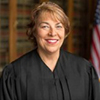
Hon. Helen Adams | Southern District of Iowa

Helen C. Adams has served as a U.S. Magistrate Judge for the Southern District of Iowa since February 13, 2014. Judge Adams received her undergraduate degree in Sociology from the University of Iowa in 1985, and her law degree from the University of Iowa in 1988, with high distinction and Order of the Coif. She began her legal career as a law clerk to U.S. District Judge Harold D. Vietor in the Southern District of Iowa from 1988 to 1990.

From 1990 to 2009, she practiced with the firm of Dickinson, Mackaman, Tyler & Hagen, where she served as President of the firm on two occasions. In 2009, she joined the corporate legal department of Pioneer Hi-Bred International (now Corteva) as associate general counsel, an international agricultural company.

Judge Adams teaches a Civil Discourse course at the University of Iowa College of law. She currently serves as the President-Elect of the Federal Magistrate Judges Association.

 

Ronald J. Hedges_myLawCLERon Hedges | Ronald J. Hedges LLC

Ronald J. Hedges is the Principal of Ronald J. Hedges LLC. He served as a United States Magistrate Judge in the District of New Jersey for over 20 years. Ron speaks and writes on a variety of topics, many of which are related to electronic information, including procedural and substantive criminal law, information governance, litigation management, and integration of new technologies such as artificial intelligence into existing information governance policies and procedures. Among other things, Ron is the chair of the Court Technology Committee of the Judicial Division of the ABA and the co-chair of the NYSBA Committee on Technology and the Legal Profession.

He is the lead author of a guide for federal judges on electronically stored information, https://www.fjc.gov/content/323370/managing-discovery-electronic-information-third-edition-2017. Ron is also the co-senior editor of The Sedona Conference Cooperation Proclamation, Resources for the Judiciary, Third Edition (June 2020) and the 2022 supplement thereto. He is also the editor of various compendiums on electronic information in criminal investigations and proceedings hosted by the Massachusetts Attorney General’s Office, https://www.mass.gov/service-details/understanding-electronic-information-in-criminal-investigations-and-actions. He can be reached at [email protected].

 

Lelia Parker | Covington & Burling LLP

Lelia advises clients on the full spectrum of discovery issues, including leveraging AI for defensible, efficient workflows. Her work spans data-mapping, TAR, information governance, and compliance with emerging legal and regulatory standards. She has experience advising clients involved in multi-district complex commercial litigation on discovery related issues.

In addition, Lelia serves a discovery facilitator, helping parties streamline processes, reduce costs, and resolve disputes involving complex discovery challenges.

Further, Lelia counsels clients in the pre-litigation and non-litigation settings relating to clean data management, preservation, defensible deletion, and related policies and procedures.

Agenda

  1. Session 1 · 1:00 pm - 2:00 pm

    AI Disclosures, Liability, Billing, and Ethical Obligations

    This session examines when and how attorneys must disclose AI usage to clients and courts, covering engagement letters, supervision of staff, and confidentiality risks. Participants will explore malpractice exposure, billing considerations when AI transforms attorney work, and core ethical obligations including competence, supervision, and communication. Sample disclosure templates and customizable clauses will be reviewed to help firms develop compliant AI policies.

    Jim Koford

  2. Break · 2:00 pm - 2:10 pm

    Scheduled Break Between Learning Sessions

    A brief intermission allowing participants to refresh before the second session. Use this time to review notes and prepare questions for the upcoming litigation-focused discussion.

    Jim Koford

  3. Session 2 · 2:10 pm - 3:10 pm

    Litigation Risks, AI Hallucinations, and Practice Management

    This session addresses the critical risks of AI hallucinations in legal practice, including fabricated citations and verification strategies to prevent court sanctions. Participants will examine landmark cases like Mata and McGee where attorneys faced severe consequences for AI-generated errors. The discussion concludes with workflow best practices, evidentiary considerations, and guidance for developing litigation-specific AI policies within law firms.

    Jim Koford

MCLE Credits

  • Alabama

    Approved for Self-Study Credits

    2 General

  • Alaska

    Approved for CLE Credits

    2 General

    Our programs are CLE-eligible through Alaska’s recognition of multi-jurisdictional reciprocity.

  • Arizona

    Approved for CLE Credits

    2 General

  • Arkansas

    Approved for CLE Credits

    2 General

  • California

    Approved for CLE Credits

    2 General

  • Colorado

    Pending CLE Approval

    2 General

  • Connecticut

    Approved for CLE Credits

    2 General

  • Delaware

    Pending CLE Approval

    2 General

  • District of Columbia

    No MCLE Required

    No MCLE Required

  • Florida

    Pending CLE Approval

    2 General Hours

    Receive CLE credit in Florida via Attorney Submission.

  • Georgia

    Approved for CLE Credits

    2 General

  • Hawaii

    Approved for CLE Credits

    2.4 General

  • Idaho

    Pending CLE Approval

    2 General

  • Illinois

    Approved for Self-Study Credits

    2 General

  • Indiana

    Approved For On-Demand Credits

    2 General

  • Iowa

    Approved for Self-Study Credits

    2 General

  • Kansas

    Pending CLE Approval

    2 Substantive

  • Kentucky

    Pending CLE Approval

    2 General

  • Louisiana

    Pending CLE Approval

    2 General

  • Maine

    Pending CLE Approval

    2 General

  • Maryland

    No MCLE Required

    2 CLE Hour(s)

  • Massachusetts

    No MCLE Required

    2 CLE Hour(s)

  • Michigan

    No MCLE Required

    2 CLE Hour(s)

  • Minnesota

    Approved for Self-Study Credits

    2 General

  • Mississippi

    Pending CLE Approval

    2 General

  • Missouri

    Approved for Self-Study Credits

    2.4 General

  • Montana

    Pending CLE Approval

    2 General

  • Nebraska

    Pending CLE Approval

    2 General

    myLawCLE reports attendance to Nebraska on each attorney’s behalf for all programs. Please do not self-report.

  • Nevada

    Approved for Self-Study Credits

    2 General

  • New Hampshire

    Approved for CLE Credits

    120 General minutes

    As of July 1, 2014, the NHMCLE Board no longer provides pre- or post-approval of courses. Attendees must self-determine whether a program is eligible for credit, and self-report their attendance online at www.nhbar.org, based on qualification provisions of Rule 53.

  • New Jersey

    Approved for CLE Credits

    2 General

    Our programs are CLE-eligible through New Jersey’s recognition of multi-jurisdictional reciprocity, except for the courses required under BCLE Reg. 201:2

  • New Mexico

    Approved for Self-Study Credits

    2 General

  • New York

    Approved for CLE Credits

    2 General

    Our programs are CLE-eligible through New York’s Approved Jurisdiction Group “B”.

  • North Carolina

    Pending CLE Approval

    2 General

  • North Dakota

    Approved for CLE Credits

    2 General

    Our programs are CLE-eligible through North Dakota’s recognition of multi-jurisdictional reciprocity. Section 1, Policy 1.14

  • Ohio

    Approved for Self-Study Credits

    2 General

  • Oklahoma

    Pending CLE Approval

    2.5 General

  • Oregon

    Pending CLE Approval

    2 General

  • Pennsylvania

    Approved for Self-Study Credits

    2 General

  • Rhode Island

    Pending CLE Approval

    2.5 General

  • South Carolina

    Pending CLE Approval

    2 General

  • South Dakota

    No MCLE Required

    2 CLE Hour(s)

  • Tennessee

    Approved for Self-Study Credits

    2 General

  • Texas

    Approved for CLE Credits

    2 General

  • Utah

    Pending CLE Approval

    2 General

  • Vermont

    Approved for CLE Credits

    2 General

  • Virginia

    Not Eligible

    2 General Hours

  • Washington

    Approved via Attorney Submission

    2 Law & Legal Hours

    Receive CLE credit in Washington via attorney submission.

  • West Virginia

    Pending CLE Approval

    2.4 General

  • Wisconsin

    Approved for Self-Study Credits

    2 General

  • Wyoming

    Pending CLE Approval

    2 General