
On-Demand · June 30, 2026
Who’s Liable When AI Agents Misbehave? A 2026 Guide to Deployer Responsibility and Compliance-by-Design
Master AI agent liability before your clients face it. Learn to allocate risk, draft defensive contracts, build compliance controls, and survive FTC scrutiny in the agentic AI era.

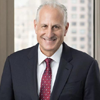
 Jack L. Hobaugh Jr. Brownstein Hyatt Farber Schreck, LLPAndrew Lustigman Olshan Frome Wolosky LLPBarry M. Greenbaum Olshan Frome Wolosky LLP
About this program


Course Overview
When the Agent Acts, the Deployer Answers
Agentic AI doesn't just generate text—it plans, calls tools, and takes actions, and when one of those actions harms a consumer, the question of who answers collapses onto the deployer. The FTC has made its position plain: you cannot outsource compliance, and vendor API terms from OpenAI, Anthropic, and Google increasingly push responsibility downstream to the businesses that deploy these systems. Section 5, state UDAP statutes, ROSCA, and the new wave of state transparency laws—California, Colorado, Maine, Texas's RAIGA, Utah—now reach automated subscription flows, dark patterns, and unsubstantiated capability claims that no one drafted for. Any attorney advising a client that deploys an AI agent is already exposed, whether or not the engagement letter says so. This session maps the deployer/developer distinction, the tort standard-of-care question for agent harm, and the governance controls—red-teaming, audit logs, escalation records—that build a defensible record. You will leave able to allocate liability by contract, audit a client's agent deployment, and draft the human-oversight representations regulators will test.
Key Topics
- Responsibility Who is responsible for AI and AI agents among users and developers?
- Data provenance Whether training data and your data matter, and closed-source versus open-source.
- Tort standard Does an AI agent have a tort standard of care for harm?
- Contract language Using policies and contract language to identify and minimize risks and responsibilities.
- Enforcement risks Private litigation, FTC Section 5, and state UDAP enforcement for AI behavior.
- Deployer liability Why the FTC pursues the deployer rather than the model provider.
What You Will Learn and Gain
What you will learn
Attorneys will learn where AI agent liability falls among users, deployers, and developers, plus AI enforcement risks under FTC Section 5, state UDAP, and ROSCA.
What you will gain
Attorneys will gain ideas to minimize liability risk through policies, contract language, and governance controls that create defensible records for users, deployers, and developers.
Speakers
Jack L. Hobaugh Jr.
Brownstein Hyatt Farber Schreck, LLP
Jack Hobaugh combines his 18-year career as a software engineer, in which he designed and built relational databases, with his legal practice to focus on AI law and governance, cybersecurity law, and privacy law. Jack is a certified iapp AI governance professional (AIGP), privacy professional (FIP/CIPT/CIPP/US/E) and ISC2 Certified Information System Security Professional (CISSP). Jack is equally at home whiteboarding technical solutions with product engineers, as incident counsel, or providing legal advice to inhouse counsel. Jack specializes in guiding start-up companies through the AI, privacy, and security compliance maze. His compliance focus is guiding products to production environment as opposed to being a naysayer. A guest lecturer and author of four books on cybersecurity law, Jack is sought out counsel for startups, and mergers & acquisitions. Prior to his legal career, Jack was a software engineer with a focus on international IT consulting and telecom (Europe / Middle East / West Africa / Brazil), writing his first artificial intelligence program in 1989 in LISP as part of his MS in Computer Science at Johns Hopkins University. In addition to litigating and prosecuting patents, Jack also served as a patent examiner for the United States Patent and Trademark Office.
Full profile
Experience
Before entering law, Mr. Hobaugh spent eighteen years as a software engineer. He later served as a patent examiner with the United States Patent and Trademark Office and, in house, as senior counsel for privacy and security.Education
Mr. Hobaugh earned his Juris Doctor from the University of Denver Sturm College of Law, Masters of Laws from Georgetown University Law Center and The George Washington University Law School, and a Master of Science from Johns Hopkins University. He is active in Colorado, bar number 39,371, inactive in the District of Columbia and Virginia, and registered before the United States Patent and Trademark Office.Recognition
Mr. Hobaugh is a Shareholder in the Denver office of Brownstein Hyatt Farber Schreck, LLP, where his practice spans privacy and cybersecurity, technology transactions, and mergers and acquisitions. He chairs the Denver KnowledgeNet Chapter of the International Association of Privacy Professionals.Professional involvement
Mr. Hobaugh serves on the Colorado Bar Association Artificial Intelligence and Innovation Task Force. He speaks regularly at industry conferences, including the ISC2 Security Congress, SHRM, and InfoComm. Andrew Lustigman
Olshan Frome Wolosky LLP
Andrew B. Lustigman is Co-Managing Partner of Olshan Frome Wolosky LLP in New York, Chair of the firm’s Advertising, Marketing & Promotions Practice, Co-Chair of its Brand Management & Protection Practice, and a member of the firm’s Executive Committee. For three decades he has advised domestic and international marketers, advertisers, agencies, and suppliers on advertising, marketing, and promotions law, and has represented them in regulatory investigations, enforcement actions, and litigation before the Federal Trade Commission, the Food and Drug Administration, the Department of Justice, the Federal Communications Commission, the U.S. Postal Service, state Attorneys General, and district attorneys. Subscription and automatic-renewal marketing is a core focus of his practice: he counsels subscription businesses across every media channel on enrollment, disclosure, consent, billing, renewal, and cancellation practices, has resolved an investigation by California’s Automatic Renewal Task Force, and is among the most prolific legal commentators in the country on the FTC’s Click-to-Cancel Rule, its vacatur, and the Commission’s renewed subscription enforcement under ROSCA — including the FTC’s record $2.5 billion settlement with Amazon over Prime enrollment and cancellation practices.
Full profile
Experience
Mr. Lustigman began his career in 1995 at The Lustigman Firm, the advertising law boutique founded by his father, Sheldon S. Lustigman, with whom he practiced for more than 25 years; the firm joined Olshan in 2011. His subscription and negative option experience spans the full range of enforcement risk: he represented a leading subscription marketer of wine products on continuity compliance and resolved a California Automatic Renewal Task Force investigation of its enrollment and cancellation practices; advises a leading financial news publisher on its subscription program, including telemarketing, automatic renewal, billing disclosures, and collections; and provides ongoing regulatory counsel to a leading online travel agency on advertising, subscription enrollments, and outbound call center practices. He has defended an e-commerce marketer in a New York Attorney General investigation, defended a memorabilia marketer in a joint FTC and New York State investigation of its marketing practices, represented an over-the-counter pharmaceutical company in National Advertising Division challenges that upheld its national campaign, and defeated class certification in a TCPA action against an automated voice and text messaging provider, reducing claimed exposure from $20 million to $500. He also clears advertising and promotional materials, structures sweepstakes, contests, and games of skill, advises on social media and direct marketing programs, counsels on FTC and FDA requirements for health claims and labeling, and conducts advertising and marketing due diligence in mergers, acquisitions, and investments. That combination of day-to-day compliance counseling for subscription businesses, hands-on defense of state and federal investigations, and sustained public analysis of the Click-to-Cancel Rule’s rise, fall, and revival makes him uniquely positioned to walk practitioners through the ROSCA and dark patterns enforcement landscape of 2026.Education
Mr. Lustigman earned his J.D., magna cum laude, from American University Washington College of Law, where he was Managing Editor of the American University Law Review and a member of the Washington College of Law Honor Society, and his B.A. from the University of Michigan. He is admitted to practice in New York, New Jersey, Maryland, and the District of Columbia, and before the U.S. District Courts for the Southern and Eastern Districts of New York, the District of New Jersey, the District of Maryland, and the District of Columbia, and the U.S. Court of Appeals for the Fourth Circuit.Recognition
Mr. Lustigman is recognized by Chambers USA as a leading advertising lawyer and is highlighted by The Legal 500 US in Advertising and Marketing, where Olshan is ranked as a leading firm. He has been selected for The Best Lawyers in America (2027), named to the Lawdragon 500 Leading Global Entertainment, Sports & Media Lawyers (2026), and profiled by Financier Worldwide as a “Power Player” and Distinguished Adviser in Advertising & Marketing (2025). He was elected a Fellow of the American Bar Foundation in 2020, an honor limited to a small fraction of the practicing bar. He is the publisher of Olshan’s Advertising Law Blog, which he has written for more than twenty years, and his articles appear regularly in the New York Law Journal, Bloomberg Law, Law360, Attorney at Law Magazine, and Inside Counsel. His recent writing tracks the subject of this program in real time, including “Amazon’s $2.5B Settlement with the FTC and the Continued Focus on Subscription-Based Practices” (New York Law Journal, 2025), an analysis for Bloomberg Law of why marketers must remain vigilant after the death of the Click-to-Cancel Rule (2025), “FTC’s ‘Click to Cancel’ Rule” (New York Law Journal, 2024), “Avoiding Automatic Renewal and Cancellation Pitfalls” (Bloomberg Law, 2024), and analyses of the FTC’s and the states’ prioritization of automatic-renewal regulation.Professional involvement
Mr. Lustigman serves as Treasurer of the International Bar Association’s Intellectual Property and Entertainment Law Committee and has been a frequent presenter at IBA annual conferences, including a 2026 Copenhagen program on AI-generated advertising. He served as editor of the American Bar Association’s Advertising Report and is a member of the American Bar Association, the New York City Bar Association, the District of Columbia Bar, the Maryland State Bar Association, and the Federal Communications Bar Association. He is a sought-after faculty member for the advertising bar’s leading continuing education programs, including the Practising Law Institute’s Hot Topics in Advertising Law, the American Conference Institute’s advertising claims substantiation and regulatory forums, Brooklyn Law School’s annual developments in advertising and social media law, the Institute for Advertising Ethics, and myLawCLE, where he has presented on sweepstakes and promotions, false advertising litigation, and AI liability. He has also testified as an expert witness on advertising compliance in federal court and serves as special advertising counsel to other leading law firms. Barry M. Greenbaum
Olshan Frome Wolosky LLP
Barry M. Greenbaum is a partner in Olshan’s Brand Management & Protection and Intellectual Property Law practices who helps clients turn their innovations and brands into assets by developing and executing IP strategies that support growth, commercialization, and transactions while protecting technology and product investments. With a background that pairs legal practice with hands-on engineering and startup experience, Barry is sought out by technology-focused clients—from early-stage startups to global enterprises—on patent prosecution, intellectual property transactions, trademarks and design, brand protection and enforcement, and privacy matters. Clients rely on him to secure and enforce their intellectual property in a way that aligns with commercial objectives, risk tolerance, and transaction needs.
Full profile
Experience
Barry advises clients across the full IP lifecycle. He counsels clients on a broad array of commercial and technology agreements—including software licensing, SaaS, master services, consulting, assignment, and AI-technology agreements—and advises on privacy and data considerations in connection with them. He has significant experience managing global patent portfolios, coordinating prosecution across multiple jurisdictions, and counseling clients on trademark strategy, copyright matters, and brand protection. His work includes drafting and prosecuting utility and design patent applications in the United States and abroad, supporting post-grant proceedings before the Patent Trial and Appeal Board, and conducting IP due diligence and portfolio analyses in connection with financings, acquisitions, and other transactions. His practice concentrates on fast-moving and emerging sectors. Barry's technical experience spans artificial intelligence and generative AI, machine learning, autonomous vehicles and robotics, IoT systems, fintech, blockchain and cryptocurrency, image-recognition technology, advanced sensors, and data-driven infrastructure, as well as mechanical and consumer products such as medical devices, wearables, lighting systems, and power tools. Representative matters include counseling an applied-science research institute on monetizing a 350-patent portfolio spanning wireless communications, semiconductor design, imaging, and energy technologies; representing a global automotive technology company in patent prosecution across AI, autonomous-vehicle systems, and advanced sensors; and representing a consumer products company in cross-border enforcement of design patents, trade dress, and trademarks against a foreign competitor.Education
Barry earned his J.D. from Fordham University School of Law in 2008. He holds a Master of Engineering in Civil Engineering, with a minor in Biomedical Engineering, from Cooper Union (2006), and a Bachelor of Engineering in Civil Engineering from Cooper Union (2005). He is admitted to practice in New York and New Jersey and is registered to practice before the United States Patent and Trademark Office.Recognition
Barry joined Olshan as a partner in 2026, a lateral move that drew coverage across the legal press. He previously served as Senior Counsel in Norton Rose Fulbright LLP's Intellectual Property practice, and cofounded a cloud-based platform designed to automate patent drawing review and analysis—giving him firsthand insight into how technology companies build, scale, and protect their innovations and brands. Earlier in his career, he served as a judicial intern to the Honorable Edward R. Korman of the U.S. District Court for the Eastern District of New York.Professional involvement
Barry is an active author and speaker on the intersection of artificial intelligence and intellectual property. His recent writing includes articles in Managing IP on AI's growing role in trademark naming and clearance and in Bloomberg Law on how AI is changing trademark creation, clearance, and enforcement. He also presents on emerging-technology issues, including a CLE webinar on creative content production using AI.Agenda
-
AI Agents and Liability: Managing the Risks
When an AI agent causes harm, liability rarely lands cleanly on one party. This session traces responsibility across users, deployers, and developers, examining tort standards, data provenance, contract drafting, and the enforcement risks shaping how agentic AI gets governed.
Jack L. Hobaugh Jr.
-
AI Agent Conduct: FTC Section 5 and State UDAP Risks
Regulators and plaintiffs increasingly frame agent failures as deception or unfairness. This session examines FTC Section 5, state UDAP, ROSCA, and subscription-cancellation rules, then maps the governance controls and deployer obligations that build defensible records through 2026.
Andrew Lustigman, Barry M. Greenbaum
MCLE Credits
-
Alabama
Approved for Self-Study Credits
2 General
-
Alaska
Approved for CLE Credits
2 General
Our programs are CLE-eligible through Alaska’s recognition of multi-jurisdictional reciprocity.
-
Arizona
Approved for CLE Credits
2 General
-
Arkansas
Approved for CLE Credits
2 General
-
California
Approved for CLE Credits
2 General
-
Colorado
Pending CLE Approval
2 General
-
Connecticut
Approved for CLE Credits
2 General
-
Delaware
Pending CLE Approval
2 General
-
District of Columbia
No MCLE Required
No MCLE Required
-
Florida
Approved for CLE Credits
2.5 General
-
Georgia
Approved for CLE Credits
2 General
-
Hawaii
Approved for CLE Credits
2 General
-
Idaho
Pending CLE Approval
2 General
-
Illinois
Pending CLE Approval
2 General
-
Indiana
Pending CLE Approval
2 General
-
Iowa
Pending CLE Approval
2 General
-
Kansas
Pending CLE Approval
2 Substantive
-
Kentucky
Pending CLE Approval
2 General
-
Louisiana
Pending CLE Approval
2 General
-
Maine
Pending CLE Approval
2 General
-
Maryland
No MCLE Required
2 CLE Hour(s)
-
Massachusetts
No MCLE Required
2 CLE Hour(s)
-
Michigan
No MCLE Required
2 CLE Hour(s)
-
Minnesota
Pending CLE Approval
2 General
-
Mississippi
Pending CLE Approval
2 General
-
Missouri
Approved for Self-Study Credits
2.4 General
-
Montana
Pending CLE Approval
2 General
-
Nebraska
Pending CLE Approval
2 General
myLawCLE reports attendance to Nebraska on each attorney’s behalf for all programs. Please do not self-report.
-
Nevada
Pending CLE Approval
2 General
-
New Hampshire
Approved for CLE Credits
120 General minutes
As of July 1, 2014, the NHMCLE Board no longer provides pre- or post-approval of courses. Attendees must self-determine whether a program is eligible for credit, and self-report their attendance online at www.nhbar.org, based on qualification provisions of Rule 53.
-
New Jersey
Approved for CLE Credits
2 General
Our programs are CLE-eligible through New Jersey’s recognition of multi-jurisdictional reciprocity, except for the courses required under BCLE Reg. 201:2
-
New Mexico
Approved for Self-Study Credits
2 General
-
New York
Approved for CLE Credits
2 General
Our programs are CLE-eligible through New York’s Approved Jurisdiction Group “B”.
-
North Carolina
Pending CLE Approval
2 General
-
North Dakota
Approved for CLE Credits
2 General
Our programs are CLE-eligible through North Dakota’s recognition of multi-jurisdictional reciprocity. Section 1, Policy 1.14
-
Ohio
Approved for Self-Study Credits
2 General
-
Oklahoma
Pending CLE Approval
2.5 General
-
Oregon
Pending CLE Approval
2 General
-
Pennsylvania
Approved for Self-Study Credits
2 General
-
Rhode Island
Pending CLE Approval
2.5 General
-
South Carolina
Pending CLE Approval
2 General
-
South Dakota
No MCLE Required
2 CLE Hour(s)
-
Tennessee
Approved for Self-Study Credits
2 General
-
Texas
Approved for CLE Credits
2 General
-
Utah
Pending CLE Approval
2 General
-
Vermont
Approved for CLE Credits
2 General
-
Virginia
Not Eligible
2 General Hours
-
Washington
Approved via Attorney Submission
2 Law & Legal Hours
Receive CLE credit in Washington via attorney submission.
-
West Virginia
Pending CLE Approval
2.4 General
-
Wisconsin
Approved for Self-Study Credits
2 General
-
Wyoming
Pending CLE Approval
2 General
No state matches.