
On-Demand · June 23, 2026
30(b)(6) Depositions: Practical and Legal Considerations from All Angles (Presented by the Federal Bar Association’s Corporate and Association Counsel Division and Judiciary Division)
Master Rule 30(b)(6) depositions from every angle—draft airtight notices, defeat or quash challenges, select the right deponent, and ask questions that produce trial-ready evidence.

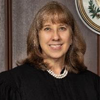
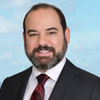
 Hope T. Cannon Northern District of FloridaDonna Phillips Currault Eastern District of LouisianaAlexander Fischer Sanchez Fischer Levine, LLPWilliam Whitman Federal Express Corporation
About this program

Course Overview
The Witness Is the Company, and the Notice Sets the Terms
A Rule 30(b)(6) deposition does not test a witness—it binds the organization itself, which means a single notice can lock a company into positions it must defend through trial. Recent federal case law has sharpened the fights over notice scope, the selection of the corporate designee, and the grounds for quashing or narrowing an overbroad demand, and courts now diverge enough that yesterday's assumptions no longer hold. Litigators on both sides—those serving notices and those defending corporations—are already exposed every time they treat the device as routine discovery rather than a strategic inflection point. Two federal magistrate judges, outside counsel, and in-house counsel map the legal and technical mechanics of the Rule, the standards judges apply to quash motions, the recent decisions reshaping practice, deponent selection, and the questioning that elicits trial-ready evidence. You will leave able to draft a defensible notice, attack a flawed one, and prepare a designee who advances your case.
Key Topics
- Rule guide Legal and technical aspects of Federal Rule 30(b)(6) will be covered.
- Quashing notices How to avoid getting a 30(b)(6) notice quashed or how to quash one.
- Case law Recent federal case law addressing 30(b)(6) topics will be discussed.
- Deponent selection Choosing the right deponent from the in-house counsel perspective.
- Questioning How to ask best questions to elicit most useful evidence for trial.
- Trial setup How to utilize Rule 30(b)(6) to best set up case for trial.
What You Will Learn and Gain
What you will learn
Attorneys will learn the legal and technical aspects of Rule 30(b)(6), recent federal case law, how to quash or avoid quashing a notice, and effective deposition questioning.
What you will gain
They will gain the ability to choose the right deponent, ask questions that elicit the most useful evidence, and utilize Rule 30(b)(6) to best set up trial.
Speakers
Hope T. Cannon
Northern District of Florida
Hope T. Cannon has served as a United States Magistrate Judge for the United States District Court for the Northern District of Florida since 2019. Prior to her judicial appointment, she was a partner at Bradley Arant Boult Cummings LLP, where she practiced for nearly two decades and handled complex commercial litigation, products liability matters, and appeals across the country. Since joining the federal bench, Judge Cannon has presided over a variety of complex matters, including serving as the assigned magistrate judge in multiple high-profile cases and multidistrict litigations.
Full profile
Experience
Before her judicial appointment, Judge Cannon spent almost twenty years as a partner at Bradley Arant Boult Cummings LLP, where she represented clients in complex commercial disputes, products liability litigation, and appellate matters throughout the country. Since joining the federal bench in 2019, she has overseen numerous complex cases and has been assigned to several significant matters, including two multidistrict litigations, bringing extensive private practice experience to her role as a federal magistrate judge.Education
Judge Cannon graduated from the University of Alabama School of Law and later completed the Judicial Studies LL.M. program at the Duke Law School Bolch Judicial Institute. Her educational background combines traditional legal training with advanced judicial studies focused on the judiciary and judicial administration.Recognition
Judge Cannon’s appointment as a United States Magistrate Judge for the Northern District of Florida reflects her extensive litigation experience and professional accomplishments. Since taking the bench in 2019, she has played a significant role in managing complex federal litigation, including serving as the magistrate judge assigned to two multidistrict litigations, demonstrating her leadership in overseeing large and sophisticated federal cases.Professional involvement
As a member of the federal judiciary, Judge Cannon is actively involved in the administration and management of complex civil litigation within the Northern District of Florida. Her work includes overseeing pretrial proceedings, discovery matters, motions practice, and case management in significant commercial and multidistrict litigation matters. Donna Phillips Currault
Eastern District of Louisiana
Donna Phillips Currault serves as a United States Magistrate Judge for the United States District Court for the Eastern District of Louisiana. Appointed to the federal bench in June 2020, Judge Currault brings decades of experience in complex commercial and employment litigation. Prior to her judicial service, she was a member of Gordon Arata LLC, where she represented clients in class and collective actions, business disputes, business tort litigation, and a broad range of labor and employment matters. Her practice included advising employers on compliance with federal and state employment laws, drafting employment agreements and workplace policies, and conducting employment-related training programs. In addition to her judicial responsibilities, Judge Currault has maintained a longstanding commitment to professional leadership, legal education, and bar service at both the state and national levels.
Full profile
Experience
Before joining the federal bench in 2020, Judge Currault built an accomplished legal career as a member of Gordon Arata LLC, where she handled complex commercial litigation, class and collective actions, business disputes, business torts, and labor and employment matters. She regularly represented employers in litigation involving federal and state anti-discrimination laws and advised clients on employment agreements, restrictive covenant issues, workplace policies, and compliance matters. Her experience also includes significant judicial service beginning with her clerkship for Judge Morey L. Sear and continuing through her current role as a United States Magistrate Judge overseeing federal civil litigation and judicial proceedings in the Eastern District of Louisiana.Education
Judge Currault earned her Juris Doctor, magna cum laude, from Tulane University School of Law in 1989 and was elected to the Order of the Coif. During law school, she served as a Managing Editor and member of the Tulane Law Review and was also a Senior Fellow in Tulane Law School’s Legal Research and Writing Program. Following graduation, she served as a judicial law clerk to the Honorable Morey L. Sear of the United States District Court for the Eastern District of Louisiana from 1989 to 1990.Recognition
Judge Currault has held numerous leadership positions within the legal profession and judiciary. She currently serves as the Fifth Circuit Director for the Federal Magistrate Judges Association and is a Life Fellow of both the Federal Bar Foundation and the American Bar Foundation. She is also a Fellow of the Louisiana Bar Foundation and the Litigation Counsel of America. Her prior leadership roles include serving as President of the New Orleans Chapter of the Federal Bar Association, Chair of the Federal Bar Association’s Labor & Employment Section, Chair of the Louisiana Board of Legal Specialization’s Employment Law Advisory Commission, and Director of the Foundation of the Federal Bar Association.Professional involvement
Judge Currault remains actively involved in numerous professional organizations dedicated to the legal profession and judicial administration. She serves on the Advisory Board of the Tulane Law Review and is a member of the St. Thomas More Inn of Court and the Federal Magistrate Judges Association. She has also contributed extensively to attorney licensing and legal education efforts, having served as a Code I Bar Examiner and currently serving on the Testing Committee for the Louisiana Committee on Bar Admissions. Her long-standing involvement with the Federal Bar Association includes more than two decades of leadership and service at both the chapter and national levels. Alexander Fischer
Sanchez Fischer Levine, LLP
Alexander Fischer is a founding partner of Sanchez Fischer Levine, LLP and leads the firm’s Broward office. His practice focuses on complex commercial litigation and appeals, with a particular emphasis on business disputes, fraud litigation, and class action defense. Alex represents a diverse range of clients, including publicly traded companies, large corporate entities, small and mid-sized businesses, private individuals, and corporate shareholders involved in internal business disputes. Drawing on his background as a former prosecutor and experienced trial lawyer, he has handled more than 40 jury trials through verdict and brings extensive courtroom experience to high-stakes civil and commercial matters.
Full profile
Experience
Alex has extensive experience handling complex commercial litigation, appeals, business disputes, fraud claims, and class action defense matters. His work has included obtaining favorable outcomes in multimillion-dollar proceedings involving fraudulent transfer claims and offshore trusts, successfully appealing contempt findings, securing full arbitration awards for clients, and representing major cruise line companies in complex commercial disputes. Prior to founding Sanchez Fischer Levine, LLP, he practiced at a prominent South Florida law firm where he represented police departments, businesses, and individual litigants in matters involving civil forfeitures, employment disputes, consumer protection claims, civil appeals, and business litigation. Earlier in his career, Alex served as a prosecutor with the Broward County State Attorney’s Office, where he secured thousands of criminal convictions and prosecuted a wide range of cases, including violent crimes and major drug trafficking offenses, gaining substantial trial experience that continues to inform his litigation practice today.Education
Alex’s professional credentials are rooted in his extensive litigation, appellate, and trial experience developed throughout both his prosecutorial and private practice careers. His background includes service as a prosecutor with the Broward County State Attorney’s Office, followed by significant civil litigation practice representing businesses, governmental entities, and individual clients in a wide range of complex disputes.Recognition
Alex’s success in complex commercial litigation and defense work has led to his nomination and induction into the International Association of Defense Counsel. As a founding partner and head of the Broward office of Sanchez Fischer Levine, LLP, he plays a leadership role in the firm's litigation practice while continuing to represent clients in sophisticated commercial disputes, appeals, and class action matters.Professional involvement
Alex is actively involved in representing corporate and individual clients in complex litigation matters throughout Florida and beyond. His practice encompasses shareholder disputes, fraud claims, class action defense, commercial arbitration, and appellate litigation. Through his membership in the International Association of Defense Counsel, he remains engaged with a network of attorneys and legal professionals focused on defense and commercial litigation issues. William Whitman
Federal Express Corporation
William G. Whitman serves as in-house counsel for Federal Express Corporation in Pittsburgh, Pennsylvania, where he is Lead Counsel in the company’s Litigation Department. In this role, he regularly represents the company in arbitrations and in both federal and state courts, often serving as trial counsel in complex litigation matters. Before joining FedEx, William practiced as a commercial litigator with Bass, Berry & Sims PLC in Memphis, Tennessee. His legal career also includes service as a federal judicial law clerk, providing him with valuable insight into litigation and judicial processes from multiple perspectives.
Full profile
Experience
William’s experience spans private practice, judicial service, and corporate in-house counsel roles. As Lead Counsel in the Litigation Department of Federal Express Corporation, he handles litigation matters and frequently serves as trial counsel in arbitrations and proceedings before federal and state courts. Prior to joining FedEx, he practiced commercial litigation at Bass, Berry & Sims PLC, representing clients in a variety of business disputes. Earlier in his career, he served as a law clerk to Judge Thomas M. Shanahan of the United States District Court for the District of Nebraska, gaining foundational experience in federal court litigation and judicial decision-making.Education
William earned his law degree from Notre Dame Law School. Following law school, he served as a federal judicial law clerk to the Honorable Thomas M. Shanahan of the United States District Court for the District of Nebraska, gaining firsthand experience with federal litigation and court proceedings that has informed his subsequent litigation practice.Recognition
William currently serves as Division Chair of the Corporate and Association Counsel Division of the Federal Bar Association. In addition to his current leadership role, he has remained actively involved in the Federal Bar Association and its Corporate and Association Counsel Division through various leadership and service positions over several years, contributing to the organization’s mission of supporting attorneys in corporate and in-house legal practice.Professional involvement
William is actively engaged with the Federal Bar Association and the Corporate and Association Counsel Division, where he has served in multiple capacities and now leads the division as Chair. Through these roles, he contributes to the advancement of professional development, networking, and educational opportunities for in-house and corporate counsel nationwide.Agenda
-
Legal and Technical Aspects of Rule 30(b)(6)
This session establishes the legal and technical foundations of Rule 30(b)(6), explaining how the deposition operates, what the rule requires of noticing parties and responding organizations, and the procedural mechanics every litigator must command before drafting or defending a notice.
Presented by the Federal Bar Association’s Corporate and Association Counsel Division and Judiciary Division.
Hope T. Cannon, Donna Phillips Currault, Alexander Fischer, William Whitman
-
How to Avoid a 30(B)(6) Notice Quashed or How to Quash such a Notice
A 30(b)(6) notice can be challenged or defended before testimony begins, and this session shows litigators how to draft a notice that survives a motion to quash—and, from the opposing side, how to quash or narrow an overbroad demand.
Presented by the Federal Bar Association’s Corporate and Association Counsel Division and Judiciary Division.
Hope T. Cannon, Donna Phillips Currault, Alexander Fischer, William Whitman
-
How to Avoid a 30(B)(6) Notice Quashed or How to Quash such a Notice
An evolving line of recent federal case law is reshaping how courts treat 30(b)(6) disputes, and this session reviews decisions that matter most—drawn from magistrate judges who have issued opinions in this area—and what they mean for practice.
Presented by the Federal Bar Association’s Corporate and Association Counsel Division and Judiciary Division.
Hope T. Cannon, Donna Phillips Currault, Alexander Fischer, William Whitman
-
Choosing the Right Deponent from In-House Counsel Perspective
The choice of corporate designee determines whether a 30(b)(6) deposition helps or harms the organization, and this session draws on in-house counsel experience to explain how to identify, evaluate, and select the right witness to testify on the company’s behalf.
Presented by the Federal Bar Association’s Corporate and Association Counsel Division and Judiciary Division.
Hope T. Cannon, Donna Phillips Currault, Alexander Fischer, William Whitman
-
Ask Best Questions at 30(B)(6) Deposition for Useful Evidence for Trial
How a question is framed at a 30(b)(6) deposition determines what evidence becomes available at trial, and this session demonstrates techniques outside and in-house counsel use to ask questions that elicit the most useful, trial-ready testimony from the corporate designee.
Presented by the Federal Bar Association’s Corporate and Association Counsel Division and Judiciary Division.
Hope T. Cannon, Donna Phillips Currault, Alexander Fischer, William Whitman
-
Questions & Answers
A closing question-and-answer period gives attendees the opportunity to put their own 30(b)(6) scenarios to the panel of two federal magistrate judges, outside counsel, and in-house counsel, drawing practical guidance directly from the bench and from practitioners on both sides.
Presented by the Federal Bar Association’s Corporate and Association Counsel Division and Judiciary Division.
Hope T. Cannon, Donna Phillips Currault, Alexander Fischer, William Whitman
MCLE Credits
-
Alabama
Approved for Self-Study Credits
1 General
-
Alaska
Approved for CLE Credits
1 General
Our programs are CLE-eligible through Alaska’s recognition of multi-jurisdictional reciprocity.
-
Arizona
Approved for CLE Credits
1 General
-
Arkansas
Approved for CLE Credits
1 General
-
California
Approved for CLE Credits
1 General
-
Colorado
Approved for Self-Study Credits
1 General
-
Connecticut
Approved for CLE Credits
1 General
-
Delaware
Pending CLE Approval
1 General
-
District of Columbia
No MCLE Required
No MCLE Required
-
Florida
Pending CLE Approval
1 General Hours
Receive CLE credit in Florida via attorney submission.
-
Georgia
Approved for CLE Credits
1 General
-
Hawaii
Approved for CLE Credits
1 General
-
Idaho
Pending CLE Approval
1 General
-
Illinois
Approved for Self-Study Credits
1 General
-
Indiana
Pending CLE Approval
1 General
-
Iowa
Pending CLE Approval
1 General
-
Kansas
Pending CLE Approval
1 Substantive
-
Kentucky
Pending CLE Approval
1 General
-
Louisiana
Approved for Self-Study Credits
1 General
-
Maine
Pending CLE Approval
1 General
-
Maryland
No MCLE Required
1 CLE Hour(s)
-
Massachusetts
No MCLE Required
1 CLE Hour(s)
-
Michigan
No MCLE Required
1 CLE Hour(s)
-
Minnesota
Approved for Self-Study Credits
1 General
-
Mississippi
Pending CLE Approval
1 General
-
Missouri
Approved for Self-Study Credits
1.2 General
-
Montana
Pending CLE Approval
1 General
-
Nebraska
Pending CLE Approval
1 General
myLawCLE reports attendance to Nebraska on each attorney’s behalf for all programs. Please do not self-report.
-
Nevada
Pending CLE Approval
1 General
-
New Hampshire
Approved for CLE Credits
60 General minutes
As of July 1, 2014, the NHMCLE Board no longer provides pre- or post-approval of courses. Attendees must self-determine whether a program is eligible for credit, and self-report their attendance online at www.nhbar.org, based on qualification provisions of Rule 53.
-
New Jersey
Approved for CLE Credits
1 General
Our programs are CLE-eligible through New Jersey’s recognition of multi-jurisdictional reciprocity, except for the courses required under BCLE Reg. 201:2
-
New Mexico
Approved for Self-Study Credits
1 General
-
New York
Approved for CLE Credits
1 General
Our programs are CLE-eligible through New York’s Approved Jurisdiction Group “B”.
-
North Carolina
Pending CLE Approval
1 General
-
North Dakota
Approved for CLE Credits
1 General
Our programs are CLE-eligible through North Dakota’s recognition of multi-jurisdictional reciprocity. Section 1, Policy 1.14
-
Ohio
Approved for Self-Study Credits
1 General
-
Oklahoma
Pending CLE Approval
1 General
-
Oregon
Pending CLE Approval
1 General
-
Pennsylvania
Approved for Self-Study Credits
1 General
-
Rhode Island
Pending CLE Approval
1 General
-
South Carolina
Pending CLE Approval
1 General
-
South Dakota
No MCLE Required
1 CLE Hour(s)
-
Tennessee
Approved for Self-Study Credits
1 General
-
Texas
Approved for CLE Credits
1 General
-
Utah
Pending CLE Approval
1 General
-
Vermont
Approved for CLE Credits
1 General
-
Virginia
Not Eligible
1 General Hours
-
Washington
Approved via Attorney Submission
1 Law & Legal Hours
Receive CLE credit in Washington via attorney submission.
-
West Virginia
Pending CLE Approval
1.2 General
-
Wisconsin
Approved for Self-Study Credits
1 General
-
Wyoming
Approved for Self-Study Credits
1 General
No state matches.