
Live Video-Broadcast · TBD
Building a Healthcare Qui Tam Case: From Whistleblower to Recovery
Most healthcare qui tam cases are won or lost before the seal lifts. Vet relator candidates, clear the public disclosure bar, plead FCA claims under Rule 9(b), and build falsity theories that hold up after SuperValu.
12 - 2:10 PM EST 11 AM - 1:10 PM CST 10 AM - 12:10 PM MST 9 - 11:10 AM PST
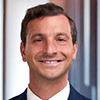
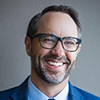 Daniel Fruchter Morgan VerkampClayton E. Wire Ogborn Mihm LLP
About this program

Course Overview
A Declined Case Now Faces a Constitutional Challenge, Not Just a Motion to Dismiss
Healthcare qui tam practice no longer turns on pleading alone. SuperValu moved scienter to what the defendant actually believed. The circuits split on whether AKS-tainted claims require but-for causation. And the constitutionality of the qui tam provisions themselves is now live.
Miss the public disclosure bar and the case ends before the government reads it. Plead below Rule 9(b) particularity and the complaint draws a dismissal motion instead of an investigation. Violate the seal and the filing itself becomes the problem. Misread enforcement priorities and the government declines.
You leave with a relator-vetting and pre-filing diligence framework, a Rule 9(b) pleading approach for healthcare claims, and a working model for structuring falsity theories, reading current Medicaid enforcement priorities, and defending a case the government declines.
Key Topics
- Relator Vetting and Diligence Screen whistleblower candidates for credibility and document risk, then run the pre-filing diligence that decides whether the case is worth bringing.
- Public Disclosure Bar Test insider knowledge against the public disclosure bar and original source doctrine before the defense does it for you.
- Pleading and Seal Compliance Plead healthcare FCA claims at the particularity Rule 9(b) demands and meet seal requirements so the filing itself never becomes the issue.
- FCA Elements and Scienter Work the healthcare FCA elements through the post-SuperValu subjective scienter framework and what it changes at trial.
- Causation and Materiality Choose a causation theory that survives the AKS circuit split and preempt materiality arguments built on government and defendant knowledge.
- Enforcement and Constitutional Risk Read the government’s current Medicaid and healthcare enforcement priorities and position a declined case against the live constitutional challenge to qui tam.
Speakers
Daniel Fruchter
Morgan Verkamp
Daniel “Dan” Fruchter is an attorney with Morgan Verkamp, where he focuses on qui tam and whistleblower matters. He represents whistleblowers in False Claims Act cases involving fraud against government programs, with experience in healthcare fraud, government contracts, grants, mortgage lending, cybersecurity, and other public programs. Before entering private practice, he spent nearly two decades with the U.S. Department of Justice and U.S. Attorney’s Offices, where he prosecuted False Claims Act, healthcare fraud, environmental, civil rights, and consumer protection matters. His government work resulted in billions of dollars in recoveries for the public and helped protect programs including Medicare, Medicaid, SNAP, veterans benefits, and federal environmental programs.
Full profile
Experience
During his nearly two decades in government service, Mr. Fruchter served as an Assistant U.S. Attorney and Health Care Fraud Coordinator, as well as a Trial Attorney in the U.S. Department of Justice’s Civil Division Fraud Section. From 2017 to 2025, he served as Chief of the Fraud and White-Collar Crime Unit at the U.S. Attorney’s Office for the Eastern District of Washington, handling civil and criminal fraud, False Claims Act, healthcare fraud, environmental, civil rights, and consumer protection matters. He now brings this extensive government enforcement experience to his exclusively qui tam and whistleblower-focused practice at Morgan Verkamp.Education
Mr. Fruchter earned his J.D. from the University of Maryland School of Law and his B.A. in Environmental Science and English, magna cum laude, from Tulane University. He is admitted in Washington, New York, Wisconsin, and Oregon, as well as several federal district and appellate courts.Recognition
Mr. Fruchter has received numerous awards for his government fraud and False Claims Act work, including the Samuel J. Heyman Service to America Medal, the Attorney General’s Award for Fraud Prevention, the Anti-Fraud Coalition’s “Honest Abe” Integrity in Government Award, and multiple Department of Justice, Department of Energy, and federal inspector general awards. From 2017 to 2025, he served as Chief of the Fraud and White-Collar Crime Unit at the U.S. Attorney’s Office for the Eastern District of Washington.Professional involvement
Mr. Fruchter serves on the Advisory Board and Membership Committee of the Federal Bar Association’s Qui Tam Section and is a member of the Washington Association for Justice, The Anti-Fraud Coalition, and the American Association for Justice. He regularly teaches and speaks on False Claims Act, whistleblower, and health care fraud issues for organizations including the Federal Bar Association, American Bar Association, and Anti-Fraud Coalition. Clayton E. Wire
Ogborn Mihm LLP
Clayton “Clay” E. Wire is a partner at Ogborn Mihm LLP in Denver and a trial lawyer focused on whistleblower, qui tam, employment, and commercial litigation. He represents whistleblowers in False Claims Act matters and retaliation claims, including cases involving health care fraud, the Anti-Kickback Statute, Stark Law, Sarbanes-Oxley, and other federal protections. His broader practice includes employment disputes, business torts, contract litigation, and appellate matters.
Full profile
Experience
Mr. Wire has represented relators in False Claims Act cases involving Medicare and Medicaid reimbursement, government-backed mortgage fraud, and health care fraud, as well as employees alleging retaliation for reporting federal violations. His appellate work includes Genberg v. Porter, a precedent-setting Tenth Circuit decision that broadened protections for corporate whistleblowers under Sarbanes-Oxley. His broader trial record includes a $1.2 million jury verdict in a contract and employment dispute and a $3.5 million settlement in a civil rights case against the City of Lakewood Police Department.Education
Mr. Wire earned his J.D. from the University of Denver Sturm College of Law, where he was recognized in the Order of St. Ives, and his B.A. in Editorial Journalism and Political Science from Colorado State University. He is admitted to practice in Colorado and California and before the U.S. District Court for the District of New Mexico.Recognition
Mr. Wire was named the 2018 Barristers Best plaintiff-side employment lawyer and his team received the 2018 Plaintiffs Employment Lawyers Association Case of the Year. He has held leadership positions in the Colorado Bar Association, Colorado Trial Lawyers Association, and Colorado Plaintiffs Employment Lawyers Association, including serving as Co-Chair of the Colorado Trial Lawyers Association’s Employment Law Section.Professional involvement
Mr. Wire is a member of the Colorado Trial Lawyers Association, Plaintiffs Employment Lawyers Association, National Employment Lawyers Association, Colorado Bar Association, Denver Bar Association, and American Association for Justice. He has also been actively involved in continuing legal education and legislative efforts concerning plaintiff-side employment and whistleblower law.Agenda
-
Building a Healthcare Qui Tam Case: From Whistleblower to Well-Pleaded Complaint
This session walks relator counsel through the pre-suit lifecycle of a Medicare/Medicaid fraud qui tam action, from evaluating potential whistleblowers to preparing a complaint that can jump-start the government’s investigation and ultimately stand on its own when it needs to. Attendees will learn practical strategies for assessing relator credibility, conducting pre-filing diligence, navigating procedural hurdles, and developing a litigation-ready case. The discussion will also examine recent developments shaping False Claims Act litigation, including pleading standards, government priorities, and other emerging legal and practical issues affecting qui tam practice.
Daniel Fruchter
-
Current Developments in Healthcare Qui Tam Cases
This session covers the substantive legal elements that determine whether a healthcare fraud qui tam case succeeds at trial and what the relator ultimately recovers. Attorneys will work through the post-SuperValu scienter framework, the AKS-based causation circuit split, the materiality defense, and the government’s recent focus on Medicaid fraud. Attendees leave with a working model for structuring falsity theories, determining enforcement priorities, and anticipating the constitutional threats now facing declined qui tam cases.
Clayton E. Wire
MCLE Credits
-
Alabama
Approved for CLE Credits
2 General
-
Alaska
Approved for CLE Credits
2 General
Our programs are CLE-eligible through Alaska’s recognition of multi-jurisdictional reciprocity.
-
Arizona
Approved for CLE Credits
2 General
-
Arkansas
Approved for CLE Credits
2 General
-
California
Approved for CLE Credits
2 General
-
Colorado
Approved for CLE Credits
2 General
-
Connecticut
Approved for CLE Credits
2 General
-
Delaware
Pending CLE Approval
2 General
-
District of Columbia
No MCLE Required
2 CLE Hour(s)
-
Florida
Pending CLE Approval
2 General Hours
Receive CLE credit in Florida via attorney submission.
-
Georgia
Approved for CLE Credits
2 General
-
Hawaii
Approved for CLE Credits
2 General
-
Idaho
Pending CLE Approval
2 General
-
Illinois
Approved for CLE Credits
2 General
-
Indiana
Approved for CLE Credits
2 General
-
Iowa
Pending CLE Approval
2 General
-
Kansas
Pending CLE Approval
2 Substantive
-
Kentucky
Pending CLE Approval
2 General
-
Louisiana
Pending CLE Approval
2 General
-
Maine
Pending CLE Approval
2 General
-
Maryland
No MCLE Required
2 CLE Hour(s)
-
Massachusetts
No MCLE Required
2 CLE Hour(s)
-
Michigan
No MCLE Required
2 CLE Hour(s)
-
Minnesota
Pending CLE Approval
2 General
-
Mississippi
Pending CLE Approval
2 General
-
Missouri
Approved for Self-Study Credits
2.4 General
-
Montana
Pending CLE Approval
2 General
-
Nebraska
Pending CLE Approval
2 General
myLawCLE reports attendance to Nebraska on each attorney’s behalf for all programs. Please do not self-report.
-
Nevada
Approved for CLE Credits
2 General
-
New Hampshire
Approved for CLE Credits
120 General minutes
As of July 1, 2014, the NHMCLE Board no longer provides pre- or post-approval of courses. Attendees must self-determine whether a program is eligible for credit, and self-report their attendance online at www.nhbar.org, based on qualification provisions of Rule 53.
-
New Jersey
Approved for CLE Credits
2 General
Our programs are CLE-eligible through New Jersey’s recognition of multi-jurisdictional reciprocity, except for the courses required under BCLE Reg. 201:2
-
New Mexico
Approved for CLE Credits
2 General
-
New York
Approved for CLE Credits
2 General
Our programs are CLE-eligible through New York’s Approved Jurisdiction Group “B”.
-
North Carolina
Pending CLE Approval
2 General
-
North Dakota
Approved for CLE Credits
2 General
Our programs are CLE-eligible through North Dakota’s recognition of multi-jurisdictional reciprocity. Section 1, Policy 1.14
-
Ohio
Approved for CLE Credits
2 General
-
Oklahoma
Pending CLE Approval
2.5 General
-
Oregon
Approved for CLE Credits
2 General
-
Pennsylvania
Approved for CLE Credits
2 General
-
Rhode Island
Pending CLE Approval
2.5 General
-
South Carolina
Pending CLE Approval
2 General
-
South Dakota
No MCLE Required
2 CLE Hour(s)
-
Tennessee
Approved for CLE Credits
2 General
-
Texas
Approved for CLE Credits
2 General
-
Utah
Pending CLE Approval
2 General
-
Vermont
Approved for CLE Credits
2 General
-
Virginia
Not Eligible
2 General Hours
-
Washington
Approved for CLE Credits
2 Law & Legal Hours
-
West Virginia
Pending CLE Approval
2.4 General
-
Wisconsin
Pending CLE Approval
2 General
-
Wyoming
Pending CLE Approval
2 General
No state matches.