
On-Demand · September 28, 2026
Managing Tariff and Trade Enforcement Risk in 2026
Tariff exposure and customs enforcement have both escalated in the post-IEEPA landscape. Map your Section 301, 232, and AD/CVD exposure, structure duty drawback, FTZ, and first sale mitigation, and evaluate whether the IEEPA refund challenges are worth joining.

 John M. Foote Sidley Austin LLPFlynn K. Madden Sidley Austin LLP
About this program
Course Overview
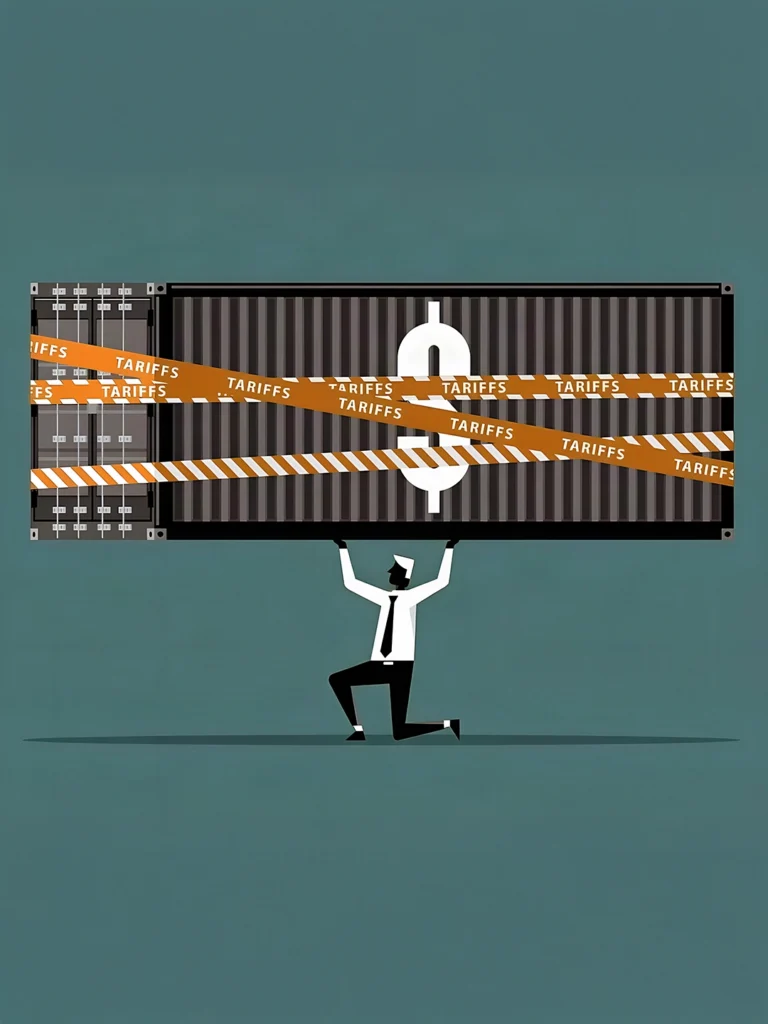
The tariff bill is only half your exposure — the enforcement case is the other half.
IEEPA is no longer the center of the tariff map. Section 301, Section 122, Section 232, and AD/CVD now carry the exposure. Executive Order 14411 and a new customs enforcement Executive Order have raised the enforcement stakes alongside them.
Misjudge country of origin, and EAPA and transshipment review follow. Miss a UFLPA Entity List addition, and CBP detains the shipment. Sit out the IEEPA refund challenges, and the class-basis efforts proceed without you. A trade fraud task force now coordinates enforcement, and artificial intelligence has entered the process.
You leave with a mitigation toolkit you can price: drawback, foreign-trade zones, bonded warehouses, first sale valuation, Section 232 U.S.-content exceptions, and onshoring agreements. You also leave with a working read on where the litigation stands. That judgment — which lever fits which importer — is not something a model returns.
Key Topics
- Post-IEEPA Exposure Map Identify whether Section 301, Section 122, Section 232, or AD/CVD — with its related EAPA risk — is actually driving the duty bill.
- Core Duty Reduction Tools Apply duty drawback, foreign-trade zones, bonded warehouses, first sale valuation, and strategic country-of-origin planning to reduce liability.
- Regime-Specific Mitigation Evaluate Section 232 U.S.-content exceptions, China Board of Trade HS-based action, and onshoring agreements as supply-chain restructuring options.
- New Enforcement Posture Adjust compliance to the new customs enforcement Executive Order, the trade fraud task force, the White House transshipment report, and the use of artificial intelligence in customs enforcement.
- UFLPA and WRO Risk Track UFLPA Entity List expansion, Withhold Release Order enforcement, and UFLPA litigation before a detention reaches a client shipment.
- Trade Litigation Posture Decide whether to pursue the IEEPA refund challenges, including class-basis efforts, and where Section 122 and Section 301 challenges now stand.
Speakers
John M. Foote
Sidley Austin LLP
John M. Foote focuses his practice on U.S. international trade law and policy, counseling companies through the complex tariff and trade compliance challenges of importing goods into the United States. He helps businesses navigate high-stakes enforcement actions, design practical compliance solutions, and resolve disputes with U.S. Customs and Border Protection (CBP). Drawing on years of experience leading a customs practice, John is a trusted advisor on tariff compliance and mitigation and on the increasingly critical area of forced labor supply chain compliance.
Full profile
Experience
John has guided many clients through trade enforcement proceedings before CBP, including civil penalty proceedings, customs audits, Uyghur Forced Labor Prevention Act (UFLPA) detentions, forced labor trade enforcement, and Enforce and Protect Act (EAPA) investigations, and has represented companies in litigation before the U.S. Court of International Trade and the U.S. Court of Appeals for the Federal Circuit. He advises on tariff classification, valuation, country-of-origin determinations, preferential trade arrangements, tariff exclusions, duty drawback, and supply chain due diligence to reduce trade costs and minimize disruption. Representative matters include assisting numerous clients in rectifying non-compliant trade activity through voluntary self-disclosures to CBP; guiding leading consumer goods companies in building supply chain compliance frameworks free of ties to Xinjiang or forced Uyghur labor; representing a U.S. importer in a tariff classification dispute before the Court of International Trade that resulted in a voluntary reversal by CBP and a multimillion-dollar refund; and obtaining a full revocation of a Withhold Release Order to clear a company of forced labor allegations under Section 307 of the Tariff Act. He has also helped importers design "first sale" duty savings programs and partnered with a social media company to design a global public consultations process that shaped the creation of its content-moderation Oversight Board.Education
John earned his J.D. and an M.A. from the University of Kansas, both in 2008, following his B.A. from Miami University in Oxford, Ohio, in 2002. He is admitted to practice in the District of Columbia and New York. Early in his career, he clerked for the Honorable Gregory W. Carman at the U.S. Court of International Trade.Recognition
A recognized authority on customs and trade enforcement, John joined Sidley as a partner in October 2025 to help expand the firm's Global Arbitration, Trade and Advocacy practice. He is a frequent commentator on trade policy developments, quoted in outlets such as Bloomberg Law and co-authoring Sidley analyses on significant developments including the U.S. Supreme Court's International Emergency Economic Powers Act tariff decision.Professional involvement
John is a member of the Customs and International Trade Bar Association. Alongside his client work, he maintains a strong pro bono commitment, representing Uyghur and other asylum seekers and advancing efforts to combat forced labor in global supply chains. Flynn K. Madden
Sidley Austin LLP
Flynn K. Madden focuses his practice on international trade and customs law, advising companies on all aspects of U.S. customs law and the substantive matters involved in importing merchandise into the United States. Drawing on hands-on experience from inside the federal government, Flynn brings a practical, agency-informed perspective to helping importers navigate the complex regulatory landscape of cross-border trade.
Full profile
Experience
At CBP, Flynn worked on administrative rulings, petitions, and protests, and advised agency officials on admissibility determinations for merchandise being imported into the United States. In private practice at Sidley, he applies that experience to counsel companies on the full range of U.S. customs matters related to importation—advising on classification, admissibility, and compliance, and helping clients resolve issues before Customs and the other agencies that govern international trade.Education
Flynn earned his J.D. from Washington and Lee University School of Law in 2020 and his B.A. from the College of William & Mary in 2016. He is admitted to practice in the District of Columbia.Recognition
Flynn's distinctive credential is his government service: before entering private practice, he served as an Attorney-Advisor with U.S. Customs and Border Protection (CBP) headquarters in the Office of Trade, Regulations and Rulings Directorate—experience that gives him firsthand insight into how the agency approaches the issues his clients face. He is also a contributing author on Sidley's White Collar Watch blog, writing on developments such as executive action to enhance customs enforcement.Professional involvement
As a member of Sidley's Global Arbitration, Trade and Advocacy practice, Flynn works across customs, anti-dumping and countervailing duties and trade remedies, global policy and advocacy, international intellectual property, and ITC Section 337 matters. He contributes to the firm's thought leadership on customs enforcement and trade regulation, helping clients stay ahead of a rapidly evolving policy environment.Agenda
-
The Post-IEEPA Tariff Landscape and Mitigation Strategies
This session will be divided evenly between the current tariff landscape and practical tariff mitigation strategies. The first half will provide an overview of the principal sources of tariff and trade-remedy exposure in the post-IEEPA environment, including current Section 301 tariffs and investigations, Section 122 tariffs, key issues in Section 232 exposure, and AD/CVD exposure and related Enforce and Protect Act (EAPA) risk. The second half will focus on practical strategies for reducing or managing tariff liability, including duty drawback, foreign-trade zones and bonded warehouses, first sale valuation, strategic country-of-origin planning, and novel mitigation opportunities available under particular tariff regimes, including U.S.-content exceptions to Section 232 tariffs, China Board of Trade HS-based action, and onshoring agreements.
John M. Foote
-
Customs Enforcement and Judicial Oversight: New Enforcement Priorities and Trade Litigation
This session will be divided evenly between emerging customs enforcement priorities and judicial oversight of tariffs and trade enforcement. The first half will examine Executive Order 14411, the administration’s new Executive Order to strengthen customs enforcement, the trade fraud task force, the new White House transshipment report, the growing use of artificial intelligence in customs enforcement, and UFLPA and Withhold Release Order enforcement developments, including expansion of the UFLPA Entity List. The second half will include guidance on how to navigate this new enforcement landscape, and provide an update on trade litigation, including the IEEPA refund legal challenges and efforts to secure refunds on a class basis, challenges to Section 122 tariffs, Section 301 challenges, and UFLPA litigation.
Flynn K. Madden
MCLE Credits
-
Alabama
Approved for Self-Study Credits
2 General
-
Alaska
Approved for CLE Credits
2 General
Our programs are CLE-eligible through Alaska’s recognition of multi-jurisdictional reciprocity.
-
Arizona
Approved for CLE Credits
2 General
-
Arkansas
Approved for CLE Credits
2 General
-
California
Approved for CLE Credits
2 General
-
Colorado
Pending CLE Approval
2 General
-
Connecticut
Approved for CLE Credits
2 General
-
Delaware
Pending CLE Approval
2 General
-
District of Columbia
No MCLE Required
2 CLE Hour(s)
-
Florida
Pending CLE Approval
2 General Hours
Receive CLE credit in Florida via attorney submission.
-
Georgia
Approved for CLE Credits
2 General
-
Hawaii
Approved for CLE Credits
2 General
-
Idaho
Pending CLE Approval
2 General
-
Illinois
Approved for Self-Study Credits
2 General
-
Indiana
Approved For On-Demand Credits
2 General
-
Iowa
Pending CLE Approval
2 General
-
Kansas
Pending CLE Approval
2 Substantive
-
Kentucky
Pending CLE Approval
2 General
-
Louisiana
Pending CLE Approval
2 General
-
Maine
Pending CLE Approval
2 General
-
Maryland
No MCLE Required
2 CLE Hour(s)
-
Massachusetts
No MCLE Required
2 CLE Hour(s)
-
Michigan
No MCLE Required
2 CLE Hour(s)
-
Minnesota
Pending CLE Approval
2 General
-
Mississippi
Pending CLE Approval
2 General
-
Missouri
Approved for Self-Study Credits
2.4 General
-
Montana
Pending CLE Approval
2 General
-
Nebraska
Pending CLE Approval
2 General
myLawCLE reports attendance to Nebraska on each attorney’s behalf for all programs. Please do not self-report.
-
Nevada
Approved for Self-Study Credits
2 General
-
New Hampshire
Approved for CLE Credits
120 General minutes
As of July 1, 2014, the NHMCLE Board no longer provides pre- or post-approval of courses. Attendees must self-determine whether a program is eligible for credit, and self-report their attendance online at www.nhbar.org, based on qualification provisions of Rule 53.
-
New Jersey
Approved for CLE Credits
2 General
Our programs are CLE-eligible through New Jersey’s recognition of multi-jurisdictional reciprocity, except for the courses required under BCLE Reg. 201:2
-
New Mexico
Approved for Self-Study Credits
2 General
-
New York
Approved for CLE Credits
2 General
Our programs are CLE-eligible through New York’s Approved Jurisdiction Group “B”.
-
North Carolina
Pending CLE Approval
2 General
-
North Dakota
Approved for CLE Credits
2 General
Our programs are CLE-eligible through North Dakota’s recognition of multi-jurisdictional reciprocity. Section 1, Policy 1.14
-
Ohio
Approved for Self-Study Credits
2 General
-
Oklahoma
Pending CLE Approval
2.5 General
-
Oregon
Pending CLE Approval
2 General
-
Pennsylvania
Approved for Self-Study Credits
2 General
-
Rhode Island
Pending CLE Approval
2.5 General
-
South Carolina
Pending CLE Approval
2 General
-
South Dakota
No MCLE Required
2 CLE Hour(s)
-
Tennessee
Approved for Self-Study Credits
2 General
-
Texas
Approved for CLE Credits
2 General
-
Utah
Pending CLE Approval
2 General
-
Vermont
Approved for CLE Credits
2 General
-
Virginia
Pending CLE Approval
2 General
-
Washington
Approved via Attorney Submission
2 Law & Legal Hours
Receive CLE credit in Washington via attorney submission.
-
West Virginia
Pending CLE Approval
2.4 General
-
Wisconsin
Approved for Self-Study Credits
2 General
-
Wyoming
Pending CLE Approval
2 General
No state matches.