
Live Video-Broadcast · November 24, 2026
Beyond the Chatbot: AI Agents for Defense Firms, Claims Teams, and Legal Departments — Governing AI That Acts, Not Just Answers
AI agents now act inside claims files and case systems, and one unchecked action can send an email, overwrite a file note, or move a reserve. Learn to set agent permissions, place approval gates, catch failure modes, and pilot agentic workflows defensibly.
2:30 - 4:40 PM EST 1:30 - 3:40 PM CST 12:30 - 2:40 PM MST 11:30 AM - 1:40 PM PST
 Frank Ramos Goldberg Segalla
About this program
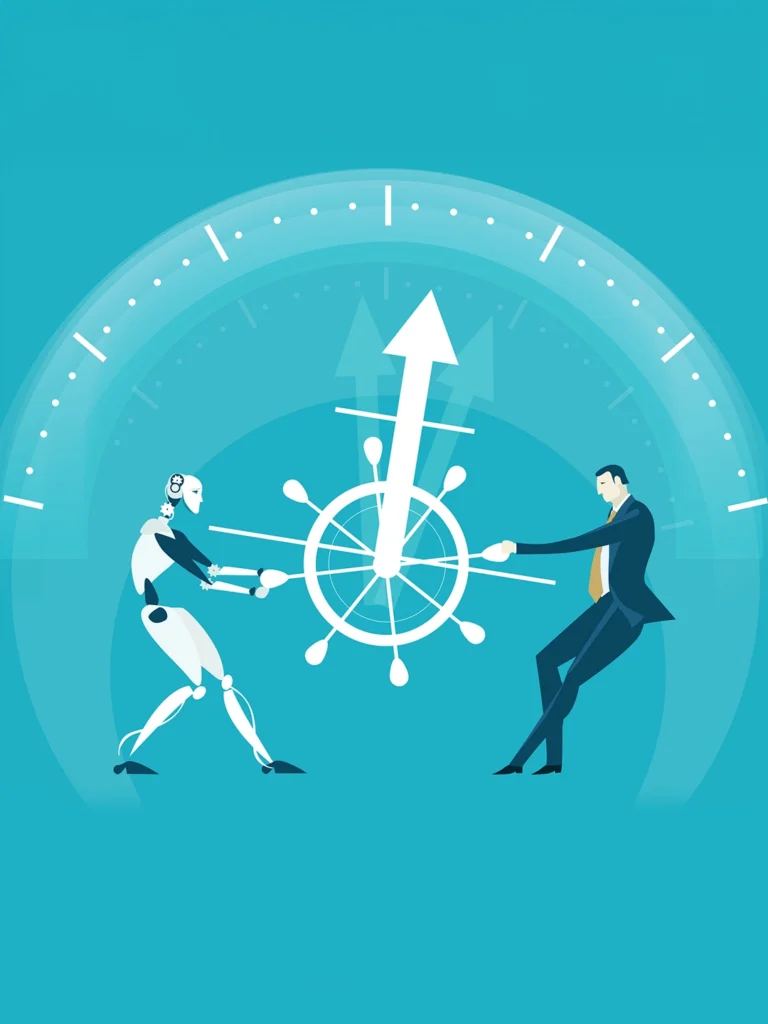
Course Overview
Once AI Can Act, the Boundaries Must Be Designed Before It Does
A chatbot waits for a prompt and returns content. An agent pursues a goal, chooses and sequences tools, and keeps acting across steps. In defense firms, claims departments, and legal departments, agentic AI is moving from experiment to operating infrastructure. Every added action creates another place for things to go wrong.
Let an agent send what it drafted and unreviewed communication reaches the outside world. Skip hard matter boundaries and documents land in the wrong file. Trust a confident answer and a silent omission slips through. Ignore prompt injection and stale authority and errors compound across steps. Regulators are watching too, including the NAIC's developing AI examination framework for claims organizations.
Attendees walk out with a step-by-step map of an agentic claim workflow, a permissions and approval-gate design, a failure-mode checklist, and a pilot-test-govern playbook capped by ten rules for agentic AI in legal and claims work. It is practitioner judgment about where human review must sit, which no tool can supply for itself.
Key Topics
- Agents Versus Chatbots Why AI that acts, not just answers, changes the risk calculus for legal and claims work.
- Autonomy and Reversibility How the two-way door / one-way door test sets how much an agent may do on its own.
- The Agentic Claim Workflow What the agent must never assume as a civil complaint moves from intake to assignment packet.
- Permissions and Approval Gates How least privilege and read, draft, write, and send separation put review where consequences begin.
- Failure Modes How to catch confident wrong answers, silent omissions, wrong-matter retrieval, prompt injection, and automation bias.
- Ethics and Defensible Rollout How competence, confidentiality, supervision, and the NAIC framework shape pilots, red-teaming, and incident response.
Speakers
Frank Ramos
Goldberg Segalla
Frank Ramos is a Partner in the Miami office of Goldberg Segalla, where he has defended clients in civil litigation for more than 26 years across retail, product liability, premises liability, trucking, insurance, and commercial disputes. He regularly writes and presents on helping clients adopt artificial intelligence safely, effectively, and lawfully. He is especially well suited to this program: he has written on AI agents in law firms and legal operations for Bloomberg Law, served as Vice Chair of the FDCC AI Committee, and has presented on using AI in claims without creating bad-faith exposure, bringing the perspective of a defense trial lawyer who guides both law firms and insurers through AI adoption.
Full profile
Experience
Mr. Ramos helps clients adopt AI safely and lawfully, navigate AI regulation, and litigate AI-related disputes. His recent writing covers running an AI pilot before an organization-wide rollout and using AI to avoid, rather than create, bad faith. As a trial lawyer, he has taken numerous cases and arbitrations to verdict or award, defending retail and hospitality businesses, manufacturers, and distributors in injury, trucking, product liability, and commercial disputes.Education
Mr. Ramos earned his J.D., magna cum laude, from the University of Miami School of Law in 1997 and his B.A., summa cum laude, from Florida International University in 1993. He is admitted in Florida and before the U.S. District Courts for the Middle and Southern Districts of Florida, and holds a Martindale-Hubbell AV Preeminent rating.Recognition
The Florida Bar named Mr. Ramos its 2025 Mentor of the Year, and Best Lawyers in America has named him Miami's "Lawyer of the Year" in Personal Injury and Product Liability Litigation – Defendants. He has been recognized by Florida Super Lawyers every year since 2013, serves as 2026 Secretary-Treasurer of the Federation of Defense and Corporate Counsel, and is a past President of the Florida Defense Lawyers Association.Professional involvement
Mr. Ramos is a member of DRI's Artificial Intelligence Task Force. He has written more than 500 articles and 20 books and has given over 400 presentations to lawyers and claims professionals, including "When AI Meets Claims: Navigating Good Faith and Avoiding Legal Risk" at the CLM Alliance Annual Conference.Agenda
-
From Answering to Acting: What an AI Agent Is, and a Step-by-Step Walkthrough of the Agentic Claim Workflow
This session gives attorneys and claims professionals a precise understanding of agentic AI — the goal, context, tools, decision logic, and oversight that make up every agentic workflow — and the two-way door / one-way door test for deciding how much autonomy an agent should get. It then follows a realistic ‘CaseFlow Agent’ through a new civil complaint: intake, matter confirmation, document classification, deadline extraction, fact mapping, issue screening, the assignment packet, approval routing, task creation, and updating the system of record — with the stop-points and never-assume rules marked at every step.
Frank Ramos
-
Permissions, Failure Modes, and Governance: The Control Architecture That Makes Agentic AI Defensible
This session builds the control architecture around the agent. It covers permissions as the real foundation — least privilege, read/draft/write/send separation, approval gates placed where consequences begin, and materiality thresholds; the nine failure modes that matter in practice, from the confident wrong answer and the silent omission to prompt injection, compounding errors, automation bias, and vendor changes; the ethics and regulatory overlay, including professional responsibility, confidentiality, billing, and the NAIC’s developing AI risk examination framework for claims organizations; and the deployment playbook: narrow pilots, red-teaming, production scorecards, change management, and incident response.
Frank Ramos
MCLE Credits
-
Alabama
Approved for CLE Credits
2 General
-
Alaska
Approved for CLE Credits
2 General
Our programs are CLE-eligible through Alaska’s recognition of multi-jurisdictional reciprocity.
-
Arizona
Approved for CLE Credits
2 General
-
Arkansas
Approved for CLE Credits
2 General
-
California
Approved for CLE Credits
2 General
-
Colorado
Pending CLE Approval
2 General
-
Connecticut
Approved for CLE Credits
2 General
-
Delaware
Pending CLE Approval
2 General
-
District of Columbia
No MCLE Required
2 CLE Hour(s)
-
Florida
Pending CLE Approval
2 General
-
Georgia
Approved for CLE Credits
2 General
-
Hawaii
Approved for CLE Credits
2 General
-
Idaho
Pending CLE Approval
2 General
-
Illinois
Pending CLE Approval
2 General
-
Indiana
Pending CLE Approval
2 General
-
Iowa
Pending CLE Approval
2 General
-
Kansas
Pending CLE Approval
2 Substantive
-
Kentucky
Pending CLE Approval
2 General
-
Louisiana
Pending CLE Approval
2 General
-
Maine
Pending CLE Approval
2 General
-
Maryland
No MCLE Required
2 CLE Hour(s)
-
Massachusetts
No MCLE Required
2 CLE Hour(s)
-
Michigan
No MCLE Required
2 CLE Hour(s)
-
Minnesota
Pending CLE Approval
2 General
-
Mississippi
Pending CLE Approval
2 General
-
Missouri
Approved for CLE Credits
2.4 General
-
Montana
Pending CLE Approval
2 General
-
Nebraska
Pending CLE Approval
2 General
myLawCLE reports attendance to Nebraska on each attorney’s behalf for all programs. Please do not self-report.
-
Nevada
Pending CLE Approval
2 General
-
New Hampshire
Approved for CLE Credits
120 General minutes
As of July 1, 2014, the NHMCLE Board no longer provides pre- or post-approval of courses. Attendees must self-determine whether a program is eligible for credit, and self-report their attendance online at www.nhbar.org, based on qualification provisions of Rule 53.
-
New Jersey
Approved for CLE Credits
2 General
Our programs are CLE-eligible through New Jersey’s recognition of multi-jurisdictional reciprocity, except for the courses required under BCLE Reg. 201:2
-
New Mexico
Approved for CLE Credits
2 General
-
New York
Approved for CLE Credits
2 General
Our programs are CLE-eligible through New York’s Approved Jurisdiction Group “B”.
-
North Carolina
Pending CLE Approval
2 General
-
North Dakota
Approved for CLE Credits
2 General
Our programs are CLE-eligible through North Dakota’s recognition of multi-jurisdictional reciprocity. Section 1, Policy 1.14
-
Ohio
Approved for CLE Credits
2 General
-
Oklahoma
Pending CLE Approval
2.5 General
-
Oregon
Pending CLE Approval
2 General
-
Pennsylvania
Approved for CLE Credits
2 General
-
Rhode Island
Pending CLE Approval
2.5 General
-
South Carolina
Pending CLE Approval
2 General
-
South Dakota
No MCLE Required
2 CLE Hour(s)
-
Tennessee
Approved for CLE Credits
2 General
-
Texas
Approved for CLE Credits
2 General
-
Utah
Pending CLE Approval
2 General
-
Vermont
Approved for CLE Credits
2 General
-
Virginia
Not Eligible
2 General Hours
-
Washington
Approved via Attorney Submission
2 Law & Legal Hours
Receive CLE credit in Washington via attorney submission.
-
West Virginia
Pending CLE Approval
2.4 General
-
Wisconsin
Pending CLE Approval
2 General
-
Wyoming
Pending CLE Approval
2 General
No state matches.