
Live Video-Broadcast · December 15, 2026
AI Products Liability: The Meta and OpenAI Lawsuits and the Next Wave of Litigation
Meta and OpenAI now face products liability suits over AI-related harms, and the claims are spreading. Apply traditional products liability theories to AI, track California’s coordination of OpenAI cases, and assess client exposure in healthcare and employment.
12 - 2:10 PM EST 11 AM - 1:10 PM CST 10 AM - 12:10 PM MST 9 - 11:10 AM PST

 Harshita K. Ganesh Womble Bond DickinsonKhaled Taqi-Eddin Womble Bond Dickinson
About this program
Course Overview
AI May Be Heading for Its Tobacco Moment
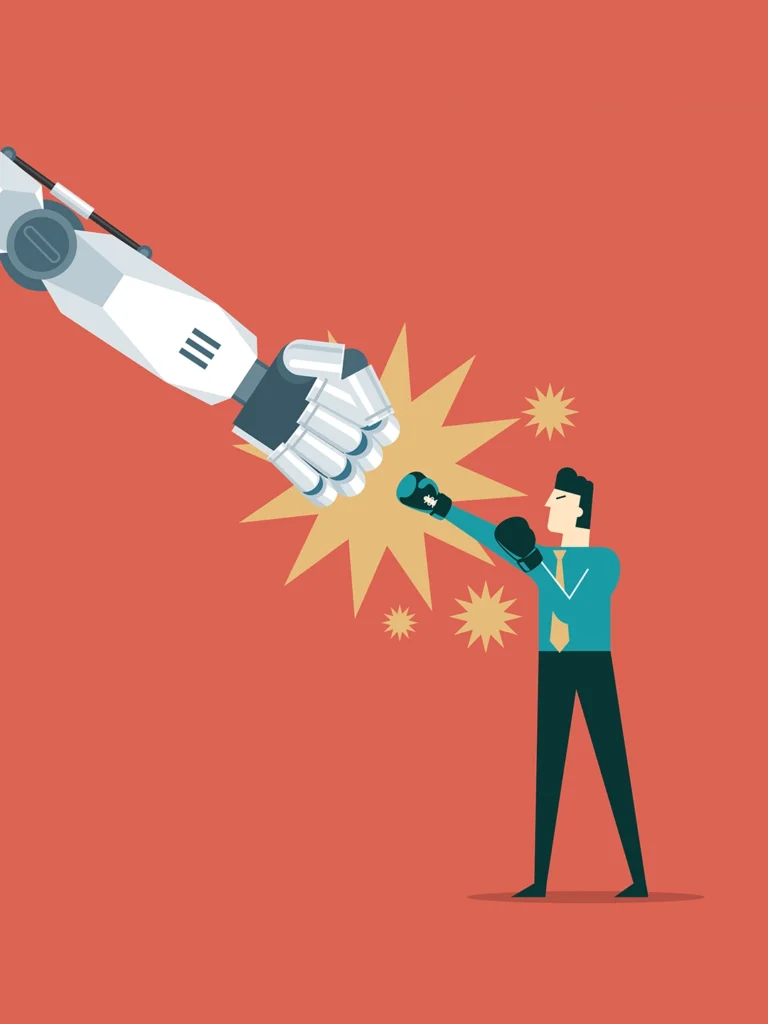
The lawsuits against AI companies are no longer hypothetical. Recent litigation involving Meta and OpenAI has put major technology companies on the receiving end of products liability claims. In California, the OpenAI cases are now coordinated, with implications that reach beyond a single courthouse. Plaintiffs are applying traditional products liability theories to AI-related harms.
The exposure is already moving across industries. Compare AI litigation to the tobacco playbook, and you can anticipate the next moves. Watch the California coordination, and you see where the OpenAI cases may lead. Deploy AI in healthcare, and products liability claims may follow. Use AI in employment, and the same theories may reach your clients.
You walk out with a working framework for applying traditional products liability theories to AI-related harms. You will know how to track the California coordination of OpenAI cases and what it signals for the next filings. You will also be ready to assess exposure for clients in healthcare and employment. This is litigation judgment from practitioners who handle mass tort and product liability matters, not a doctrine summary a chatbot could produce.
Key Topics
- Meta and OpenAI Lawsuits How the recent litigation involving Meta and OpenAI changes the way you evaluate the legal significance of claims against major AI companies.
- California OpenAI Coordination How the California coordination of OpenAI cases, and its broader implications, affects your strategy in AI-related litigation.
- Traditional Theories, New Harms How traditional products liability theories apply to AI-related harms, and what that changes in how you frame a claim or a defense.
- The Tobacco Playbook How comparing AI litigation with the tobacco products liability playbook helps you anticipate how these cases will develop.
- Emerging Strategies and Trends How emerging litigation strategies, anticipated products liability trends, and potential future developments in AI-related liability shape the advice you give clients now.
- Healthcare and Employment Exposure How AI products liability developments create potential exposure for products liability claims in the healthcare and employment industries.
Speakers
Harshita K. Ganesh
Womble Bond Dickinson
Harshita K. Ganesh is Counsel at Womble Bond Dickinson, where she focuses on mass tort and general civil litigation, with concentrations in product liability, toxic torts, employment law, and multidistrict litigation. She represents corporate clients in complex disputes and advises them throughout all phases of litigation. Her work and publications address emerging legal issues involving artificial intelligence, including AI accountability, vendor risk, and the application of traditional products liability principles to AI technologies.
Full profile
Experience
Harshita has experience handling complex federal and state court litigation, including multidistrict litigation, product liability matters, toxic torts, and employment disputes. Her litigation experience includes settlement negotiations, dispositive motions, responsive pleadings, depositions, large-volume document productions, eDiscovery, and pretrial procedures. Earlier in her career, she was a Summer Associate at Quinn Emanuel Urquhart & Sullivan and an Academic Legal Intern with the Trial Bureau Felony Division at the Harris County District Attorney’s Office.Education
Harshita earned her J.D. from Georgetown University Law Center in 2024, where she served as a Senior Editor of the American Criminal Law Review and published scholarship examining emerging legal issues at the intersection of technology, constitutional rights, and public policy. She also holds a B.S. in Chemical Engineering, with a specialization in Biochemical Engineering, from Katholieke Universiteit Leuven in Belgium. She is admitted to the Massachusetts and California Bars, the U.S. District Court for the District of Massachusetts, the U.S. District Court for the Central District of California, and the U.S. Court of Appeals for the First Circuit.Recognition
Harshita has written on emerging AI liability issues, including the application of products liability principles to artificial intelligence and the litigation risks associated with AI technologies. Her academic work also includes a contribution credited in Victoria Nourse’s The Common Law’s Resistance to Gender Violence, published in the Iowa Law Review.Professional involvement
Harshita has published articles on AI accountability, AI vendor risks, and emerging AI litigation issues. Her writing has appeared in Law360, Massachusetts Lawyers Weekly, and Corporate Counsel. She has spoken at the WIPL Conference on Legal Technology and AI Innovation, moderated a panel on litigation in the age of AI at the ALM General Counsel Conference, and co-presented at ARMA InfoNext 2026 on AI and information governance. She has also appeared on legal podcasts discussing AI adoption and implementation in law firms. Khaled Taqi-Eddin
Womble Bond Dickinson
Khaled Taqi-Eddin is Senior Counsel in the San Francisco office of Womble Bond Dickinson, where he defends corporate clients in product liability, toxic tort, and mass tort litigation. Over more than 22 years in practice, he has tried more than 40 high-stakes cases as lead counsel in courts across the United States. His broader litigation practice also covers employment law and sexual battery claims.
Full profile
Experience
Khaled's practice centers on product liability and toxic and mass tort litigation on behalf of major corporations. He served as lead trial counsel for Cambria Co. LLC in Tyler Jordan and Caitlin Jordan v. Cambria Co. LLC, Case No. 2024CV31180, a three-week jury trial in Denver, Colorado, in which the jury found on April 30, 2026 that Cambria was not negligent and that its quartz surface products were not defective. He has also acted as trial counsel defending asbestos claims nationwide.Beyond his product liability work, Khaled advises and defends California employers of all sizes on employment-related issues, and he represents landowners, developers, and contractors in real estate and construction litigation.
Education
Khaled earned his J.D. at Golden Gate University School of Law and his B.A. at San Francisco State University. He is admitted to practice in California and Hawaii, and before the U.S. District Courts for the Eastern, Northern, and Southern Districts of California.Recognition
Khaled has held a national leadership role in mass tort defense, serving as national coordinating counsel for corporate defendants in asbestos litigation across the country.Professional involvement
Khaled is a member of DRI, the State Bar of California, and the Hawaii State Bar Association.Agenda
-
Suing AI Companies: Meta, OpenAI, and the Next Wave of Products Liability Claims
Lawsuits against AI companies are testing how far traditional products liability law can reach. This session examines recent litigation involving Meta and OpenAI, the emerging claims against major technology companies, and the legal and business implications of these cases. The speakers also address the California coordination of OpenAI cases and its broader implications, and walk through how traditional products liability theories are being applied to AI-related harms.
Harshita K. Ganesh, Khaled Taqi-Eddin
-
AI's Tobacco Moment: The Future of Products Liability and Exposure Across Industries
AI products liability litigation may be following a familiar path. This session explores how these cases compare with the tobacco products liability playbook, the litigation strategies now emerging, and the products liability trends the speakers anticipate. It then turns to potential future developments in AI-related liability and what they mean for products liability claims in the healthcare and employment industries, where AI use may bring new exposure.
Harshita K. Ganesh, Khaled Taqi-Eddin
MCLE Credits
-
Alabama
Approved for CLE Credits
2 General
-
Alaska
Approved for CLE Credits
2 General
Our programs are CLE-eligible through Alaska’s recognition of multi-jurisdictional reciprocity.
-
Arizona
Approved for CLE Credits
2 General
-
Arkansas
Approved for CLE Credits
2 General
-
California
Approved for CLE Credits
2 General
-
Colorado
Pending CLE Approval
2 General
-
Connecticut
Approved for CLE Credits
2 General
-
Delaware
Pending CLE Approval
2 General
-
District of Columbia
No MCLE Required
2 CLE Hour(s)
-
Florida
Pending CLE Approval
2 General Hours
Receive CLE credit in Florida via attorney submission.
-
Georgia
Approved for CLE Credits
2 General
-
Hawaii
Approved for CLE Credits
2 General
-
Idaho
Pending CLE Approval
2 General
-
Illinois
Pending CLE Approval
2 General
-
Indiana
Pending CLE Approval
2 General
-
Iowa
Pending CLE Approval
2 General
-
Kansas
Pending CLE Approval
2 Substantive
-
Kentucky
Pending CLE Approval
2 General
-
Louisiana
Pending CLE Approval
2 General
-
Maine
Pending CLE Approval
2 General
-
Maryland
No MCLE Required
2 CLE Hour(s)
-
Massachusetts
No MCLE Required
2 CLE Hour(s)
-
Michigan
No MCLE Required
2 CLE Hour(s)
-
Minnesota
Pending CLE Approval
2 General
-
Mississippi
Pending CLE Approval
2 General
-
Missouri
Approved for CLE Credits
2.4 General
-
Montana
Pending CLE Approval
2 General
-
Nebraska
Pending CLE Approval
2 General
myLawCLE reports attendance to Nebraska on each attorney’s behalf for all programs. Please do not self-report.
-
Nevada
Pending CLE Approval
2 General
-
New Hampshire
Approved for CLE Credits
120 General minutes
As of July 1, 2014, the NHMCLE Board no longer provides pre- or post-approval of courses. Attendees must self-determine whether a program is eligible for credit, and self-report their attendance online at www.nhbar.org, based on qualification provisions of Rule 53.
-
New Jersey
Approved for CLE Credits
2 General
Our programs are CLE-eligible through New Jersey’s recognition of multi-jurisdictional reciprocity, except for the courses required under BCLE Reg. 201:2
-
New Mexico
Approved for CLE Credits
2 General
-
New York
Approved for CLE Credits
2 General
Our programs are CLE-eligible through New York’s Approved Jurisdiction Group “B”.
-
North Carolina
Pending CLE Approval
2 General
-
North Dakota
Approved for CLE Credits
2 General
Our programs are CLE-eligible through North Dakota’s recognition of multi-jurisdictional reciprocity. Section 1, Policy 1.14
-
Ohio
Approved for CLE Credits
2 General
-
Oklahoma
Pending CLE Approval
2.5 General
-
Oregon
Pending CLE Approval
2 General
-
Pennsylvania
Approved for CLE Credits
2 General
-
Rhode Island
Pending CLE Approval
2.5 General
-
South Carolina
Pending CLE Approval
2 General
-
South Dakota
No MCLE Required
2 CLE Hour(s)
-
Tennessee
Approved for CLE Credits
2 General
-
Texas
Approved for CLE Credits
2 General
-
Utah
Pending CLE Approval
2 General
-
Vermont
Approved for CLE Credits
2 General
-
Virginia
Not Eligible
2 General Hours
-
Washington
Approved via Attorney Submission
2 Law & Legal Hours
Receive CLE credit in Washington via attorney submission.
-
West Virginia
Pending CLE Approval
2.4 General
-
Wisconsin
Pending CLE Approval
2 General
-
Wyoming
Pending CLE Approval
2 General
No state matches.