
Live Video-Broadcast · December 16, 2026
Prior Inconsistent Statements as Proof in Federal Civil Trials: Pretrial Lists, Foundations, and Jury Instructions
Starting December 1, 2026, a witness's unsworn text, adjuster recording or incident report can prove its truth at a federal civil trial. Learn to inventory and list those statements, draft motions in limine for either side, lay foundations, and revise the jury instruction.
2:30 - 4:40 PM EST 1:30 - 3:40 PM CST 12:30 - 2:40 PM MST 11:30 AM - 1:40 PM PST
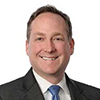
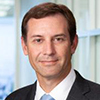 Todd A. Pickles Greenberg Traurig, LLPAaron Z. Tobin Condon Tobin
About this program

Course Overview
The Statement Your Witness Disowns Is Now Evidence
Amended Federal Rule of Evidence 801(d)(1)(A) takes effect on December 1, 2026, and the oath requirement ends. A witness's earlier unsworn text, adjuster recording, HR interview notes or incident report now proves its truth whenever it conflicts with trial testimony. The committee note rests on the California Evidence Code § 1235 model.
The change reaches every stage of a federal civil case. Final pretrial orders entered before December 1 may need Rule 16(e) relief. A statement that both impeaches and proves a fact forces a list-or-hold decision under Rule 26(a)(3). Statements someone else recorded need their own proof route. A witness who admits, denies or forgets the statement calls for a different foundation. The stock credibility-only instruction no longer fits. And a Rule 50(a) motion can turn on whether a disowned statement alone carries an element.
You walk out with working tools, not a doctrine summary: a statement-inventory matrix, a list-or-hold decision tree, motion-in-limine templates for the offering and opposing party, foundation outlines for the denied and the forgotten statement, a corrected-instruction redline, and a Rule 50(a) paragraph that names the element.
Key Topics
- Committee Note Changes How the final committee note to amended Rule 801(d)(1)(A) changes which unsworn statements now come in for their truth.
- Inventory and Proof Routes How to inventory statements by who made the record and prove a statement was made through a recording or another person's notes.
- List-or-Hold Decisions How to decide whether to list a dual-use statement and how to draft or oppose the motion in limine for either party.
- Pending Cases and Statement-Taking How to seek relief from a final pretrial order entered before December 1 and how to record, sign and take statements from now on.
- Trial Foundations How to handle the witness who admits, denies or forgets the statement, from the order of proof to Rule 607 and the written statement in the jury room.
- Instructions and Sufficiency How to replace the credibility-only instruction, argue the statement in closing, and test whether a disowned statement alone carries an element under Rule 50(a) or Rule 56(c)(2).
Speakers
Todd A. Pickles
Greenberg Traurig, LLP
Todd A. Pickles is a shareholder in Greenberg Traurig’s Sacramento office and a member of the firm’s Trial Practice Group. He has served as trial counsel in 19 jury trials and multiple bench trials and has argued before the Ninth Circuit on numerous occasions. He spent twelve years at the U.S. Attorney’s Office for the Eastern District of California, serving in both its Civil Division and its Criminal Division.
Full profile
Experience
Todd was lead trial counsel in Carlson v. Coldwell Solar, Inc., a three-week California state court trial on common law and statutory claims that included trade secret misappropriation. He was also lead defense counsel in United States v. Schena, which included a four-week federal health care fraud and securities fraud jury trial.As an Assistant U.S. Attorney, he worked in the Civil Division from 2007 to 2010 and in the Criminal Division from 2010 to 2019, investigating and prosecuting securities, investment, bank, health care and identity fraud as well as public corruption. He was lead prosecutor from indictment through trial in United States v. Martin, an international bribery and public corruption case, and lead prosecutor in United States v. Carpoff, a billion-dollar securities and tax fraud scheme involving solar credits.
Today his practice covers white collar matters and independent investigations, enforcement actions brought by government regulators in federal court and before administrative agencies, and complex business litigation in federal and state courts and arbitrations, including the prosecution and defense of trade secret claims.
Education
Todd earned his J.D., summa cum laude, from the University of San Francisco School of Law in 2001, where he served as Editor-in-Chief of the University of San Francisco Law Review. He received his B.A. in International Relations, cum laude, from Georgetown University in 1997, together with a Certificate in Russian and East European Studies. After law school, he clerked for the Hon. Saundra Brown Armstrong of the U.S. District Court for the Northern District of California from 2001 to 2002. He is admitted to practice in California.Recognition
Sacramento Magazine named Todd a Top Lawyer in Criminal Defense: White-Collar from 2021 through 2023. At the U.S. Attorney's Office, he served as Civil Rights and Hate Crimes Coordinator from 2015 to 2019 and as Public Corruption Coordinator from 2017 to 2019.Professional involvement
Todd has taught Criminal Procedure as an adjunct professor at McGeorge School of Law since 2020 and was named Adjunct Professor of the Year in 2021. He lectures regularly on federal civil rights and hate-crimes enforcement, has provided training on white-collar prosecutions, and contributes to Greenberg Traurig podcasts on the criminal aspects of trade secret misappropriation and on employment investigations. Aaron Z. Tobin
Condon Tobin
Aaron Z. Tobin is a Member of Condon Tobin in Dallas, where he leads the firm’s complex litigation practice. His jury verdicts include take-nothing defense verdicts for a financial services company on Sarbanes-Oxley and Dodd-Frank whistleblower claims and for a consulting firm on an age discrimination claim. He represents Fortune 500 companies, private equity firms and entrepreneurs across the United States.
Full profile
Experience
Aaron is a trial lawyer who handles high-stakes, bet-the-company cases. Beyond his whistleblower and age discrimination defense verdicts, he won a take-nothing jury verdict for a technology company on a trademark infringement claim, a $67 million fraud jury verdict for investor clients in an oil and gas securities case, and a multi-million-dollar jury verdict for a buyer in a real estate fraud case tied to an acquisition.He obtained a federal court dismissal of a civil rights case that the U.S. Court of Appeals for the Fifth Circuit affirmed, and summary judgment in New York federal court on breach of contract claims for a private equity client. His practice spans private equity and family office disputes, corporate governance and shareholder conflicts, fraud and business torts, trade secret and non-compete disputes, and breach of contract and fiduciary duty claims.
Education
Aaron earned his J.D. from Southern Methodist University Dedman School of Law in 2000 and attended a summer program at University College, Oxford, in 1998. He received his B.B.A., cum laude with departmental honors, from the University of Kentucky in 1996, where he was a member of the Beta Gamma Sigma and Golden Key National Honor Societies. He is licensed in Texas and North Carolina and is admitted to the Second, Fourth and Fifth Circuit Courts of Appeals and to federal district courts in Texas, Illinois, Colorado and North Carolina.Recognition
Aaron served as President of the Dallas Bar Association in 2021 and received the association's Morris Harrell Professionalism Award in 2023. He is a member of the American Board of Trial Advocates and a Master of the Patrick E. Higginbotham American Inn of Court. He has been listed in The Best Lawyers in America for Commercial Litigation since 2019, named to the Super Lawyers Top 100 Dallas/Fort Worth list in 2018, 2024 and 2025, and is a Fellow of the Texas Bar Foundation and the Dallas Bar Association.Professional involvement
Aaron serves on the State Bar of Texas Board of Directors and in the American Bar Association House of Delegates, and sits on the council of the State Bar's Antitrust and Business Litigation Section. He has been a guest instructor at the Dallas Bar Association Trial Academy and co-chaired the association's Saving the Jury Trial effort in 2018. He has volunteered for more than two decades, including with Big Brothers Big Sisters of North Texas.Agenda
-
Preparing Unsworn Witness Statements for Federal Civil Trial After the Oath Requirement Ends
Amended Fed. R. Evid. 801(d)(1)(A) takes effect December 1, 2026. After that date, a testifying witness’s unsworn texts, adjuster recordings, HR interview notes, incident reports and signed declarations come in for their truth whenever they are inconsistent with the trial testimony. This hour is for counsel who have tried federal civil jury cases and drafted pretrial orders and motions in limine but have never offered a non-party’s unsworn statement for its truth in federal court. It covers how to inventory those statements by who made the record, how to decide whether to list a statement that both impeaches and proves a fact, how to draft or oppose the motion in limine, how to move to modify a final pretrial order entered before December 1, and how to take statements from now on. Attendees leave with a statement-inventory matrix, a list-or-hold decision tree, and a motion-in-limine skeleton for both the offering and the opposing party.
Todd A. Pickles
-
Offering and Opposing a Disowned Witness Statement as Proof at Federal Civil Trial
Starting December 1, 2026, a witness’s unsworn earlier statement that conflicts with the witness’s trial testimony is admissible for its truth under amended Fed. R. Evid. 801(d)(1)(A). This hour covers how that changes a federal civil jury trial for both the party offering the statement and the party opposing it. Topics run in trial order: the confront-then-prove sequence under Rule 613; the admitted, denied, and “I don’t remember” answers; proving the statement through a recording or through someone else’s notes; calling a witness under Rule 607 to put the statement in; whether the writing goes to the jury room; replacing the stock credibility-only instruction; and a Rule 50(a) motion on whether a disowned statement alone can carry an element. Built for trial lawyers who have tried federal civil jury cases but have never offered a non-party’s unsworn statement for its truth. Attendees leave with three tools: foundation outlines for the denied and the forgotten statement, a corrected-instruction redline, and a Rule 50(a) paragraph that names the element.
Aaron Z. Tobin
MCLE Credits
-
Alabama
Approved for CLE Credits
2 General
-
Alaska
Approved for CLE Credits
2 General
Our programs are CLE-eligible through Alaska’s recognition of multi-jurisdictional reciprocity.
-
Arizona
Approved for CLE Credits
2 General
-
Arkansas
Approved for CLE Credits
2 General
-
California
Approved for CLE Credits
2 General
-
Colorado
Pending CLE Approval
2 General
-
Connecticut
Approved for CLE Credits
2 General
-
Delaware
Pending CLE Approval
2 General
-
District of Columbia
No MCLE Required
2 CLE Hour(s)
-
Florida
Pending CLE Approval
2 General Hours
Receive CLE credit in Florida via attorney submission.
-
Georgia
Pending CLE Approval
2 General
-
Hawaii
Approved for CLE Credits
2 General
-
Idaho
Pending CLE Approval
2 General
-
Illinois
Pending CLE Approval
2 General
-
Indiana
Pending CLE Approval
2 General
-
Iowa
Pending CLE Approval
2 General
-
Kansas
Pending CLE Approval
2 Substantive
-
Kentucky
Pending CLE Approval
2 General
-
Louisiana
Pending CLE Approval
2 General
-
Maine
Pending CLE Approval
2 General
-
Maryland
No MCLE Required
2 CLE Hour(s)
-
Massachusetts
No MCLE Required
2 CLE Hour(s)
-
Michigan
No MCLE Required
2 CLE Hour(s)
-
Minnesota
Pending CLE Approval
2 General
-
Mississippi
Pending CLE Approval
2 General
-
Missouri
Approved for CLE Credits
2.4 General
-
Montana
Pending CLE Approval
2 General
-
Nebraska
Pending CLE Approval
2 General
myLawCLE reports attendance to Nebraska on each attorney’s behalf for all programs. Please do not self-report.
-
Nevada
Pending CLE Approval
2 General
-
New Hampshire
Approved for CLE Credits
120 General minutes
As of July 1, 2014, the NHMCLE Board no longer provides pre- or post-approval of courses. Attendees must self-determine whether a program is eligible for credit, and self-report their attendance online at www.nhbar.org, based on qualification provisions of Rule 53.
-
New Jersey
Approved for CLE Credits
2 General
Our programs are CLE-eligible through New Jersey’s recognition of multi-jurisdictional reciprocity, except for the courses required under BCLE Reg. 201:2
-
New Mexico
Approved for CLE Credits
2 General
-
New York
Approved for CLE Credits
2 General
Our programs are CLE-eligible through New York’s Approved Jurisdiction Group “B”.
-
North Carolina
Pending CLE Approval
2 General
-
North Dakota
Approved for CLE Credits
2 General
Our programs are CLE-eligible through North Dakota’s recognition of multi-jurisdictional reciprocity. Section 1, Policy 1.14
-
Ohio
Pending CLE Approval
2 General
-
Oklahoma
Pending CLE Approval
2.5 General
-
Oregon
Pending CLE Approval
2 General
-
Pennsylvania
Approved for CLE Credits
2 General
-
Rhode Island
Pending CLE Approval
2.5 General
-
South Carolina
Pending CLE Approval
2 General
-
South Dakota
No MCLE Required
2 CLE Hour(s)
-
Tennessee
Approved for CLE Credits
2 General
-
Texas
Approved for CLE Credits
2 General
-
Utah
Pending CLE Approval
2 General
-
Vermont
Approved for CLE Credits
2 General
-
Virginia
Not Eligible
2 General Hours
-
Washington
Approved via Attorney Submission
2 Law & Legal Hours
Receive CLE credit in Washington via attorney submission.
-
West Virginia
Pending CLE Approval
2.4 General
-
Wisconsin
Pending CLE Approval
2 General
-
Wyoming
Pending CLE Approval
2 General
No state matches.