
On-Demand · November 20, 2026
Defending the Accuser in a Defamation Suit: Winning Expedited Dismissal and Fees Under the New Anti-SLAPP Laws
Clients are being sued for defamation over police reports, board complaints, online posts, and reviews. File the UPEPA special motion, attack the prima facie case element by element, protect the client declaration, and use mandatory fees as settlement leverage.
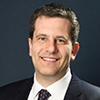

 Barry M. Landy Ciresi Conlin LLPMario Cerame SpeechDefense.comGus Cochran Ciresi Conlin LLP
About this program

Course Overview
An accusation can get your client sued, and UPEPA can make the plaintiff pay
More states continue to apply the Uniform Public Expression Protection Act (UPEPA). It gives a client sued for defamation or false light an early special motion to dismiss meritless speech lawsuits. Many litigators who have defended speech claims have never filed one.
Miss the effective-date question, and the motion may not reach earlier speech. Treat the dispute as purely private, and the public-concern argument slips away. Draft a careless client declaration, and it becomes impeachment material in a parallel criminal, family, or licensing matter. Ignore removal, and the special motion is at risk in federal court after Berk v. Choy. Win, and mandatory fees become settlement leverage.
You walk out with an element-by-element attack outline and a fee-petition and settlement checklist. You also get techniques for drafting client declarations that avoid creating impeachment material. You leave ready to answer limited discovery, amendment, nonsuit, and federal refiling. This is practitioner judgment from recent dismissals, not a statute summary.
Key Topics
- Day-One Intake How effective dates, pre-effective-date speech, and mixed public channels decide whether the special motion reaches the speech and how the reporting channel maps to a UPEPA prong.
- Privilege Inside the Motion How to run the privilege argument inside the special motion for statements made to police, a licensing board, a court, or an employer.
- Public Concern and Exceptions How to show which types of disputes can qualify as a matter of public concern, and when the commercial-speech exception puts the special motion at risk.
- Element-by-Element Attack How an element-by-element attack on the prima facie case builds the record for expedited dismissal of defamation and false light claims.
- Client Declaration Strategy How to draft the client declaration when a parallel criminal, family, licensing, or campus proceeding is open, without creating impeachment material.
- Counter-Moves and Fees How to answer stay limits, plead-around exclusions, removal, limited discovery, amendment, nonsuit, and federal refiling, and how mandatory fees create settlement leverage.
Speakers
Barry M. Landy
Ciresi Conlin LLP
Barry Landy is an accomplished trial lawyer and Chambers-ranked attorney at Ciresi Conlin, renowned for his expertise in complex commercial litigation, with a particular focus on trade secrets, breach of contract, financial services litigation, and defamation actions. He represents businesses and individuals nationwide in high-stakes disputes in federal and state courts, and brings extensive experience in appellate advocacy, having appeared before multiple federal and state appellate courts.
Full profile
Experience
Barry is widely recognized for his courtroom advocacy and deposition skills. Among his most notable matters is a $375 million settlement in a REIT dispute following more than five years of hard-fought litigation. Renowned for his cross-examination abilities, Barry's deposition of the defendant's sole corporate representative was cited more than 55 times by the U.S. District Court for the Southern District of New York, which relied heavily on that testimony in granting a liability finding for breach of contract in his client's favor and dismissing all 13 counterclaims asserted by the defendant.In addition to his trial work, Barry has achieved significant results across a wide range of complex matters, including negotiating a $27 million settlement in a royalty fee dispute and serving as Co-Lead Class Counsel in a $12.5 million ERISA class action settlement, where he successfully overcame novel defenses raised on issues of first impression. He is known for working collaboratively with corporate counsel, business leaders, and co-counsel to develop efficient, results-driven litigation strategies.
Beyond his commercial practice, Barry has an active practice defending companies and individuals in lawsuits including allegations under Minnesota's 2024 reenactment of the Uniform Public Expression Protection Act ("UPEPA"). In 2026, for example, Barry obtained two complete and expedited dismissals for clients sued for defamation and related torts targeting protected First Amendment activity. In both cases, clients were issued fee awards and achieved dismissal on several issues, such as truth or substantial truth, application of the litigation and/or fair and accurate reporting privilege, statute of limitations, and the plaintiffs' inability to establish actual malice.
Education
Barry earned his J.D., magna cum laude, from the University of Minnesota Law School, where he was an articles editor of the Minnesota Law Review and a student director of the Workers’ Rights Legal Clinic. He received his B.A. in Political Science, with distinction, from the University of Wisconsin-Madison. He clerked for the Honorable Susan Richard Nelson of the U.S. District Court for the District of Minnesota. He is admitted in Minnesota, before the U.S. District Courts for the District of Minnesota and the Central District of Illinois, and before the U.S. Courts of Appeals for the Eighth Circuit and the Federal Circuit.Recognition
Barry is consistently recognized for excellence in advocacy and professionalism. His honors include the Arthur T. Pfefer Memorial Award from the Cardozo Society, along with repeated recognition by Chambers USA, Benchmark Litigation, Best Lawyers, Super Lawyers, Minneapolis St. Paul Business Journal, and Minnesota Lawyer.Professional involvement
Chief Judge Patrick J. Schiltz appointed Barry to the Merit Selection Panel advising the U.S. District Court for the District of Minnesota on the selection of a new magistrate judge. He has sat on the Board of Directors of the Minnesota Chapter of the Federal Bar Association since 2021, including a term as Chapter National Delegate, and co-chaired the Hennepin County Bar Association's Civil Litigation Section from 2015 to 2022 while also serving on that bar's board. He is a member of The Sedona Conference's Working Group 12 on trade secrets and its General Skill, Knowledge, and Experience Brainstorming Group, co-founded and writes for the firm's trade secrets blog, and belongs to the Honorable Jimmie V. Reyna Intellectual Property American Inn of Court. He has moderated and presented programs for the Reyna Inn of Court, the Hennepin County Bar Association, and the Minnesota Federal Bar Association.In the community, Governor Tim Walz appointed Barry to the Minnesota Zoo Board of Trustees, and he serves on the Steering Committee of the Twin Cities Cardozo Society and the boards of the Northside Achievement Zone, Temple Israel Synagogue, and the Hopkins Youth Baseball Association. He also takes on pro bono matters for organizations including Minnesota Advocates for Human Rights and the ACLU.
Mario Cerame
SpeechDefense.com
Mario Cerame is a free speech litigation attorney in Hartford, Connecticut, and a partner at SpeechDefense.com. He represents people and businesses facing lawsuits, criminal charges, and other legal threats over their speech, whether online, in the media, or in public forums, including defamation, false light, and anti-SLAPP matters.
Full profile
Experience
He challenged, before the Connecticut Supreme Court, the state statute criminalizing ridicule “by advertisement,” with amicus support from the Foundation for Individual Rights and Expression and UCLA professor Eugene Volokh, after representing a University of Connecticut student arrested under that statute in 2019. With attorney Timothy Moynahan, he also brought Cerame v. Bowler, a challenge to Connecticut’s rule barring attorneys from “derogatory or demeaning” speech. His practice also covers defamation defense, true-threat and online-speech criminal defense, and appeals.Education
He earned his J.D. from Quinnipiac University School of Law in 2012, where he served as a Publications Editor on the law review and received awards including the Excellence in Written Advocacy Award, the Outstanding Performance in Oral Advocacy Award, and the Outstanding Legal Scholarship Award. He is licensed to practice in Connecticut, in multiple federal courts, and before the U.S. Supreme Court.Recognition
Super Lawyers has selected Mario for its Connecticut list in 2024 and 2025, after naming him a Rising Star from 2018 through 2023. He is a longtime member of the First Amendment Lawyers Association and is frequently cited in Connecticut media for his First Amendment expertise.Professional involvement
He testified before the Ohio legislature in support of Senate Bill 237 and draws on his own cases in presentations and teaching on free speech law. He also shares commentary on free speech, defamation, and anti-SLAPP issues through his website, blog, and video channel. Gus Cochran
Ciresi Conlin LLP
Patrick “Gus” Cochran is an associate at Ciresi Conlin whose practice focuses on complex commercial and intellectual property litigation. He represents plaintiffs and defendants nationwide in high-stakes disputes in federal and state courts. Gus has lead-counsel experience and manages critical aspects of complex disputes, including case investigation and strategy development, briefing and arguing dispositive motions, taking and defending key fact and corporate depositions, and overseeing all phases of discovery. For his work, Gus has been recognized by Minnesota Lawyer as an “Up & Coming Attorney” and by Super Lawyers as a “Minnesota Rising Star.”
Full profile
Experience
Gus has achieved notable results across a wide range of matters, with an emphasis on business-critical trade secret litigation. In one case, Gus defended a leading relocation management company in a federal trade secret suit seeking injunctive relief and more than $50 million in damages. Gus successfully argued and defeated early motions for a preliminary injunction and expedited discovery, obtained dismissal of multiple claims at the pleading stage, prevailed in significant discovery disputes, and took pivotal depositions. In another case, Gus defended a nationally prominent manufacturer against trade secret and restrictive covenant claims seeking tens of millions of dollars in damages.Beyond his commercial practice, Gus has developed an expertise in defending SLAPP suits under Minnesota's 2024 reenactment of the Uniform Public Expression Protection Act ("UPEPA"). Thus far in 2026, Gus has already obtained two complete and expedited dismissals for clients sued for defamation and related torts targeting protected First Amendment activity. In both cases, clients were issued fee awards and achieved dismissal on several issues, such as truth or substantial truth, application of the litigation and/or fair and accurate reporting privilege, statute of limitations, and the plaintiffs' inability to establish actual malice.
Education
Before joining Ciresi Conlin, Gus completed a two-year clerkship with U.S. District Court Judge Eric C. Tostrud and practiced in the business litigation group of an Am Law 50 firm. Gus graduated salutatorian from Mitchell Hamline School of Law.Recognition
Best Lawyers has named Gus to “Ones to Watch in America” for Commercial Litigation (2025–2027) and Intellectual Property Litigation (2026, 2027). Super Lawyers has named him a “Minnesota Rising Star” (2025, 2026), and Minnesota Lawyer named him an “Up & Coming Attorney” (2024). Earlier, he received the Harry A. Sieben Award from the Minnesota Chapter of the Federal Bar Association (2019) and was recognized as a North Star Lawyer by the Minnesota State Bar Association (2019, 2020).Professional involvement
Gus serves on the Council of the Minnesota State Bar Association’s Civil Litigation Section and is a member of The Sedona Conference’s Working Group 12 on trade secrets and its General Skill, Knowledge, and Experience Brainstorming Team. He belongs to the Warren E. Burger Inn of Court, served on the curriculum committee for the Minnesota Chapter of the Federal Bar Association’s Court Camp, and was a member representative for Twin Cities Diversity in Practice. He writes regularly on trade secret law, including recent pieces on the Minnesota Uniform Trade Secrets Act’s displacement provision and on trade secrets in college sports revenue sharing and name, image, and likeness. His pro bono work includes representing tenants in rent escrow actions and petitioners seeking criminal expungement.Agenda
-
Anti-SLAPP Defense for Clients Sued Over Police Reports and Official Complaints
Clients who report misconduct to police, a licensing board, a court, or an employer are increasingly sued for defamation over those reports. This session focuses on the first weeks after service: the effective-date argument, mapping the reporting channel to a UPEPA prong and a privilege, and running the privilege argument inside the special motion. It also covers drafting the client declaration while a criminal, family, licensing, or campus matter runs in parallel, and the stay limits, plead-around exclusions, and removal risks that can blunt the motion.
Mario Cerame
-
Anti-SLAPP Defense for Clients Sued Over Public Accusations Online and in Print
Individuals and small businesses are also sued for defamation after accusing someone in a post, review, press interview, or public comment. This session covers which types of disputes can qualify as matters of public concern, the commercial-speech exception, pre-effective-date speech, and mixed public channels. It walks through an element-by-element attack on the prima facie case, how to answer plaintiff counter-moves such as limited discovery, amendment, nonsuit, and federal refiling, and how mandatory fees create settlement leverage.
Barry M. Landy, Gus Cochran
MCLE Credits
-
Alabama
Approved for Self-Study Credits
2 General
-
Alaska
Approved for CLE Credits
2 General
Our programs are CLE-eligible through Alaska’s recognition of multi-jurisdictional reciprocity.
-
Arizona
Approved for CLE Credits
2 General
-
Arkansas
Approved for CLE Credits
2 General
-
California
Approved for CLE Credits
2 General
-
Colorado
Pending CLE Approval
2 General
-
Connecticut
Approved for CLE Credits
2 General
-
Delaware
Pending CLE Approval
2 General
-
District of Columbia
No MCLE Required
2 CLE Hour(s)
-
Florida
Pending CLE Approval
2 General Hours
Receive CLE credit in Florida via attorney submission.
-
Georgia
Approved for CLE Credits
2 General
-
Hawaii
Approved for CLE Credits
2 General
-
Idaho
Pending CLE Approval
2 General
-
Illinois
Pending CLE Approval
2 General
-
Indiana
Pending CLE Approval
2 General
-
Iowa
Pending CLE Approval
2 General
-
Kansas
Pending CLE Approval
2 Substantive
-
Kentucky
Pending CLE Approval
2 General
-
Louisiana
Pending CLE Approval
2 General
-
Maine
Pending CLE Approval
2 General
-
Maryland
No MCLE Required
2 CLE Hour(s)
-
Massachusetts
No MCLE Required
2 CLE Hour(s)
-
Michigan
No MCLE Required
2 CLE Hour(s)
-
Minnesota
Pending CLE Approval
2 General
-
Mississippi
Pending CLE Approval
2 General
-
Missouri
Approved for Self-Study Credits
2.4 General
-
Montana
Pending CLE Approval
2 General
-
Nebraska
Pending CLE Approval
2 General
myLawCLE reports attendance to Nebraska on each attorney’s behalf for all programs. Please do not self-report.
-
Nevada
Pending CLE Approval
2 General
-
New Hampshire
Approved for CLE Credits
120 General minutes
As of July 1, 2014, the NHMCLE Board no longer provides pre- or post-approval of courses. Attendees must self-determine whether a program is eligible for credit, and self-report their attendance online at www.nhbar.org, based on qualification provisions of Rule 53.
-
New Jersey
Approved for CLE Credits
2 General
Our programs are CLE-eligible through New Jersey’s recognition of multi-jurisdictional reciprocity, except for the courses required under BCLE Reg. 201:2
-
New Mexico
Approved for Self-Study Credits
2 General
-
New York
Approved for CLE Credits
2 General
Our programs are CLE-eligible through New York’s Approved Jurisdiction Group “B”.
-
North Carolina
Pending CLE Approval
2 General
-
North Dakota
Approved for CLE Credits
2 General
Our programs are CLE-eligible through North Dakota’s recognition of multi-jurisdictional reciprocity. Section 1, Policy 1.14
-
Ohio
Approved for Self-Study Credits
2 General
-
Oklahoma
Pending CLE Approval
2.5 General
-
Oregon
Pending CLE Approval
2 General
-
Pennsylvania
Approved for Self-Study Credits
2 General
-
Rhode Island
Pending CLE Approval
2.5 General
-
South Carolina
Pending CLE Approval
2 General
-
South Dakota
No MCLE Required
2 CLE Hour(s)
-
Tennessee
Approved for Self-Study Credits
2 General
-
Texas
Approved for CLE Credits
2 General
-
Utah
Pending CLE Approval
2 General
-
Vermont
Approved for CLE Credits
2 General
-
Virginia
Not Eligible
2 General Hours
-
Washington
Approved via Attorney Submission
2 Law & Legal Hours
Receive CLE credit in Washington via attorney submission.
-
West Virginia
Pending CLE Approval
2.4 General
-
Wisconsin
Approved for Self-Study Credits
2 General
-
Wyoming
Pending CLE Approval
2 General
No state matches.