
On-Demand · May 21, 2026
Drafting Liability Waivers That Hold Up in Court
Master the principles, drafting techniques, and public policy limits that make liability waivers and risk-allocation provisions enforceable, and avoid the common drafting mistakes that create litigation risk.

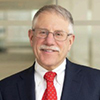 Steven O. Weise Proskauer Rose LLPEdwin E. Smith Morgan Lewis & Bockius LLP
About this program

Course Overview
Bulletproof Liability Waivers
Develop practical command of the legal principles, drafting techniques, and public policy limits governing liability waivers, exculpation clauses, and other risk-allocation provisions in commercial contracts.
- Enforceability principles Apply core legal principles governing liability limitation enforceability.
- Risk provisions Distinguish exculpation, limitations, waivers, and releases.
- Public policy Navigate tort law, unconscionability, and policy limits.
- Drafting precision Draft clear, conspicuous, and unambiguous waiver language.
Why Attend
A single drafting mistake in a liability waiver can render the entire provision unenforceable, exposing clients to litigation risk that careful drafting would have foreclosed.
- 90% of commercial contracts include limitation of liability or similar risk-allocation provisions, making enforceability a central issue in contract drafting.
- $100k+ is the median cost of a single commercial litigation matter, increasing the stakes for every risk-allocation provision that fails on enforceability.
- 70%+ of contract disputes arise from disagreements over contract language or interpretation, underscoring the importance of clear and precise drafting.
- $1M+ in annual legal spend is reported by many companies on contract-related disputes, reinforcing the financial impact of ineffective risk-allocation provisions.
Key Topics
- Contractual agreement Assess whether parties actually agreed to risk-allocation provisions.
- Substance form Determine whether the form of the provision matters.
- UCC allocation Apply risk allocation under the Uniform Commercial Code.
- Drafting mistakes Avoid common drafting mistakes that create litigation risk.
- Forum law Apply choice of law, forum, and limitations shortening.
- Fiduciary disclaimers Disclaim duties, including fiduciary duties, in contracts.
What You Will Learn and Gain
What you will learn
Learn what makes liability limitations enforceable, the full range of risk-shifting provisions, public policy limits, UCC risk allocation, drafting techniques, and other risk-allocation tools.
What you will gain
Gain practical drafting skills for liability waivers and risk-allocation provisions, command of public policy limits, and command of other risk-allocation tools like choice of law and forum.
Speakers
Steven O. Weise
Proskauer Rose LLP
Steven O. Weise is a Partner in the Corporate Department at Proskauer Rose LLP, practicing in its Los Angeles office. He practices in a wide range of commercial law, spending much of his time on matters arising under the Uniform Commercial Code, especially Article 9 – Secured Transactions and is a nationally recognized expert in these matters. Steve is also authoritative on third-party opinion letters and contract law, especially online contracting, plain English drafting, contract drafting, and boilerplate.
Full profile
Experience
Steve is a Lecturer in Law at UCLA Law School, where he teaches Uniform Commercial Code – Secured Transactions. His practice spans secured transactions, online contracting, plain English drafting, contract drafting, and third-party opinion letters, serving as a recognized authority for clients across commercial law matters.Education
Steve earned his J.D. from the University of California, Berkeley, School of Law, and his B.A. from Yale University. He is admitted to the California Bar and the U.S. District Court for the Central District of California.Recognition
Steve received the Distinguished Service Award from the American Law Institute (2022), the Lifetime Achievement Award from the California State Bar Business Law Section, and the Chair's Award from the American Bar Association Business Law Section. He has been ranked in Chambers USA for California Banking & Finance (2010–2023) and named Senior Statesperson (2023–2025), listed in Best Lawyers in America (1995–2024) including Lawyer of the Year honors (2019, 2024), and recognized in Southern California Super Lawyers (2004–2018).Professional involvement
Steve is a member of the Permanent Editorial Board for the Uniform Commercial Code and of the Council of the American Law Institute. For thirty years, he has served on many UCC drafting committees, including the comprehensive revision of UCC Article 9 in 1999 and the 2022 UCC Amendments addressing digital assets as collateral. He was instrumental as an Adviser in the American Law Institute Restatement of the Law, Consumer Contracts, is the former Chair of the American Bar Association's Section of Business Law and its Legal Opinions Committee and has been the Reporter for many TriBar Opinions Committee reports on opinions under the UCC. Edwin E. Smith
Morgan Lewis & Bockius LLP
Edwin E. Smith focuses on commercial law and insolvency, both domestic and cross-border, as a Senior Consultant at Morgan, Lewis & Bockius LLP. He advises creditors and counterparties on the insolvency and commercial risks that arise in sales, leasing, financing, investment securities, derivatives, and repo-style transactions, and his work spans workouts, bankruptcies, debt and structured financings, and international transactions. He is also a Uniform Law Commissioner and Life Member for the Commonwealth of Massachusetts.
Full profile
Experience
Mr. Smith’s insolvency experience includes serving as counsel to Exelon Corporation in the Chapter 11 of Pacific Gas & Electric Company, to UBS AG in the Chapter 9 bankruptcy of the City of Detroit, to various creditors of Lehman Brothers Holdings Inc. and its subsidiaries, to Chapter 11 plan administrators for Refco Inc. and the Chapter 11 trustee of Refco Capital Markets Ltd., and to asset purchasers in the Chapter 11 of Sun Edison. Outside of court, he has represented bank syndication agents, syndicate members, and derivative obligation holders in restructurings, and counseled a hedge fund on settling counterparty claims and restructuring investor arrangements toward liquidation.He has taught secured transactions as a faculty lecturer at Harvard Law School, Northeastern University Law School, and Suffolk Law School, and at Boston University Law School’s Morin Center for Banking Law Studies. He speaks regularly for organizations including the American Bankruptcy Institute, the National Conference of Bankruptcy Judges, ALI-CLE, the American Bar Association, and the Practicing Law Institute.
Education
Mr. Smith received his Juris Doctor from Harvard Law School in 1974 and his Bachelor of Arts from Yale University in 1968. He is admitted to practice in Massachusetts and New York, including before the Massachusetts Supreme Judicial Court and the U.S. District Court for the District of Massachusetts.Recognition
Chambers USA has recognized Mr. Smith as a Senior Statesperson in Bankruptcy/Restructuring and in Banking & Finance in Massachusetts (2021–2026), and Lawdragon has named him among the 500 Leading Global Bankruptcy and Restructuring Lawyers (2020, 2024–2026). His honors include the Homer Kripke Achievement Award from the American College of Commercial Finance Lawyers (2012), an Achievement Award from the Boston Bar Association, the Massachusetts Bar Association, and the Uniform Law Foundation (2013), and the Excellence Award of the UCC Committee of the ABA Business Law Section (2009). He has also been listed in The Best Lawyers in America, with Lawyer of the Year designations in 2012, 2013, 2014, and 2020.Professional involvement
Mr. Smith serves as a Board Member and Treasurer of the National Bankruptcy Conference, is a past Board Member of the American College of Bankruptcy, and is a member of the International Insolvency Institute. Within the Uniform Law Commission, he chaired the Drafting Committee to amend the Uniform Fraudulent Transfer Act, now the Uniform Voidable Transactions Act, as well as the drafting committees for the 2022 UCC amendments addressing emerging technologies and the 2002 amendments to UCC Articles 3 and 4, and the Joint Review Committee for the 2010 amendment to UCC Article 9. He is a member of the Permanent Editorial Board for the UCC and a Life Member of the American Law Institute, a past Chair of the UCC Committee of the ABA Business Law Section, a past President of the American College of Commercial Finance Lawyers, and has served as a U.S. Delegate to UNCITRAL working groups on international receivables financing and the secured transactions guide.Agenda
-
Enforceability and Public Policy Limits
Examine what makes liability limitations enforceable, including freedom of contract, agreement to risk-allocation provisions, and the full range of risk-shifting tools—exculpation, limitations, waivers, releases—and the public policy guardrails of tort law and unconscionability.
Steven O. Weise, Edwin E. Smith
-
UCC, Drafting, and Other Risk-Allocation Tools
Apply risk allocation under the Uniform Commercial Code, draft clear and conspicuous waiver language while avoiding common drafting mistakes and deploy other risk-allocation tools including choice of law and forum, liquidated damages, and fiduciary duty disclaimers.
Steven O. Weise, Edwin E. Smith
MCLE Credits
-
Alabama
Approved for Self-Study Credits
2 General
-
Alaska
Approved for CLE Credits
2 General
Our programs are CLE-eligible through Alaska’s recognition of multi-jurisdictional reciprocity.
-
Arizona
Approved for CLE Credits
2 General
-
Arkansas
Approved for CLE Credits
2 General
-
California
Approved for CLE Credits
2 General
-
Colorado
Approved for Self-Study Credits
2 General
-
Connecticut
Approved for CLE Credits
2 General
-
Delaware
Pending CLE Approval
2 General
-
District of Columbia
No MCLE Required
No MCLE Required
-
Florida
Pending CLE Approval
2 General Hours
Receive CLE credit in Florida via attorney submission.
-
Georgia
Approved for CLE Credits
2 General
-
Hawaii
Approved for CLE Credits
2 General
-
Idaho
Pending CLE Approval
2 General
-
Illinois
Approved for Self-Study Credits
2 General
-
Indiana
Pending CLE Approval
2 General
-
Iowa
Pending CLE Approval
2 General
-
Kansas
Approved for Self-Study Credits
2 Substantive
-
Kentucky
Pending CLE Approval
2 General
-
Louisiana
Pending CLE Approval
2 General
-
Maine
Pending CLE Approval
2 General
-
Maryland
No MCLE Required
2 CLE Hour(s)
-
Massachusetts
No MCLE Required
2 CLE Hour(s)
-
Michigan
No MCLE Required
2 CLE Hour(s)
-
Minnesota
Pending CLE Approval
2 General
-
Mississippi
Pending CLE Approval
2 General
-
Missouri
Approved for Self-Study Credits
2.4 General
-
Montana
Pending CLE Approval
2 General
-
Nebraska
Pending CLE Approval
2 General
myLawCLE reports attendance to Nebraska on each attorney’s behalf for all programs. Please do not self-report.
-
Nevada
Pending CLE Approval
2 General
-
New Hampshire
Approved for CLE Credits
120 General minutes
As of July 1, 2014, the NHMCLE Board no longer provides pre- or post-approval of courses. Attendees must self-determine whether a program is eligible for credit, and self-report their attendance online at www.nhbar.org, based on qualification provisions of Rule 53.
-
New Jersey
Approved for CLE Credits
2 General
Our programs are CLE-eligible through New Jersey’s recognition of multi-jurisdictional reciprocity, except for the courses required under BCLE Reg. 201:2
-
New Mexico
Approved for Self-Study Credits
2 General
-
New York
Approved for CLE Credits
2 General
Our programs are CLE-eligible through New York’s Approved Jurisdiction Group “B”.
-
North Carolina
Approved for Self-Study Credits
2 General
-
North Dakota
Approved for CLE Credits
2 General
Our programs are CLE-eligible through North Dakota’s recognition of multi-jurisdictional reciprocity. Section 1, Policy 1.14
-
Ohio
Approved for Self-Study Credits
2 General
-
Oklahoma
Pending CLE Approval
2.5 General
-
Oregon
Approved for Self-Study Credits
2 General
-
Pennsylvania
Approved for Self-Study Credits
2 General
-
Rhode Island
Pending CLE Approval
2.5 General
-
South Carolina
Pending CLE Approval
2 General
-
South Dakota
No MCLE Required
2 CLE Hour(s)
-
Tennessee
Approved for Self-Study Credits
2 General
-
Texas
Approved for CLE Credits
2 General
-
Utah
Pending CLE Approval
2 General
-
Vermont
Approved for CLE Credits
2 General
-
Virginia
Not Eligible
2 General Hours
-
Washington
Approved via Attorney Submission
2 Law & Legal Hours
Receive CLE credit in Washington via attorney submission.
-
West Virginia
Pending CLE Approval
2.4 General
-
Wisconsin
Approved for Self-Study Credits
2 General
-
Wyoming
Pending CLE Approval
2 General
No state matches.