

Live Video-Broadcast · TBD

Establishing a Constitutional Policing Unit: A Proactive Framework for Institutional Risk Mitigation and Accountability (Presented by The Federal Bar Association and Advancing the Legal Profession)

12 - 1:00 PM EST 11 AM - 12:00 PM CST 10 - 11:00 AM MST 9 - 10:00 AM PST

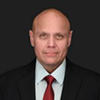
Alex del Carmen, Ph.D. Del Carmen Consulting LLCEddie Garcia

About this program

Speakers

Alex del Carmen, Ph.D. | Del Carmen Consulting LLC

Alex del Carmen, Ph.D., is the founder and CEO of Del Carmen Consulting LLC, a law enforcement consulting firm specializing in police reform, racial profiling compliance, and constitutional policing. He recently retired from nearly three decades of serving as an administrator at a major research university in Texas. He was appointed as a Fulbright Specialist by the U.S. State Department while being assigned to train police professionals in the Czech Republic. He currently serves as a federal court-appointed Special Master for consent decree implementation in Puerto Rico. Dr. del Carmen is the author of Racial Profiling in Policing: Beyond the Basics, a work cited in federal court opinions, and has provided consulting services to law enforcement agencies nationwide for nearly three decades. He has trained thousands of police officers through the Law Enforcement Management Institute of Texas (LEMIT) and the FBI National Academy in Quantico. Dr. del Carmen holds a Ph.D. in Criminology from Florida State University and a Master of Education in Higher Education Leadership from Harvard University. He serves as the criminologist in residence to the Dallas and Fort Worth Police Department’s Constitutional Policing Units.


Chief Eddie Garcia

Edgardo “Eddie” Garcia was born in Puerto Rico and raised in San Jose, California, where early life experiences shaped his steadfast commitment to public service, resilience, and community trust. Throughout his career, he has built a leadership legacy centered on proactive community engagement, modern policing strategies, and operational excellence.

Garcia has served in senior law enforcement roles in both San Jose and Dallas, driving initiatives that modernized policing practices, strengthened organizational culture, and promoted constitutional and unbiased policing.

As Assistant Chief in San Jose, he played a key role in rebuilding the department after significant pension reforms, leading efforts to restore staffing, boost morale, and rebuild productive labor relationships. Later, as Chief of Police, he introduced progressive training programs, including a partnership with San Jose State University to educate officers on the social and historical context of policing.

During his time as Chief of Police in Dallas, Garcia continued his reform-focused leadership. He increased transparency by launching a public Use of Force Dashboard, established a Community Advisory Board, improved officer wellness programs, modernized the promotions process, and led data-driven crime reduction strategies that helped achieve four consecutive years of declining violent crime.

After retiring from active policing, Garcia moved into a public safety executive role in Austin, Texas, where he provided strategic oversight and coordination of Police, Fire, EMS, Homeland Security, and Emergency Management.

In September 2025, Edgardo “Eddie” Garcia was appointed as the 28th Chief of the Fort Worth Police Department. He continues to lead with integrity, innovation, and a strong commitment to community safety, accountability, and justice.

Agenda

I. The Current Landscape: Federal Oversight, Litigation Trends, and Institutional Risk | 12:00pm – 12:10pm

II. Conceptual Framework: What Is a Constitutional Policing Unit? | 12:10pm – 12:20pm

III. Implementation: Structure, Staffing, and Review Methodologies | 12:20pm – 12:35pm

IV. Operationalizing Accountability: Case Examples and Lessons Learned | 12:35pm – 12:50pm

V. Questions and Discussion | 12:50pm – 1:00pm

MCLE Credits

  • Alabama

    Approved for Self-Study Credits

    1 General

  • Alaska

    Approved for CLE Credits

    1 General

    Our programs are CLE-eligible through Alaska’s recognition of multi-jurisdictional reciprocity.

  • Arizona

    Approved for CLE Credits

    1 General

  • Arkansas

    Approved for CLE Credits

    1 General

  • California

    Approved for CLE Credits

    1 General

  • Colorado

    Pending CLE Approval

    1 General

  • Connecticut

    Approved for CLE Credits

    1 General

  • Delaware

    Pending CLE Approval

    1 General

  • District of Columbia

    No MCLE Required

    No MCLE Required

  • Florida

    Pending CLE Approval

    1 General Hour

    Receive CLE credit in Florida via Attorney Submission.

  • Georgia

    Approved for CLE Credits

    1 General

  • Hawaii

    Approved for CLE Credits

    1 General

  • Idaho

    Pending CLE Approval

    1 General

  • Illinois

    Pending CLE Approval

    1 General

  • Indiana

    Pending CLE Approval

    1 General

  • Iowa

    Pending CLE Approval

    1 General

  • Kansas

    Pending CLE Approval

    1 Substantive

  • Kentucky

    Pending CLE Approval

    1 General

  • Louisiana

    Pending CLE Approval

    1 General

  • Maine

    Pending CLE Approval

    1 General

  • Maryland

    No MCLE Required

    1 CLE Hour(s)

  • Massachusetts

    No MCLE Required

    1 CLE Hour(s)

  • Michigan

    No MCLE Required

    1 CLE Hour(s)

  • Minnesota

    Approved for Self-Study Credits

    1 General

  • Mississippi

    Pending CLE Approval

    1 General

  • Missouri

    Approved for Self-Study Credits

    1.2 General

  • Montana

    Pending CLE Approval

    1 General

  • Nebraska

    Pending CLE Approval

    1 General

    myLawCLE reports attendance to Nebraska on each attorney’s behalf for all programs. Please do not self-report.

  • Nevada

    Pending CLE Approval

    1 General

  • New Hampshire

    Approved for CLE Credits

    60 General minutes

    As of July 1, 2014, the NHMCLE Board no longer provides pre- or post-approval of courses. Attendees must self-determine whether a program is eligible for credit, and self-report their attendance online at www.nhbar.org, based on qualification provisions of Rule 53.

  • New Jersey

    Approved for CLE Credits

    1 General

    Our programs are CLE-eligible through New Jersey’s recognition of multi-jurisdictional reciprocity, except for the courses required under BCLE Reg. 201:2

  • New Mexico

    Approved for Self-Study Credits

    1 General

  • New York

    Approved for CLE Credits

    1 General

    Our programs are CLE-eligible through New York’s Approved Jurisdiction Group “B”.

  • North Carolina

    Pending CLE Approval

    1 General

  • North Dakota

    Approved for CLE Credits

    1 General

    Our programs are CLE-eligible through North Dakota’s recognition of multi-jurisdictional reciprocity. Section 1, Policy 1.14

  • Ohio

    Approved for Self-Study Credits

    1 General

  • Oklahoma

    Pending CLE Approval

    1 General

  • Oregon

    Pending CLE Approval

    1 General

  • Pennsylvania

    Approved for Self-Study Credits

    1 General

  • Rhode Island

    Pending CLE Approval

    1 General

  • South Carolina

    Pending CLE Approval

    1 General

  • South Dakota

    No MCLE Required

    1 CLE Hour(s)

  • Tennessee

    Approved for Self-Study Credits

    1 General

  • Texas

    Approved for CLE Credits

    1 General

  • Utah

    Pending CLE Approval

    1 General

  • Vermont

    Approved for CLE Credits

    1 General

  • Virginia

    Not Eligible

    1 General Hours

  • Washington

    Approved via Attorney Submission

    1 Law & Legal Hours

    Receive CLE credit in Washington via attorney submission.

  • West Virginia

    Pending CLE Approval

    1.2 General

  • Wisconsin

    Pending CLE Approval

    1 General

  • Wyoming

    Pending CLE Approval

    1 General