
On-Demand · October 20, 2025
Ethical Issues in Withdrawing from a Representation
Examines lawyers' ethical obligations when withdrawing from client representation, covering mandatory and permissive withdrawal grounds, procedures, and post-withdrawal duties.
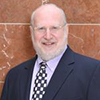
 Arthur D. Burger Jackson & Campbell, P.CGerman Gomez White & Case LLP
About this program


Course Overview
Navigating Ethical Withdrawal from Client Representation
Participants will learn when and how to ethically withdraw from client representation under ABA Model Rule 1.16. Apply these principles to protect yourself, your clients, and the judicial system.
- Mandatory Withdrawal Identify circumstances requiring immediate withdrawal.
- Permissive Withdrawal Evaluate discretionary grounds for ending representation.
- Procedural Compliance Navigate court approval and confidentiality obligations.
- Post-Withdrawal Duties Protect client interests during transition.
Why Attend
Mastering withdrawal ethics under Rule 1.16 protects attorneys from malpractice claims, disciplinary complaints, and financial liability arising from improper termination of client representation.
- 14% Of all legal malpractice claims fall under 'client relations,' including improper withdrawal by the attorney (Patrick Malone & Associates, citing ABA study).
- 83k+ Disciplinary complaints received by state bar agencies in 2018 across 45 states and D.C. (ABA Profile of the Legal Profession 2020).
- 70% Of major legal malpractice insurers paid claims exceeding $50 million in a two-year period (Ames & Gough 2023 Survey, ABA Journal).
- 35k+ Legal malpractice claims filed annually in the United States, with 12,000 resulting in monetary recovery (Settlement Planners, citing ABA data).
Key Topics
- Mandatory Withdrawal When continued representation violates rules, lawyer is impaired, or client uses services for fraud.
- Permissive Withdrawal Circumstances allowing discretionary withdrawal when no material adverse effect harms the client.
- Tribunal Procedures Court permission requirements for withdrawal in litigation matters and compliance with procedural rules.
- Confidentiality Balance Reconciling duty of confidentiality when filing motions to withdraw before a court.
- Client Protection Providing reasonable notice, returning papers and property, and refunding unearned fees.
- Prevention Strategies Due diligence before accepting representation to identify problematic clients or matters early.
What You Will Learn and Gain
What you will learn
Attorneys will learn the ethical framework of Rule 1.16 for withdrawing from client representation, including mandatory and permissive withdrawal circumstances and proper procedures.
What you will gain
Attorneys will gain practical guidance on protecting client interests during withdrawal while maintaining confidentiality, professionalism, and compliance with tribunal rules.
Speakers

Arthur D. Burger
Jackson & Campbell, P.C.
Arthur D. Burger is Of Counsel at Jackson & Campbell, P.C. and chair of the firm’s Professional Responsibility Practice Group, representing law firms and lawyers in matters related to legal ethics and legal malpractice. A national leader in legal ethics, legal malpractice, and the law governing lawyers, he has been representing prominent law firms and lawyers for over two decades.
Full profile
Experience
Burger litigates in the areas of legal malpractice, fiduciary duties, motions to disqualify, internal law firm disputes, Bar disciplinary proceedings, and matters before the Office of Enrollment and Discipline of the U.S. Patent and Trademark Office. He also serves as outside counsel to law firms and provides guidance regarding potential conflicts of interest and other ethical dilemmas, and serves as an expert witness on legal ethics and the standard of care for lawyers. His speaking and publication record spans legal ethics topics including conflicts of interest, advance waivers, risk management, remote-work ethics, and the ethics of generative AI use by lawyers, presented before audiences such as the ABA National Conference on Professional Responsibility, the District of Columbia Bar, and Legalweek.Education
Burger earned his J.D. from The George Washington University Law School. He is admitted to practice in the District of Columbia and Maryland, and before the U.S. District Court for the District of Columbia, the U.S. Court of Appeals for the District of Columbia Circuit, the U.S. Court of Federal Claims, and the U.S. Supreme Court.Recognition
Burger has been selected repeatedly as a Best Lawyer® in Ethics and Professional Responsibility by Best Lawyers of America© and as a Super Lawyer® in Professional Liability Defense, and he was named " Lawyer of the Year" in Washington, D.C. for Ethics and Professional Responsibility Law by Best Lawyers of America® for 2023. He holds an AV Preeminent® rating from Martindale-Hubbell®. In Diamond Resorts v. Newton Group Transfers, LLC, 2022 WL 1642865 (S.D. Fla. 2022), the court found him "more than qualified to give his expert opinion in matters of legal ethics."Professional involvement
Burger has a deep background in the jurisprudence of ethics law. He was a member of the Editorial Board of the ABA/Bloomberg Law-Lawyers' Manual on Professional Conduct and is an Adjunct Professor at the Antonin Scalia Law School of George Mason University, teaching a night class in Professional Responsibility. He was a member of the ten-person American Bar Association (ABA) Committee on Ethics and Professional Responsibility from 2014 to 2017; an elected District of Columbia Bar Delegate to the ABA House of Delegates from 2011 to 2012, where he worked with the ABA Ethics 20/20 Commission; a member of the District of Columbia Bar Legal Ethics Committee from 2003 to 2009; and a member of the District of Columbia Bar Rules of Professional Conduct Review Committee from 1998 to 2004. He has taught numerous District of Columbia Bar continuing legal education courses on legal ethics and has lectured around the country. German Gomez
White & Case LLP
German is responsible for analyzing and resolving complex ethics, professional responsibility, compliance, regulatory, reputational, and risk management issues for the firm. German Gomez is currently an Associate General Counsel at White & Case an international law firm with over 2,800 lawyers working.
Agenda
-
Circumstances When Attorney Withdrawal May Be Appropriate
This session explores the ethical framework of Rule 1.16, examining when lawyers may appropriately withdraw from problematic client relationships. Topics include clients with fraudulent goals, uncooperative behavior, matters lacking evidentiary support, and nonpayment of fees.
Arthur D. Burger, German Gomez
-
Mandatory Withdrawal Requirements Under Rule 1.16(a)
This session covers the four circumstances requiring mandatory withdrawal, including the 2023 amendment imposing a duty of inquiry. Participants will learn the distinctions between mandatory and permissive withdrawal and when continued representation becomes ethically impossible.
Arthur D. Burger, German Gomez
-
Scheduled Break for Program Participants
A brief intermission allowing participants to refresh before continuing with the remaining program content. Use this time to reflect on the mandatory withdrawal concepts covered in the previous session.
Arthur D. Burger, German Gomez
-
Practical Issues in Effectuating Client Withdrawal
This session addresses the mechanics of withdrawal, including providing proper notice to clients and distinguishing procedures for litigation versus non-litigation matters. Special attention is given to reconciling confidentiality duties when seeking court permission to withdraw.
Arthur D. Burger, German Gomez
-
Ethical Duties Lawyers Owe Upon Withdrawal
This final session examines post-withdrawal obligations including returning client papers and property, cooperating with successor counsel, and avoiding material adverse effects. Participants will learn about the concept of noisy withdrawal and special considerations for government attorneys.
Arthur D. Burger, German Gomez
MCLE Credits
-
Alabama
Pending CLE Approval
2 Ethics
-
Alaska
Approved for CLE Credits
2 Ethics
Our programs are CLE-eligible through Alaska’s recognition of multi-jurisdictional reciprocity.
-
Arizona
Approved for CLE Credits
2 Professional Responsibility/Ethics
-
Arkansas
Approved for CLE Credits
2 Ethics
-
California
Approved for CLE Credits
2 Ethics
-
Colorado
Approved for Self-Study Credits
2 Ethics / Professionalism
-
Connecticut
Approved for CLE Credits
2 Ethics / Professionalism
-
Delaware
Pending CLE Approval
2 Enhanced Ethics
-
District of Columbia
No MCLE Required
No MCLE Required
-
Florida
Pending CLE Approval
2 Ethics Hours
Receive CLE credit in Florida via Attorney Submission.
-
Georgia
Approved for CLE Credits
2 Ethics
-
Hawaii
Approved for CLE Credits
2 Ethics / Professionalism
-
Idaho
Pending CLE Approval
2 Ethics / Professionalism
-
Illinois
Approved for Self-Study Credits
2 Ethics, Civility, Professionalism
-
Indiana
Pending CLE Approval
2 Ethics
-
Iowa
Pending CLE Approval
2 Ethics
-
Kansas
Pending CLE Approval
2 Ethics / Professionalism
-
Kentucky
Pending CLE Approval
2 Ethics
-
Louisiana
Pending CLE Approval
2 Ethics
-
Maine
Pending CLE Approval
2 Ethics / Professionalism
-
Maryland
No MCLE Required
2 CLE Hour(s)
-
Massachusetts
No MCLE Required
2 CLE Hour(s)
-
Michigan
No MCLE Required
2 CLE Hour(s)
-
Minnesota
Approved for Self-Study Credits
2 Ethics
-
Mississippi
Pending CLE Approval
2 Ethics
-
Missouri
Approved for Self-Study Credits
2.4 Ethics
-
Montana
Pending CLE Approval
2 Professional Fitness and Integrity
-
Nebraska
Pending CLE Approval
2 Professional Responsibility
myLawCLE reports attendance to Nebraska on each attorney’s behalf for all programs. Please do not self-report.
-
Nevada
Approved for Self-Study Credits
2 Ethics
-
New Hampshire
Approved for CLE Credits
120 Ethics / Professionalism minutes
As of July 1, 2014, the NHMCLE Board no longer provides pre- or post-approval of courses. Attendees must self-determine whether a program is eligible for credit, and self-report their attendance online at www.nhbar.org, based on qualification provisions of Rule 53.
-
New Jersey
Approved for CLE Credits
2 Ethics / Professionalism
Our programs are CLE-eligible through New Jersey’s recognition of multi-jurisdictional reciprocity, except for the courses required under BCLE Reg. 201:2
-
New Mexico
Approved for Self-Study Credits
2 Ethics
-
New York
Approved for CLE Credits
2 Ethics / Professionalism
Our programs are CLE-eligible through New York’s Approved Jurisdiction Group “B”.
-
North Carolina
Pending CLE Approval
2 Ethics
-
North Dakota
Approved for CLE Credits
2 Ethics
Our programs are CLE-eligible through North Dakota’s recognition of multi-jurisdictional reciprocity. Section 1, Policy 1.14
-
Ohio
Approved for Self-Study Credits
2 Professional Conduct
-
Oklahoma
Pending CLE Approval
2.5 Ethics / Professionalism
-
Oregon
Pending CLE Approval
2 Ethics
-
Pennsylvania
Approved for Self-Study Credits
2 Ethics
-
Rhode Island
Pending CLE Approval
2.5 Ethics / Professionalism
-
South Carolina
Pending CLE Approval
2 Ethics / Professionalism
-
South Dakota
No MCLE Required
2 CLE Hour(s)
-
Tennessee
Pending CLE Approval
2 Dual
-
Texas
Pending CLE Approval
2 Ethics
-
Utah
Pending CLE Approval
2 Ethics / Professionalism
-
Vermont
Approved for CLE Credits
2 Ethics
-
Virginia
Not Eligible
2 Ethics / Professionalism Hours
-
Washington
Approved via Attorney Submission
2 Ethics Hours
Receive CLE credit in Washington via Attorney Submission. myLawCLE will supply Washington state attorneys with instructions on how to gain credit.
-
West Virginia
Pending CLE Approval
2.4 Ethics / Professionalism
-
Wisconsin
Approved for Self-Study Credits
2 General
Ethics credits can ONLY be earned through Live-Webcast programs, the Wisconsin Board of Bar Examiners does not approve Ethics through On-Demand sessions.
-
Wyoming
Pending CLE Approval
2 Ethics / Professionalism
No state matches.