
Live Video-Broadcast · December 3, 2026
Federal Written Discovery Disputes: Objections That Survive, Motions to Compel, and Fee Awards
Boilerplate objections now draw Rule 26(g) scrutiny, and the witnesses who matter most are often not parties. Learn to draft request-specific objections a magistrate judge will accept, assert privilege without a log, and issue, serve, and enforce Rule 45 subpoenas at home and abroad.
12 - 2:10 PM EST 11 AM - 1:10 PM CST 10 AM - 12:10 PM MST 9 - 11:10 AM PST

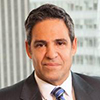 Richard M. Hunt Hunt Huey PLLCScott M. Berman Friedman Kaplan Seiler Adelman & Robbins LLP
About this program

Course Overview
The judge reading your objections has no patience for boilerplate, and the witness who matters most isn’t a party
Responding to discovery is no longer a form exercise. In First Baptist Church of Kenner v. Safepoint Insurance Company (E.D. La. Sept. 5, 2025), the court made plain that form objections cannot satisfy Rules 33(b)(4), 34(b)(2)(C), or 36(a)(5), and that they therefore violate Rule 26(g). Meanwhile, the facts that decide many cases sit with accountants, former employees, and other nonparties reachable only through Rule 45, informal interviews, or foreign procedures.
Cut and paste block objections, and you invite a Rule 26(g) finding. Miss the Rule 36 deadline, and the requests are deemed admitted. Serve a document subpoena without notice to every party under Rule 45(a)(4), and it is vulnerable. Command travel of more than 100 miles, and the compliance court must quash or modify. Subpoena a nonparty’s ESI, and the Mount Sinai factors decide who pays.
You will leave with a working method: review of instructions and definitions before any answer is drafted, objections written for the magistrate judge that state what you will produce, privilege asserted by category under Rule 26(b)(5)(A)(ii), and a Rule 45 checklist covering form, witness fees, service, notice, the 14-day objection window, cost allocation, and the Hague Convention and letters rogatory.
Key Topics
- Instructions and Definitions First Spot definitions such as “Identify” and “singular includes plural” that broaden the scope of discovery beyond the Rules, and decide what is wrong with each request from the client’s viewpoint before drafting a response.
- No Form Objections Apply First Baptist Church of Kenner v. Safepoint Insurance Company (E.D. La. Sept. 5, 2025): form objections cannot satisfy Rules 33(b)(4), 34(b)(2)(C), or 36(a)(5) and therefore violate Rule 26(g), so every objection is written for the request and for the magistrate judge.
- Privilege, Timing, and Admissions Assert privilege by category under Rule 26(b)(5)(A)(ii) rather than a line-by-line log, ask for an extension instead of objecting from ignorance, and move to withdraw deemed admissions quickly with a correct set attached.
- Informal Nonparty Discovery Weigh unprivileged interviews, ethical limits on contacting an adverse party’s former employees, FOIA and state FOIL requests, and whether deposing a nonparty surrenders the element of surprise.
- Rule 45 Subpoena Mechanics Issue, serve, and notice a federal subpoena correctly, from the court form and “See attachment” to witness fees under 28 U.S.C. § 1821, the 100-mile limit, the 14-day objection window, and motions to quash or modify heard in the compliance court.
- Costs and Foreign Witnesses Negotiate or litigate ESI cost allocation under the Mount Sinai factors, anticipate Rule 45(f) transfer, and reach foreign nonparties through voluntary cooperation, the Hague Convention, or letters rogatory.
Speakers
Richard M. Hunt
Hunt Huey PLLC
Richard is a Texas Board Certified Civil Trial Lawyer with forty-five years of experience representing businesses and individuals in litigation, arbitration, and mediation. He is AV rated by Martindale Hubble and is a Thomson Reuters Superlawyer.
Richard’s practice covers a wide range of business disputes, including those brought under the disability rights provisions of the Fair Housing Act and the Americans with Disabilities Act. He has served as an adjunct professor teaching Disability Law at the Dedman School of Law at Southern Methodist University and has served on the Examination Committee for Civil Trial Certification for the Texas Board of Legal Specialization and as an adjunct professor of trial advocacy at Texas Wesleyan School of Law. Richard is the author of Accessibility Defense (accessdefense.com), a blog for businesses concerned with avoiding and defending lawsuits brought under the Americans with Disabilities Act and Fair Housing Act. Richard frequently writes, speaks and presents webinars on the ADA, FHA, trial practice and professional responsibility issues among other topics. He has been interviewed by The Economist, Forbes and other publications on issues related to ADA and FHA litigation.
Full profile
Experience
Richard’s recent speaking on litigation practice includes “Discovery Done Right, Ethics, Efficiency and Getting what you really need” for myLawCLE (November 2025), Trial Preparation for Paralegals and Legal Assistants (January 2025), and “What I learned about brief writing from writing country songs” for University of Texas CLE (January 2020). His articles in the Dallas Bar Association’s Headnotes include “Texas Lawyers’ Ethical Obligation of Candor to the Tribunal” (February 2021), “Turning Failure into Success – What to do when mediation fails” (April 2018), and “Ethical and Legal Obligations of Local Counsel” (September 2015). Over the past decade he has presented more than sixty programs on the ADA, the Fair Housing Act, website accessibility, animal accommodations, and professional responsibility for audiences including the Federal Bar Association, the American Bar Association, the University of Texas CLE, Lawline, Justia, the Dallas Bar Association, and the Connecticut Bar Association, and has served as an expert on website accessibility litigation in the Southern and Eastern Districts of New York. To protect client confidentiality, Hunt Huey PLLC does not disclose client names; Richard’s clients are businesses of all kinds, including multi-family and single-family developers, home-owners associations, construction and management companies, commercial real estate and investment companies, website developers, remediation companies and internet retailers, developers of residential group homes, and law firms requiring representation in malpractice and state bar disciplinary proceedings.Education
Richard earned his Juris Doctor, with honors, from The University of Texas School of Law in 1981 and his Bachelor of Arts, magna cum laude, from Rice University in 1978. He is admitted to the state courts of Texas and Connecticut, the United States Court of Appeals for the Fifth Circuit, the United States District Courts for the Eastern, Northern, Southern and Western Districts of Texas, and the United States District Court for the District of Connecticut, and has been admitted pro hac vice in various federal and state courts throughout the United States. He has reading knowledge and basic conversational skills in German and holds a DELF B1 diploma in French.Recognition
Richard is AV® Preeminent™ Peer Review Rated by Martindale-Hubbell and has been named to Thomson Reuters Super Lawyers in 2004 and in each year from 2014 through 2026. He is a Texas Board Certified Civil Trial Lawyer and has served on the Examination Committee for Civil Trial Certification for the Texas Board of Legal Specialization.Professional involvement
Richard is a member of the Dallas Bar Association, the Texas Bar Association, and the Connecticut Bar Association. He has taught as an adjunct professor of Disability Law at the Dedman School of Law at Southern Methodist University and as an adjunct professor of trial advocacy at Texas Wesleyan School of Law, and he has served as an expert witness, including an analysis of malpractice claims in Lorber, Greenfield & Polito, LLP v. Rhino Linings Corp. et al in the Superior Court for the State of California, County of San Diego. Scott M. Berman
Friedman Kaplan Seiler Adelman & Robbins LLP
Scott Berman represents plaintiffs and defendants in complex commercial disputes in state and federal courts, including at trial and in arbitration, and has significant experience handling cross-border disputes. His work for the Official Stanford Investors Committee in the litigation arising from R. Allen Stanford’s Ponzi scheme involved extensive motion practice, complex issues of U.S., Canadian, English, and Swiss law, and nearly one hundred fact and expert depositions taken in the United States and abroad. A partner in the Litigation practice at Friedman Kaplan Seiler Adelman & Robbins LLP in New York, he is the former chair of the New York County Lawyers Association’s Committee on Federal Courts.
Full profile
Experience
Scott’s litigation practice is built on discovery-intensive matters, often reaching nonparties and witnesses outside the United States. For the Official Stanford Investors Committee, he and co-counsel prosecuted investor and estate claims in Texas federal court against five banks, including Toronto-Dominion Bank, HSBC Bank plc, and Société Générale Private Banking (Suisse), S.A., resulting in a $1.6 billion recovery after thirteen years of litigation. He has represented institutional investors in Madoff feeder funds against the funds’ manager, parent, and auditor; a director and outside counsel of an offshore fund of funds in clawback litigation brought by the Madoff liquidation trustee; the liquidators of Carlyle Capital Corporation Limited in litigation in the United States and Guernsey; two former directors of a Cayman holding company defending claims under Cayman law; and investors in Lancer Offshore, Beacon Hill Master Fund, and the Granite Funds against the funds’ service providers and major banks. His CLE presentations include “Winning Cases in Federal Court” and “Document Preservation and the Consequences of Neglect.” His practice areas include securities litigation, complex commercial litigation, bankruptcy and creditors’ rights litigation, trial, arbitration, and mediation, professional liability, and asset recovery and judgment enforcement.Education
Scott received his J.D. from New York University School of Law in 1982 and his B.A. from Emory University in 1979. He is admitted to practice in the State of New York, the United States District Courts for the Southern and Eastern Districts of New York and for the District of Columbia, and the United States Courts of Appeals for the Second and Third Circuits.Recognition
Scott has been named to the New York Super Lawyers list every year since 2006 and received the David Y. Hinshaw Award in 2011. He was recognized by Lexology Index in its 2026 Asset Recovery Report, and his firm has been named a Tier 1 boutique for commercial disputes in The Legal 500 United States 2026 guide.Professional involvement
Scott has served on the board of the New York County Lawyers Association for more than twenty years, is treasurer of the NYCLA Foundation, and formerly chaired NYCLA’s Committee on Federal Courts, where he has presented at the committee’s webinar programs. He also acts as an arbitrator in financial disputes, has twenty years of experience serving as a mediator, and is a former board member of the Chappaqua School Foundation in Westchester County, New York. He has spoken at Offshore Disputes Week, FIRE Americas, Asset Recovery International, Asset Recovery Americas, and INSOL International programs.Agenda
-
Federal Discovery Objections That Work
Richard Hunt walks through how to approach responding to written discovery, and especially objecting, with the magistrate judge as the audience. The session begins the day the discovery is received: calendaring the response date, telling the partner or client within a day or two what they will have to produce and answer, and reviewing the instructions and definitions for provisions that broaden the scope of discovery, create supplementation obligations not consistent with the rules, or make it hard to understand what is really being asked. It then turns to the lesson of First Baptist Church of Kenner v. Safepoint Insurance Company (E.D. La. Sept. 5, 2025), that form objections cannot satisfy Rules 33(b)(4), 34(b)(2)(C), or 36(a)(5) and therefore violate Rule 26(g), and to writing request-specific, persuasive objections that say what you will do rather than only what you won’t. Specific issues covered include timing and extensions, deemed admissions and motions to withdraw, asserting privilege by category under Rule 26(b)(5)(A)(ii), and the Rule 37(a)(1) conference.
Richard M. Hunt
-
Nonparty Discovery
Scott Berman covers the nonparty component of discovery: the accountants, underwriters, other professionals, and retired or terminated employees involved in most lawsuits of any complexity. The session opens with informal discovery (unprivileged interviews, ethical restrictions on contacting an adverse party’s former employees, confidentiality agreements tied to severance) and quasi-formal tools such as FOIA and state comparables like New York’s FOIL, then weighs whether to depose a nonparty at all. It then works through the Rule 45 subpoena: types and scope, the court form and attachment, witness fees under 28 U.S.C. § 1821, the 100-mile limit, nationwide service, notice to the parties under the 2013 amendments, objections within 14 days, motions to quash or modify in the compliance court, transfer under Rule 45(f), and contempt. The session closes with allocation of ESI costs under the factors applied in Mount Sinai Med. Ctr. v. Port Auth. of N.Y. & N.J. and with obtaining evidence from foreign nonparties through voluntary cooperation, the Hague Convention, and letters rogatory.
Scott M. Berman
MCLE Credits
-
Alabama
Approved for CLE Credits
2 General
-
Alaska
Approved for CLE Credits
2 General
Our programs are CLE-eligible through Alaska’s recognition of multi-jurisdictional reciprocity.
-
Arizona
Approved for CLE Credits
2 General
-
Arkansas
Approved for CLE Credits
2 General
-
California
Approved for CLE Credits
2 General
-
Colorado
Pending CLE Approval
2 General
-
Connecticut
Approved for CLE Credits
2 General
-
Delaware
Pending CLE Approval
2 General
-
District of Columbia
No MCLE Required
2 CLE Hour(s)
-
Florida
Pending CLE Approval
2 General Hours
Receive CLE credit in Florida via attorney submission.
-
Georgia
Approved for CLE Credits
2 General
-
Hawaii
Approved for CLE Credits
2 General
-
Idaho
Pending CLE Approval
2 General
-
Illinois
Pending CLE Approval
2 General
-
Indiana
Pending CLE Approval
2 General
-
Iowa
Pending CLE Approval
2 General
-
Kansas
Pending CLE Approval
2 Substantive
-
Kentucky
Pending CLE Approval
2 General
-
Louisiana
Pending CLE Approval
2 General
-
Maine
Pending CLE Approval
2 General
-
Maryland
No MCLE Required
2 CLE Hour(s)
-
Massachusetts
No MCLE Required
2 CLE Hour(s)
-
Michigan
No MCLE Required
2 CLE Hour(s)
-
Minnesota
Pending CLE Approval
2 General
-
Mississippi
Pending CLE Approval
2 General
-
Missouri
Approved for CLE Credits
2.4 General
-
Montana
Pending CLE Approval
2 General
-
Nebraska
Pending CLE Approval
2 General
myLawCLE reports attendance to Nebraska on each attorney’s behalf for all programs. Please do not self-report.
-
Nevada
Pending CLE Approval
2 General
-
New Hampshire
Approved for CLE Credits
120 General minutes
As of July 1, 2014, the NHMCLE Board no longer provides pre- or post-approval of courses. Attendees must self-determine whether a program is eligible for credit, and self-report their attendance online at www.nhbar.org, based on qualification provisions of Rule 53.
-
New Jersey
Approved for CLE Credits
2 General
Our programs are CLE-eligible through New Jersey’s recognition of multi-jurisdictional reciprocity, except for the courses required under BCLE Reg. 201:2
-
New Mexico
Approved for CLE Credits
2 General
-
New York
Approved for CLE Credits
2 General
Our programs are CLE-eligible through New York’s Approved Jurisdiction Group “B”.
-
North Carolina
Pending CLE Approval
2 General
-
North Dakota
Approved for CLE Credits
2 General
Our programs are CLE-eligible through North Dakota’s recognition of multi-jurisdictional reciprocity. Section 1, Policy 1.14
-
Ohio
Pending CLE Approval
2 General
-
Oklahoma
Pending CLE Approval
2.5 General
-
Oregon
Pending CLE Approval
2 General
-
Pennsylvania
Approved for CLE Credits
2 General
-
Rhode Island
Pending CLE Approval
2.5 General
-
South Carolina
Pending CLE Approval
2 General
-
South Dakota
No MCLE Required
2 CLE Hour(s)
-
Tennessee
Approved for CLE Credits
2 General
-
Texas
Approved for CLE Credits
2 General
-
Utah
Pending CLE Approval
2 General
-
Vermont
Approved for CLE Credits
2 General
-
Virginia
Not Eligible
2 General Hours
-
Washington
Approved via Attorney Submission
2 Law & Legal Hours
Receive CLE credit in Washington via attorney submission.
-
West Virginia
Pending CLE Approval
2.4 General
-
Wisconsin
Pending CLE Approval
2 General
-
Wyoming
Pending CLE Approval
2 General
No state matches.