
On-Demand · February 26, 2026
Responsible AI for Lawyers: Ethical Limits, Judicial Scrutiny, and the Risks Attorneys Can’t Ignore (2026 Edition)
Comprehensive guide to ethical AI integration in legal practice, covering judicial expectations, risk management, and practical implementation strategies.
Jeffrey Cunningham Cohen VaughanMatthew H. Grady Wolf Greenfield & SacksAbout this program


Course Overview
Responsible AI Integration for Legal Practice
Participants will learn ethical frameworks, risk management strategies, and practical workflows for using AI tools in legal practice. Gain actionable skills to implement compliant AI policies while meeting judicial expectations.
- Risk Management Develop comprehensive AI policies protecting clients and firms.
- Ethical Compliance Apply Model Rules to AI-assisted legal work.
- Judicial Expectations Navigate disclosure requirements and avoid sanctions.
- Workflow Integration Validate AI outputs through structured review processes.
Why Attend
Understanding responsible AI use is essential for legal practitioners because failure to comply with evolving ethical rules and judicial expectations can result in sanctions, malpractice liability, and reputational harm.
- 1k+ Documented court cases worldwide involving AI-generated hallucinated content in legal filings, highlighting the critical need for verification protocols.
- 53% Of law firms have no formal AI policy or are unaware of one, creating significant compliance and confidentiality risks for attorneys.
- 79% Of legal professionals now use AI tools in their practice, making competence in AI technology an ethical imperative under professional conduct rules.
- $3.9B Projected global legal AI market size by 2030, reflecting rapid industry transformation that practitioners must understand to remain competitive.
Key Topics
- Risk Management Written AI policies are essential regardless of firm size or practice area.
- Ethics Rules Rules on competence, confidentiality, supervision, and fees govern all AI use.
- Judicial Scrutiny Courts have issued 683 tracked instances of AI misuse with resulting sanctions.
- Validation All AI outputs require human verification as lawyers own submitted work product.
- Confidentiality Free AI tools may forfeit privilege and work product protections.
- Workflow Integration Sequence AI outputs section-by-section and validate each before proceeding.
What You Will Learn and Gain
What you will learn
Attorneys will learn how to use AI tools ethically under the Model Rules of Professional Conduct while managing risks through written policies, validation procedures, and proper supervision.
What you will gain
Attorneys will gain practical strategies for integrating generative AI into law firm workflows while meeting judicial expectations and avoiding sanctions for AI misuse.
Speakers
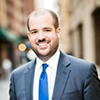
Jeffrey Cunningham
Cohen Vaughan
Jeff actively defends lawyers and acts as outside General Counsel to small and mid-sized law firms across the United States, defending industry professionals in professional liability, ethics and disciplinary matters with an emphasis on risk management.
Full profile
Experience
15 years of large firm experience defending professional liability cases on behalf of lawyers, law firms, and other professionals. Serves as outside General Counsel to numerous small and mid-sized law firms. Legal intern with Queens District Attorney's Office and US Attorney's Office Southern District of New York Criminal Division. Served as Cadet Second Lieutenant/Platoon Leader, First Battalion Honor Court Representative, and Editor-in-Chief of The Brigadier newspaper at The Citadel.Education
Graduate of The Citadel, The Military College of South Carolina; Fordham Law where he was Associate Editor of the Fordham Journal of Corporate & Financial Law; Fulbright Scholar with fellowship in Germany.Recognition
Fulbright Scholar; Earned the Archibald R. Murray Public Service Award magna cum laude for pro bono work; Has an audience of over 30,000 followers on LinkedIn and social media platforms.Professional involvement
Produces a weekly newsletter on ethics and malpractice, a monthly law firm risk management newsletter, daily blog Point One: A Bite of Ethics a Day Keeps Legal Malpractice Claims Away, and The Model-Rule-Meme-A-Day. Presents dozens of Continuing Legal Education courses per year on law firm risk management and ethics.
Matthew H. Grady
Wolf Greenfield & Sacks
Matthew Grady brings significant industry experience in computer sciences to his practice, guiding clients through the development of effective intellectual property-building strategies incorporating utility patents, design patents, trademarks, copyrights, and trade secrets.
Full profile
Experience
Works extensively in US and foreign jurisdictions protecting innovation in artificial intelligence, encryption, authentication, database design, implementation and optimization, web-based services (Web3.0), cryptocurrency, blockchain technologies, medical imaging and devices, bioinformatics, communication systems, cloud computing, application development, and advises clients in quantum computing.Recognition
Founding member of The Ordinary Observer®, a weekly blog dedicated to the world of design patents, for which he registered the trademark.Professional involvement
Serves as the firm's AI Task Force Lead, helping shape guidance and best practices around emerging AI technologies.Agenda
-
AI Tools, Ethics Rules, and Judicial Expectations
This session explores how attorneys are practically using AI today across research, e-discovery, client communications, and marketing. Participants will examine key ethics rules governing AI use under the Model Rules of Professional Conduct, disclosure obligations, and notable sanctions cases that illustrate the risks of AI misuse in court proceedings.
Jeffrey Cunningham, Matthew H. Grady
-
Generative AI Integration, Limits, and Strategic Adoption
This session provides a deep dive into generative AI applications for legal drafting, research, and document review while addressing critical limitations including hallucinations and bias. Attendees will learn practical workflow integration strategies, validation techniques, policy development frameworks, and how to align AI adoption with evolving client expectations and competitive pressures.
Jeffrey Cunningham, Matthew H. Grady
MCLE Credits
-
Alabama
Approved for Self-Study Credits
1 General, 1 Ethics
-
Alaska
Approved for CLE Credits
1 General, 1 Ethics
Our programs are CLE-eligible through Alaska’s recognition of multi-jurisdictional reciprocity.
-
Arizona
Approved for CLE Credits
1 General, 1 Professional Responsibility/Ethics
-
Arkansas
Approved for CLE Credits
1 General, 1 Ethics
-
California
Approved for CLE Credits
1 General, 1 Ethics
-
Colorado
Approved for Self-Study Credits
1 General, 1 Ethics / Professionalism
-
Connecticut
Approved for CLE Credits
1 General, 1 Ethics / Professionalism
-
Delaware
Pending CLE Approval
1 General, 1 Enhanced Ethics
-
District of Columbia
No MCLE Required
No MCLE Required
-
Florida
Pending CLE Approval
1 General Hour, 1 Ethics Hour
Receive CLE credit in Florida via Attorney Submission.
-
Georgia
Approved for CLE Credits
1 General, 1 Ethics
-
Hawaii
Approved for CLE Credits
1 General, 1.2 Ethics or Professional Responsibility Education
-
Idaho
Pending CLE Approval
1 General, 1 Ethics / Professionalism
-
Illinois
Pending CLE Approval
1 General, 1 Ethics, Civility, Professionalism
-
Indiana
Approved For On-Demand Credits
1 General, 1 Ethics
-
Iowa
Approved for Self-Study Credits
1 General, 1 Ethics
-
Kansas
Approved for Self-Study Credits
1 Substantive, 1 Ethics / Professionalism
-
Kentucky
Pending CLE Approval
1 General, 1 Ethics
-
Louisiana
Pending CLE Approval
1 General, 1 Ethics
-
Maine
Pending CLE Approval
1 General, 1 Ethics / Professionalism
-
Maryland
No MCLE Required
2 CLE Hour(s)
-
Massachusetts
No MCLE Required
2 CLE Hour(s)
-
Michigan
No MCLE Required
2 CLE Hour(s)
-
Minnesota
Approved for Self-Study Credits
1 General, 1 Ethics
-
Mississippi
Pending CLE Approval
1 General, 1 Ethics
-
Missouri
Approved for Self-Study Credits
1.2 General, 1.2 Ethics
-
Montana
Approved for Self-Study Credits
1 General, 1 Professional Fitness and Integrity
-
Nebraska
Pending CLE Approval
1 General, 1 Professional Responsibility
myLawCLE reports attendance to Nebraska on each attorney’s behalf for all programs. Please do not self-report.
-
Nevada
Approved for Self-Study Credits
1 General, 1 Ethics / Professionalism
-
New Hampshire
Approved for CLE Credits
60 General minutes, 60 Ethics / Professionalism minutes
As of July 1, 2014, the NHMCLE Board no longer provides pre- or post-approval of courses. Attendees must self-determine whether a program is eligible for credit, and self-report their attendance online at www.nhbar.org, based on qualification provisions of Rule 53.
-
New Jersey
Approved for CLE Credits
1 General , 1 Ethics / Professionalism
Our programs are CLE-eligible through New Jersey’s recognition of multi-jurisdictional reciprocity, except for the courses required under BCLE Reg. 201:2
-
New Mexico
Approved for Self-Study Credits
1 General, 1 Ethics / Professionalism
-
New York
Approved for CLE Credits
1 General, 1 Ethics / Professionalism
Our programs are CLE-eligible through New York’s Approved Jurisdiction Group “B”.
-
North Carolina
Pending CLE Approval
1 General, 1 Ethics
-
North Dakota
Approved for CLE Credits
1 General, 1 Ethics
Our programs are CLE-eligible through North Dakota’s recognition of multi-jurisdictional reciprocity. Section 1, Policy 1.14
-
Ohio
Approved for Self-Study Credits
1 General, 1 Professional Conduct
-
Oklahoma
Pending CLE Approval
1 General, 1 Ethics / Professionalism
-
Oregon
Approved for Self-Study Credits
1 General, 1 Ethics
-
Pennsylvania
Approved for Self-Study Credits
1 General, 1 Ethics / Professionalism
-
Rhode Island
Pending CLE Approval
1 General, 1 Ethics
-
South Carolina
Pending CLE Approval
1 General, 1 Ethics / Professionalism
-
South Dakota
No MCLE Required
2 CLE Hour(s)
-
Tennessee
Approved for Self-Study Credits
1 General, 1 Dual
-
Texas
Approved for CLE Credits
1 General, 1 Ethics / Professionalism
-
Utah
Approved for Self-Study Credits
1 General, 1 Ethics / Professionalism
-
Vermont
Approved for CLE Credits
1 General, 1 Ethics
-
Virginia
Not Eligible
1 General Hours, 1 Ethics / Professionalism Hours
-
Washington
Approved via Attorney Submission
1 Law & Legal Hours, 1 Ethics Hours
Receive CLE credit in Washington via attorney submission.
-
West Virginia
Pending CLE Approval
1.2 General, 1.2 Ethics / Professionalism
-
Wisconsin
Approved for Self-Study Credits
2 Law Practice Management
-
Wyoming
Pending CLE Approval
1 General, 1 Ethics / Professionalism
No state matches.