
Live Video-Broadcast · December 4, 2026
When the Opponent’s Brief Cites Fake Cases: Building the Sanctions Record and Collecting the Fee Award
An opponent’s brief cites cases that do not exist, and staying silent can cost your client the fee award. Document the discovery, choose the right sanctions motion, limit the fee request to what the fabrication caused, and collect from payors who stall.
12 - 2:10 PM EST 11 AM - 1:10 PM CST 10 AM - 12:10 PM MST 9 - 11:10 AM PST
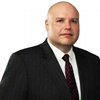
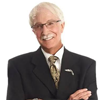 Ellis M. Oster Hinshaw & Culbertson LLPW. Michael Hensley FBT Gibbons LLP
About this program

Course Overview
Catching the Fake Citation Is Only the First Step
Courts nationwide are sanctioning lawyers who file briefs with fabricated case citations and misquoted opinions, often produced by artificial intelligence tools. The burden no longer rests on the offending lawyer alone. Courts have begun criticizing non-offending counsel who say nothing, and some have denied fees or relief.
Stay silent, and the fee award may never reach your client. Serve a Rule 11 motion too late, and the safe harbor defeats it. Ask for more than the fabrication caused, and Goodyear v. Haeger limits the request. Win a fine payable to the court, and the movant is paid nothing. Win fees against a stalling, insolvent, or self-represented payor, and the order still has to be collected.
This two-part program follows a litigator from the moment a quotation turns up missing from a cited opinion through collection of the resulting award. You leave with a decision tree, verification log, notice letter, annotated fee declaration, time-entry template, and collection checklist to adapt to your next motion.
Key Topics
- The Verification Log How a dated verification log documents the discovery, what goes in it, and how far to verify before you act.
- The Notice Decision How to decide among a letter to opposing counsel, notice to the court, or both, so that the notice reserves fees and preserves error.
- Choosing the Motion How to choose under deadline among Rule 11, state rules, 28 U.S.C. § 1927, inherent power and FRAP 38/46(c), including when the fabrication appears in a final reply brief or on appeal.
- Fees Versus Fines How to tell fees payable to the movant from fines payable to the court, and how to scope the fee claim to fabrication-caused hours under Goodyear v. Haeger.
- The Opposition Papers How to answer the offending lawyer’s response and opposition papers at both the sanctions motion and the fee submission.
- Collecting the Award How to weigh award economics with the client, decide on pro se collectability before filing, and collect from a stalling lawyer or a judgment-proof payor.
Speakers
Ellis M. Oster
Hinshaw & Culbertson LLP
Ellis M. Oster, Sr. is a partner in the New York office of Hinshaw & Culbertson LLP, where his practice includes complex commercial litigation, financial services litigation and appeals. His firm profile features the Hinshaw legal team’s January 2026 result, the first appellate-level decision in New York sanctioning the misuse of generative AI in litigation. He has more than 45 published appellate victories across all four Appellate Division departments of the New York Supreme Court.
Full profile
Experience
His appellate record includes several reversals of trial court orders, among them the denial of summary judgment for a mortgagee, the denial of a mortgagee’s pre-answer motion to dismiss a quiet title case, and an order requiring a mortgagee to accept a late answer. He has also secured affirmances of foreclosure judgments, including judgments of more than $1.6 million and $1.9 million, and dismissals of appeals. In an Article 78 proceeding against a town zoning board of appeals, he persuaded the Appellate Division to affirm dismissal in a commercial speech case later cited favorably by the New York Court of Appeals.With nearly two decades of experience in foreclosure and real estate matters, he handles litigation, real estate transactions and distressed property issues in consumer finance, mortgage lending and loan servicing, and advises clients on settlement negotiations, evictions and appeals. Before joining Hinshaw, he was director of litigation in the New York office of a full-service financial services law firm. He began his career in-house at a title insurance company in Western New York.
Education
Mr. Oster earned his J.D. from Cornell Law School in 2006, where he served as Events Editor of the Cornell Journal of Law and Public Policy. He holds both an M.A. and a B.A. in politics from The Catholic University of America, each awarded in 2003, the B.A. magna cum laude. He was admitted to the New York bar in 2007 and is also admitted before the U.S. District Courts for the Northern and Western Districts of New York.Recognition
Mr. Oster was selected for inclusion in the 2025 Marquis Who’s Who directory, which chooses honorees based on position, achievements, visibility and prominence in their field. In 2019, Lawyers of Distinction recognized him for excellence in civil litigation. With fellow Hinshaw partner Robert D. Bailey, he represented the lender in Deutsche Bank National Trust Company v. LeTennier, the first appellate-level decision in New York sanctioning the misuse of generative AI in litigation and co-authored the firm’s January 2026 analysis of the ruling. Before joining Hinshaw as a partner in May 2024, he served as director of litigation at LOGS Legal Group LLP. As an undergraduate, he received the Vincent P. Walter Jr. Community Service Award from The Catholic University of America.Professional involvement
Mr. Oster has been a member of the New York State Bar Association since 2007. He practices in Hinshaw’s Consumer Financial Services group and writes for the firm’s “Consumer Crossroads” blog, which covers financial services and litigation. He has also presented to practitioners on foreclosure practice, including a 2014 program titled “Role of the Referee in a Mortgage Foreclosure.” W. Michael Hensley
FBT Gibbons LLP
W. Michael Hensley is the principal author of The California Attorney Fees blog, a resource on attorney fee and cost awards in California state and federal courts, and he regularly lectures on attorney fees issues at bar association and continuing education seminars. He is Counsel in the Santa Ana, California office of FBT Gibbons, where his practice covers business and commercial litigation, appeals and class actions.
Full profile
Experience
Fee awards run through his trial and appellate results. After prevailing in a month-long trial for a developer sued by an out-of-state lender, he recovered 85% of the client’s attorney fees. For an accounting firm and a public company, he reduced a jury verdict and attorney’s fees against his client by about 75%. For a commercial developer with projects in Costa Mesa and Anaheim, he obtained a judgment in the client’s favor together with an award of attorney fees. A trial lawyer with close to 40 years of experience, Mr. Hensley resolves disputes through trials, arbitrations, mediations and appeals. He has argued before the U.S. Supreme Court and all Southern California state and federal courts and has represented numerous clients before the Los Angeles and Orange County intermediate appellate courts. His cases have involved real estate, securities, corporate governance, trade secrets, employment, unfair competition and California financing laws, and he has significant experience defending class actions.Education
Mr. Hensley earned his J.D. from Rutgers University School of Law in 1979 and his B.A. in Speech Communication from the University of Southern California in 1976. He was admitted to practice in California in 1979 and has made pro hac vice appearances in federal and state courts across the United States.Recognition
He was featured on the cover of Los Angeles Lawyer Magazine in October 2020. The January 2021 edition of Orange County Lawyer magazine featured him in the article “Alter Ego Piercing, The Mists of a Metaphor,” and Vol. 34, No. 1 of California Litigation Journal featured him in “Covid-19 and Commercial Tenancies: Can the Twain Ever Meet? Negotiation Tips To Do So.”Professional involvement
Beyond The California Attorney Fees blog, his writing includes “New Year, new rules, and the legal shake-up for landlords and tenants” in the LA Daily Journal (January 2025) and “Floating Utility Easements in California” in CEB Daily News (November 2023). His firm profile also lists the January 2026 publication “California Appellate Courts Remind Practitioners to Avoid Citing AI Hallucinations in Legal Briefs” and the September 2025 publication “Winning the Battle is Not Winning the War.” He lectures at bar association and continuing education seminars on attorney fees, real estate and mechanics lien issues.Agenda
-
From Catching an Opponent’s Fake Citations to Filing the Right Sanctions Motion
This session teaches litigators acting as non-offending moving counsel what to do from the moment an opponent’s fabricated citation is caught to the filing of the right sanctions motion. That includes the dated verification log, the notice letter that reserves fees and preserves error, and the choice among Rule 11, § 128.7, 130-1.1, § 1927, inherent power and FRAP 38/46(c).
-
Turning a Sanctions Order for Fabricated Citations Into Fees Actually Collected
This one-hour session is for litigators who represent the moving party after a court sanctions an opponent for fabricated citations, from either the plaintiff or the defense chair. It covers who the award is payable to, how to scope the fee submission to fabrication-caused hours under Haeger, how to answer the offending lawyer’s opposition, and how to collect from a stalling lawyer, a judgment-proof party, or a pro se payor.
W. Michael Hensley
MCLE Credits
-
Alabama
Approved for CLE Credits
2 General
-
Alaska
Approved for CLE Credits
2 General
Our programs are CLE-eligible through Alaska’s recognition of multi-jurisdictional reciprocity.
-
Arizona
Approved for CLE Credits
2 General
-
Arkansas
Approved for CLE Credits
2 General
-
California
Approved for CLE Credits
2 General
-
Colorado
Pending CLE Approval
2 General
-
Connecticut
Approved for CLE Credits
2 General
-
Delaware
Pending CLE Approval
2 General
-
District of Columbia
No MCLE Required
2 CLE Hour(s)
-
Florida
Pending CLE Approval
2 General Hours
Receive CLE credit in Florida via attorney submission.
-
Georgia
Approved for CLE Credits
2 General
-
Hawaii
Approved for CLE Credits
2 General
-
Idaho
Pending CLE Approval
2 General
-
Illinois
Pending CLE Approval
2 General
-
Indiana
Pending CLE Approval
2 General
-
Iowa
Pending CLE Approval
2 General
-
Kansas
Pending CLE Approval
2 Substantive
-
Kentucky
Pending CLE Approval
2 General
-
Louisiana
Pending CLE Approval
2 General
-
Maine
Pending CLE Approval
2 General
-
Maryland
No MCLE Required
2 CLE Hour(s)
-
Massachusetts
No MCLE Required
2 CLE Hour(s)
-
Michigan
No MCLE Required
2 CLE Hour(s)
-
Minnesota
Pending CLE Approval
2 General
-
Mississippi
Pending CLE Approval
2 General
-
Missouri
Approved for CLE Credits
2.4 General
-
Montana
Pending CLE Approval
2 General
-
Nebraska
Pending CLE Approval
2 General
myLawCLE reports attendance to Nebraska on each attorney’s behalf for all programs. Please do not self-report.
-
Nevada
Pending CLE Approval
2 General
-
New Hampshire
Approved for CLE Credits
120 General minutes
As of July 1, 2014, the NHMCLE Board no longer provides pre- or post-approval of courses. Attendees must self-determine whether a program is eligible for credit, and self-report their attendance online at www.nhbar.org, based on qualification provisions of Rule 53.
-
New Jersey
Approved for CLE Credits
2 General
Our programs are CLE-eligible through New Jersey’s recognition of multi-jurisdictional reciprocity, except for the courses required under BCLE Reg. 201:2
-
New Mexico
Approved for CLE Credits
2 General
-
New York
Approved for CLE Credits
2 General
Our programs are CLE-eligible through New York’s Approved Jurisdiction Group “B”.
-
North Carolina
Pending CLE Approval
2 General
-
North Dakota
Approved for CLE Credits
2 General
Our programs are CLE-eligible through North Dakota’s recognition of multi-jurisdictional reciprocity. Section 1, Policy 1.14
-
Ohio
Approved for CLE Credits
2 General
-
Oklahoma
Pending CLE Approval
2.5 General
-
Oregon
Pending CLE Approval
2 General
-
Pennsylvania
Approved for CLE Credits
2 General
-
Rhode Island
Pending CLE Approval
2.5 General
-
South Carolina
Pending CLE Approval
2 General
-
South Dakota
No MCLE Required
2 CLE Hour(s)
-
Tennessee
Approved for CLE Credits
2 General
-
Texas
Approved for CLE Credits
2 General
-
Utah
Pending CLE Approval
2 General
-
Vermont
Approved for CLE Credits
2 General
-
Virginia
Not Eligible
2 General Hours
-
Washington
Approved via Attorney Submission
2 Law & Legal Hours
Receive CLE credit in Washington via attorney submission.
-
West Virginia
Pending CLE Approval
2.4 General
-
Wisconsin
Pending CLE Approval
2 General
-
Wyoming
Pending CLE Approval
2 General
No state matches.