
On-Demand · August 20, 2025
AI in the Courts: What Judges Are Using, How It Works, and Why Lawyers Need to Adapt (Presented by Above the Law)
Explore ethical AI implementation in legal practice, covering best practices, court protocols, and evolving technology for attorneys and judges.

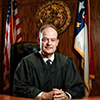
 Jared Correia Red Cave Law Firm ConsultingMarty McGee Cabarrus CountyJosh Noffke Noffke Law
About this program


Course Overview
Implementing AI Ethically in Legal Practice
Participants will learn practical frameworks for adopting generative AI while maintaining professional responsibility and client confidentiality. These strategies apply immediately to both courtroom and transactional settings.
- AI Literacy Build foundational skills through low-stakes applications.
- Prompt Development Craft effective prompts using chain techniques.
- Confidentiality Protocols Vet vendors and develop firm AI policies.
- Evidentiary Authentication Address AI-generated evidence issues before trial.
Why Attend
Understanding AI ethics and implementation in legal practice is essential because attorneys must balance emerging technology's efficiency benefits with professional responsibility obligations to avoid sanctions and protect clients.
- 53% Of legal professionals say their firm has no AI policy or are unaware of one, according to the 2025 Clio Legal Trends Report.
- 75% Of attorneys cite concerns about AI-generated hallucinations as the reason for hesitancy in implementing AI tools, per the ABA 2024 Tech Survey.
- 17% Of queries to leading legal AI research tools like Lexis+ AI resulted in hallucinated responses, according to Stanford HAI research published in the Journal of Empirical Legal Studies (2025).
- 961+ Legal cases involving AI hallucinations have been documented globally, according to the AI Hallucination Cases Database maintained by legal researcher Damien Charlotin.
Key Topics
- AI Literacy Begin using AI in low-stakes situations outside legal work to build familiarity.
- Prompt Development Quality AI output requires investing thirty minutes to an hour in prompt preparation.
- Sandwich Method Human input first, AI processing in the middle, human verification and review last.
- Confidentiality Never put confidential client information into consumer-based AI tools.
- Evidence Disclosure AI-generated evidence must be disclosed promptly before trial per judicial orders.
- Agentic AI Agentic AI iterates autonomously through task steps, mimicking human workflow processes.
What You Will Learn and Gain
What you will learn
Attorneys will learn how to ethically implement generative AI in legal practice, including prompting techniques, confidentiality protocols, vendor vetting, and the sandwich method for verification.
What you will gain
Attorneys will gain practical strategies for AI adoption, including building custom GPTs, developing firm AI policies, and understanding judicial expectations for AI-generated evidence disclosure.
Speakers
Jared Correia
#NOLINE Red Cave Law Firm Consulting
CEO of Red Cave Law Firm Consulting, offering subscription-based law firm business management consulting and technology services for solo and small law firms. A former practicing attorney who has been advising lawyers and law firms for over a decade.
Full profile
Experience
Former practicing attorney with over a decade of experience advising lawyers and law firms. Red Cave also works with legal institutions and legal-facing corporations to develop programming and content.Recognition
Author of the American Bar Association publication 'Twitter in One Hour for Lawyers'. Regular contributor to legal publications including his column 'Managing' for Attorney at Work and 'Law Practice Confidential' advice column for Lawyerist.Professional involvement
Regular presenter at local, regional and national events, including ABA TECHSHOW. Marty McGee
Cabarrus County
Senior Resident Superior Court Judge in Cabarrus County with extensive judicial experience across multiple court levels and case types including family law, criminal law, juvenile law, and civil matters.
Full profile
Experience
Serves as Senior Resident Superior Court Judge in Cabarrus County. Previously served as Special Superior Court Judge and as North Carolina District Court Judge in Cabarrus County from October 2000 until January 2014, presiding over thousands of cases. Prior to becoming a judge, participated in litigation before courts ranging from the Supreme Court of the United States to small claims court.Professional involvement
Licensed to practice law in North Carolina. Admitted to practice before the Supreme Court of the United States, the United States Court of Appeals for the Armed Forces, the United States Court of Appeals for the District of Columbia Circuit, and the United States District Court for the Eastern District of North Carolina. Josh Noffke
Noffke Law
Practices transactional law, IP, and data privacy at Noffke Law, uniting legal expertise with AI to advance attorneys’ tech strategies.
Full profile
Experience
His firm, Brass Tacks Consulting, harnesses AI to streamline legal processes, turning complex challenges into practical solutions.Agenda
-
Factors Limiting and Expanding AI Court Adoption
This session examines the current state of AI adoption among legal professionals and the barriers preventing wider use. Panelists discuss the importance of AI literacy and professional responsibility requirements driving attorneys to engage with this technology.
Jared Correia, Marty McGee, Josh Noffke
-
Common Myths and Misconceptions About Legal AI
Experts debunk prevalent misconceptions including the belief that AI is primarily about time savings and that one-shot prompting yields quality results. The session emphasizes why consumer AI tools are inappropriate for legal work and why AI output requires rigorous verification.
Jared Correia, Marty McGee, Josh Noffke
-
Implementing AI Best Practices in Legal Settings
This comprehensive session introduces the sandwich method for AI use: human input, AI processing, and human verification. Panelists cover effective prompt building, confidentiality protocols, vendor vetting, and Judge McGee’s administrative order governing AI use in his jurisdiction.
Jared Correia, Marty McGee, Josh Noffke
-
Future Evolution of AI in Courtroom Applications
The panel explores emerging technologies including agentic AI that iterates autonomously and custom GPTs trained for specific legal functions. Discussion includes judicial AI applications and innovative use cases like AI-generated victim impact statements.
Jared Correia, Marty McGee, Josh Noffke
-
Audience Questions and Discussion With Panelists
Attendees have the opportunity to ask questions of the expert panel including Judge McGee, Jared Correia, and Josh Noffke. This interactive session allows for deeper exploration of topics covered throughout the presentation.
Jared Correia, Marty McGee, Josh Noffke
MCLE Credits
-
Alabama
Pending CLE Approval
1 Ethics
-
Alaska
Approved for CLE Credits
1 Ethics
Our programs are CLE-eligible through Alaska’s recognition of multi-jurisdictional reciprocity.
-
Arizona
Approved for CLE Credits
1 Professional Responsibility/Ethics
-
Arkansas
Approved for CLE Credits
1 Ethics
-
California
Approved for CLE Credits
1 Civility in the Legal Profession
-
Colorado
Approved for Self-Study Credits
1 Ethics / Professionalism
-
Connecticut
Approved for CLE Credits
1 Ethics / Professionalism
-
Delaware
Approved for CLE Credits
1 Enhanced Ethics
-
District of Columbia
No MCLE Required
1 CLE Hour(s)
-
Florida
Pending CLE Approval
1 Professionalism Hour
Receive CLE credit in Florida via Attorney Submission.
-
Georgia
Approved for CLE Credits
1 Professionalism
-
Hawaii
Approved for CLE Credits
1 Ethics / Professionalism
-
Idaho
Pending CLE Approval
1 Ethics / Professionalism
-
Illinois
Approved for Self-Study Credits
1 Ethics, Civility, Professionalism
-
Indiana
Pending CLE Approval
1 Ethics
-
Iowa
Pending CLE Approval
1 General
-
Kansas
Pending CLE Approval
1 Substantive
-
Kentucky
Pending CLE Approval
1 Ethics
-
Louisiana
Pending CLE Approval
1 General
-
Maine
Pending CLE Approval
1 Ethics / Professionalism
-
Maryland
No MCLE Required
1 CLE Hour(s)
-
Massachusetts
No MCLE Required
1 CLE Hour(s)
-
Michigan
No MCLE Required
1 CLE Hour(s)
-
Minnesota
Approved for Self-Study Credits
1.2 Ethics
-
Mississippi
Pending CLE Approval
1 Other (Professional Responsibilty)
-
Missouri
Approved for Self-Study Credits
1.2 Ethics
-
Montana
Approved for Self-Study Credits
1 Professional Fitness and Integrity
-
Nebraska
Pending CLE Approval
1 Professional Responsibility
myLawCLE reports attendance to Nebraska on each attorney’s behalf for all programs. Please do not self-report.
-
Nevada
Approved for Self-Study Credits
1 Ethics
-
New Hampshire
Approved for CLE Credits
60 Ethics / Professionalism minutes
As of July 1, 2014, the NHMCLE Board no longer provides pre- or post-approval of courses. Attendees must self-determine whether a program is eligible for credit, and self-report their attendance online at www.nhbar.org, based on qualification provisions of Rule 53.
-
New Jersey
Approved for CLE Credits
1 Ethics / Professionalism
Our programs are CLE-eligible through New Jersey’s recognition of multi-jurisdictional reciprocity, except for the courses required under BCLE Reg. 201:2
-
New Mexico
Approved for Self-Study Credits
1 Ethics
-
New York
Approved for CLE Credits
1 Ethics / Professionalism
Our programs are CLE-eligible through New York’s Approved Jurisdiction Group “B”.
-
North Carolina
Pending CLE Approval
1 Professionalism
-
North Dakota
Approved for CLE Credits
1 Ethics
Our programs are CLE-eligible through North Dakota’s recognition of multi-jurisdictional reciprocity. Section 1, Policy 1.14
-
Ohio
Pending CLE Approval
1 Professional Conduct
-
Oklahoma
Pending CLE Approval
1 Ethics / Professionalism
-
Oregon
Approved for Self-Study Credits
1 General
-
Pennsylvania
Approved for Self-Study Credits
1 Ethics
-
Rhode Island
Pending CLE Approval
1 Ethics / Professionalism
-
South Carolina
Pending CLE Approval
1 CLE Hour(s)
-
South Dakota
Pending CLE Approval
1 CLE Hour(s)
-
Tennessee
Pending CLE Approval
1 Dual
-
Texas
Pending CLE Approval
1 Ethics
-
Utah
Approved for Self-Study Credits
1 Professionalism & Civility
-
Vermont
Pending CLE Approval
1 Other (Professional Development) Hours
Receive CLE credit in Washington via attorney submission.
-
Virginia
Not Eligible
1 Ethics
-
Washington
Approved via Attorney Submission
1 Ethics
Receive CLE credit in Washington via Attorney Submission. myLawCLE will supply Washington state attorneys with instructions on how to gain credit.
-
West Virginia
Pending CLE Approval
1 Ethics / Professionalism
-
Wisconsin
Approved for Self-Study Credits
1 Law Practice Management
-
Wyoming
Pending CLE Approval
1 Ethics / Professionalism
No state matches.