
On-Demand · June 29, 2026
Defending Employer and Vendor Workplace Surveillance Liability in the AI Era
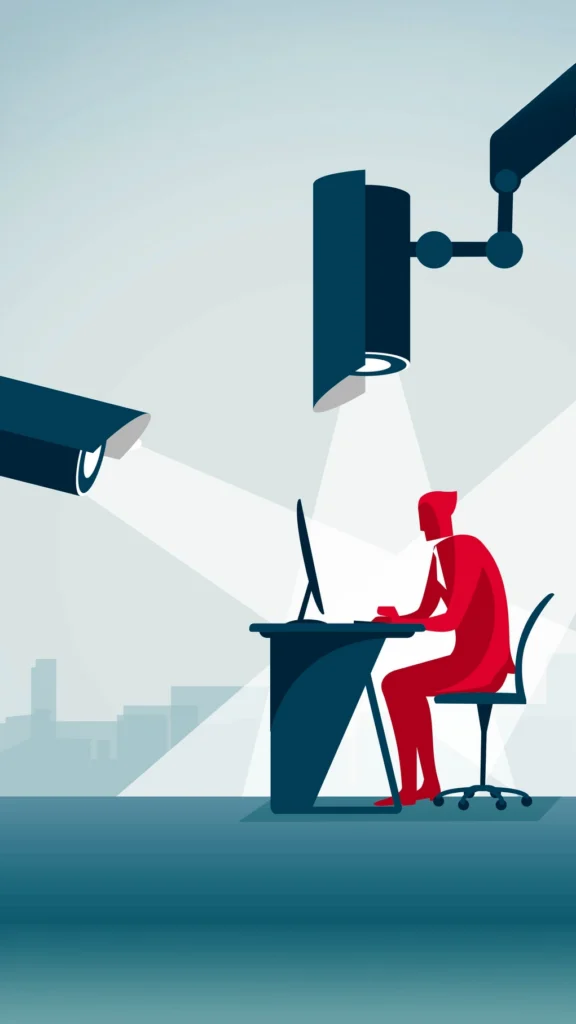
Employers now track workers with keystroke loggers, AI productivity scoring, and biometric access — and those tools went live before the laws caught up, with Mobley v. Workday putting vendors and employers on the hook together. Build the multistate notice-and-consent architecture, navigate Colorado's contested safe harbor, and wield Daubert challenges to defeat employee surveillance and bias claims before they reach a jury.
 Alex W. Karasik Duane Morris LLPAndrew P. Stevens G2
About this program

Course Overview
Bossware Is Easy to Install and Hard to Defend
An employer flips on keystroke logging and screenshot capture across a multistate workforce, and months later those same logs surface in a discrimination suit—offered as the legitimate reason for a termination, then picked apart by a plaintiff's statistical-disparity expert. That scenario is live in 2026: Illinois HB 3773's AI-decision notice rules and BIPA's written-consent requirements both bite when facial-recognition doors and voice-sentiment tools activate on January 1, and Colorado's SB 24-205 sets a June 30 deadline to qualify for the Attorney General's safe harbor on algorithmic discrimination. Any lawyer advising an employer that monitors its people—or a vendor selling the tools—is already exposed, and a single-state notice template won't hold across NY, CT, and DE. This session delivers the multistate notice-and-consent package, BIPA consent documentation, NYC Local Law 144 bias-audit workflows, and the FRE 702 Daubert challenges that defeat plaintiff experts. You'll leave able to build a monitoring rollout that survives challenge and rebut pretext claims under McDonnell Douglas and Reeves.
Key Topics
- Multistate notice Covers prior-notice packages under NY § 52-c, CT § 31-48d, and DE § 705.
- Unified consent Addresses Illinois HB 3773 and BIPA unified consent documentation.
- Safe harbor Covers Colorado SB 24-205 safe-harbor risk management.
- Bias audits Covers NYC Local Law 144 bias-audit workflows.
- Landmark cases Examines Mobley v. Workday and In Re Otter.AI Privacy Litigation.
- Daubert challenges Deploys amended FRE 702 Daubert challenges against plaintiff statistical-disparity experts.
What You Will Learn and Gain
What you will learn
Attorneys will learn to build a layered compliance and litigation-defense architecture against workplace surveillance claims arising from bossware, AI-driven productivity analytics, and biometric access systems.
What you will gain
They will gain a fundamental understanding of legislative developments and recent case developments, plus tools for deploying FRE 702 Daubert challenges and rebutting pretext claims.
Speakers
Alex W. Karasik
Duane Morris LLP
Alex Karasik is a Partner in the Chicago office of Duane Morris LLP, where he chairs the firm’s Employment Law Group’s AI Task Force. He represents businesses in a wide range of employment law matters, from bet-the-company class actions to high-stakes single-plaintiff lawsuits and administrative charges. His practice includes defending companies against claims involving discrimination, harassment, wage and hour violations, and data breach and privacy class actions. He represents clients across various industries, including restaurants, hotels, sporting venues, retailers, automotive manufacturers, logistics companies, and staffing entities, ranging from Fortune 500 multinational corporations to local Chicagoland businesses. His legal analysis has been featured in numerous publications, including Forbes, Bloomberg Law, Law360, Corporate Counsel, Westlaw Today, SHRM, HR.com, the Cook County Record, the Northern California Record, and TechTarget. He has been recognized by Lawdragon, The Legal 500, and Super Lawyers for his work in corporate employment law. He also gives presentations on artificial intelligence and its impact on employment law.
Full profile
Experience
As a Partner in Duane Morris LLP's Chicago office, Karasik represents businesses in employment law matters ranging from bet-the-company class actions to high-stakes single-plaintiff lawsuits and administrative charges. He defends companies in litigation involving discrimination, harassment, wage and hour violations, and data breach and privacy class actions. His clients operate in industries such as restaurants, hotels, sporting venues, retail, automotive manufacturing, logistics, and staffing, and include Fortune 500 multinational corporations as well as local Chicagoland businesses.Education
Alex Karasik received his Juris Doctor (J.D.) from Notre Dame Law School in 2015, where he served as Symposium Editor of the Journal of Legislation and President of the Sports, Communication & Entertainment Law Forum. He also studied abroad in London. He earned a Master of Communication Management from the University of Southern California in 2012 and a Bachelor of Arts degree from the same university in 2010.Recognition
Karasik was recognized in Lawdragon 500's Leading Corporate Employment Lawyers in 2027 and The Legal 500 U.S. Elite: Chicago in 2026. He was also named a Super Lawyers Rising Star from 2024 through 2026, a distinction awarded to only 2.5% of attorneys in Illinois. In addition, he chairs Duane Morris LLP's Employment Law Group AI Task Force.Professional involvement
Karasik's legal analysis has been featured in Forbes, Bloomberg Law, Law360, Corporate Counsel, Westlaw Today, SHRM, HR.com, the Cook County Record, the Northern California Record, and TechTarget. He also gives presentations on artificial intelligence and its impact on employment law. Andrew P. Stevens
G2
Andrew P. Stevens serves as the primary legal partner to Human Resources and People Operations, advising investigations, restructurings, executive separations, and cross-border employment. He also is an Assistant General Counsel and Senior Director, Risk & Litigation at G2, where he oversees litigation, employment matters, enterprise risk, platform integrity, and AI governance. His path to in-house leadership runs through the courtroom—he began as a trial lawyer handling complex civil litigation before moving into enterprise risk and AI governance, giving him a litigator’s perspective on the employment and technology issues companies now face.
Full profile
Experience
Before joining G2, Andrew was a trial lawyer at Corboy & Demetrio, one of the nation's leading plaintiffside litigation firms, where he handled catastrophic injury, aviation, environmental, and complex civil litigation matters. He also served as a judicial law clerk to the Honorable James N. O'Hara of the Circuit Court of Cook County.Education
Andrew earned his J.D. from Loyola University Chicago School of Law and his B.A., magna cum laude, from Saint Louis University.Recognition
Andrew serves as an Adjunct Professor of Trial Advocacy at Loyola University Chicago School of Law and is a recognized thought leader on artificial intelligence and the law, presenting at a Loyola University Chicago School of Law symposium and authoring widely on AI regulation, including the EU AI Act. At G2, he leads the company's risk and litigation function and oversees its AI governance.Professional involvement
Andrew is an Adjunct Professor of Trial Advocacy at Loyola University Chicago School of Law and has spoken and written on topics including employment law, compliance, artificial intelligence, and legal ethics.Agenda
-
Building the Compliance Architecture: Notice, Consent, and Safe Harbor
This session covers what must exist before surveillance tools go live: multistate prior-notice packages under NY § 52-c, CT § 31-48d, and Colorado SB 24-205 safe-harbor steps before the June 30, 2026 deadline; and NYC Local Law 144 bias audits.
Alex W. Karasik, Andrew P. Stevens
-
Defending the Class Action: Case Developments and Daubert Strategy
This session turns to litigation defense: the impact of Mobley v. Workday and In Re Otter.AI Privacy Litigation on employers and vendors and rebutting pretext claims under McDonnell Douglas and Reeves v. Sanderson Plumbing.
Alex W. Karasik, Andrew P. Stevens
MCLE Credits
-
Alabama
Approved for Self-Study Credits
1.5 General
-
Alaska
Approved for CLE Credits
1.5 General
Our programs are CLE-eligible through Alaska’s recognition of multi-jurisdictional reciprocity.
-
Arizona
Approved for CLE Credits
1.5 General
-
Arkansas
Approved for CLE Credits
1.5 General
-
California
Approved for CLE Credits
1.5 General
-
Colorado
Pending CLE Approval
1.5 General
-
Connecticut
Approved for CLE Credits
1.5 General
-
Delaware
Pending CLE Approval
1.5 General
-
District of Columbia
No MCLE Required
No MCLE Required
-
Florida
Pending CLE Approval
1.5 General Hours
Receive CLE credit in Florida via attorney submission.
-
Georgia
Approved for CLE Credits
1.5 General
-
Hawaii
Approved for CLE Credits
2 General
-
Idaho
Pending CLE Approval
1.5 General
-
Illinois
Approved for Self-Study Credits
1.5 General
-
Indiana
Approved For On-Demand Credits
1.5 General
-
Iowa
Pending CLE Approval
1.5 General
-
Kansas
Pending CLE Approval
1.5 Substantive
-
Kentucky
Pending CLE Approval
1.5 General
-
Louisiana
Pending CLE Approval
1.5 General
-
Maine
Pending CLE Approval
1.5 General
-
Maryland
No MCLE Required
1.5 CLE Hour(s)
-
Massachusetts
No MCLE Required
1.5 CLE Hour(s)
-
Michigan
No MCLE Required
1.5 CLE Hour(s)
-
Minnesota
Pending CLE Approval
1.5 General
-
Mississippi
Pending CLE Approval
1.5 General
-
Missouri
Approved for Self-Study Credits
1.8 General
-
Montana
Pending CLE Approval
1.5 General
-
Nebraska
Pending CLE Approval
1.5 General
myLawCLE reports attendance to Nebraska on each attorney’s behalf for all programs. Please do not self-report.
-
Nevada
Pending CLE Approval
1.5 General
-
New Hampshire
Approved for CLE Credits
90 General minutes
As of July 1, 2014, the NHMCLE Board no longer provides pre- or post-approval of courses. Attendees must self-determine whether a program is eligible for credit, and self-report their attendance online at www.nhbar.org, based on qualification provisions of Rule 53.
-
New Jersey
Approved for CLE Credits
1.5 General
Our programs are CLE-eligible through New Jersey’s recognition of multi-jurisdictional reciprocity, except for the courses required under BCLE Reg. 201:2
-
New Mexico
Approved for Self-Study Credits
1.5 General
-
New York
Approved for CLE Credits
1.5 General
Our programs are CLE-eligible through New York’s Approved Jurisdiction Group “B”.
-
North Carolina
Pending CLE Approval
1.5 General
-
North Dakota
Approved for CLE Credits
1.5 General
Our programs are CLE-eligible through North Dakota’s recognition of multi-jurisdictional reciprocity. Section 1, Policy 1.14
-
Ohio
Approved for Self-Study Credits
1.5 General
-
Oklahoma
Pending CLE Approval
2 General
-
Oregon
Pending CLE Approval
1.5 General
-
Pennsylvania
Approved for Self-Study Credits
1.5 General
-
Rhode Island
Approved for Self-Study Credits
1.5 General
-
South Carolina
Approved for Self-Study Credits
1.5 General
-
South Dakota
No MCLE Required
1.5 CLE Hour(s)
-
Tennessee
Approved for Self-Study Credits
1.5 General
-
Texas
Approved for CLE Credits
1.5 General
-
Utah
Pending CLE Approval
1.5 General
-
Vermont
Approved for CLE Credits
1.5 General
-
Virginia
Not Eligible
1.5 General Hours
-
Washington
Approved via Attorney Submission
1.5 Law & Legal Hours
Receive CLE credit in Washington via attorney submission.
-
West Virginia
Pending CLE Approval
1.8 General
-
Wisconsin
Approved for Self-Study Credits
1.5 General
-
Wyoming
Pending CLE Approval
1.5 General
No state matches.