
On-Demand · October 16, 2026
Small Estate Affidavits in 2026: Building the File and Making the Institution Honor It
Small estate affidavits are only faster if the file qualifies and the bank honors it. Learn to calculate the new state thresholds, classify and value assets, assemble an institution-ready file, and escalate a refusal into enforcement and fee recovery.
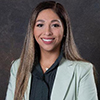
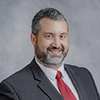 Susie Coons McDonald Coons Law Group, APCJared R. Clemence Eagle Heritage Law PC
About this program

Course Overview
The thresholds went up. The bank's willingness to honor your affidavit did not
In 2024 and 2025 a wave of states raised their small estate affidavit thresholds, and California, Illinois, Arizona, and Colorado now let far larger estates bypass formal probate. Eligibility is no longer a quick arithmetic check. Whether the cap keys to the date of death or the date of filing, which assets count, and how they are valued now decide whether the affidavit route exists at all.
Misclassify a non-probate asset and the estate looks too large. Miss the real property dividing line and formal probate becomes mandatory. Sign an incomplete affidavit and the affiant carries the duties and liabilities. Present a proper file and the bank may still refuse it. California, Nebraska, Illinois, Washington, and UPC-adoption states supply statutory enforcement mechanisms and fee-shifting, mandatory in some and discretionary in others, but only if the argument was preserved before suit.
You leave with a threshold and asset-classification method for intake, a file-assembly checklist built for institutional review, and a pre-litigation escalation protocol that runs from statute to manager to legal department to demand letter. You also take a demand-letter framework that turns the institution's safe harbor against its refusal, plus the forum, burden, and fee-recovery considerations for a compelled-transfer action.
Key Topics
- New Threshold Triggers How the 2024–2025 increases in California, Illinois, Arizona, and Colorado change eligibility, and whether each cap keys to the date of death or the date of filing.
- Asset Classification and Valuation Which probate and non-probate assets count toward the cap, how they must be valued, and when real property ownership forces formal probate instead of the affidavit.
- Institution-Ready File Assembly What must be assembled before the affidavit is presented, the duties and liabilities the affiant assumes on signing, and the errors that get affidavits invalidated or rejected.
- Reading the Bank's Refusal The institutional compliance patterns behind refusals, the legitimate grounds a bank may raise, and the statutory safe harbor you turn back on the institution to overcome resistance.
- Pre-Litigation Escalation The statute-to-manager-to-legal-department-to-demand-letter sequence, and the steps that preserve the fee-shifting argument before any suit is filed.
- Enforcement and Fee Recovery Mandatory versus discretionary fee-shifting in California, Nebraska, Illinois, Washington, and UPC-adoption states, and the forum, burden, and fee recovery in a compelled-transfer action.
Speakers
Susie Coons
McDonald Coons Law Group, APC
Susie Coons is a co-owner of McDonald Coons Law Group, APC, in Bakersfield, California, where her practice concentrates on estate planning, trust administration, trust litigation, and probate. She represents individuals, families, fiduciaries, and beneficiaries through every stage of settling an estate, and serves clients in both English and Spanish.
Full profile
Experience
Susie's practice covers the full arc of estate administration: intake and asset analysis, identifying which assets pass through probate and which transfer outside it, small estate and simplified transfer procedures, formal probate administration, trust funding and administration, and disputes that arise between fiduciaries and beneficiaries. At McDonald Coons Law Group this work sits alongside the firm's broader practice in wills, trusts, special needs trusts, guardianships, conservatorships, and living wills. Because the firm serves clients in both English and Spanish, Susie regularly works with families for whom the probate system is unfamiliar territory — a population that often arrives without documentation in order and without a clear picture of what the process requires. That experience informs a practical, step-by-step approach to building a complete file.Education
Susie holds her Juris Doctor from The Santa Barbara & Ventura Colleges of Law and is licensed by the State Bar of California. She practices from McDonald Coons Law Group's Bakersfield office, a firm built to concentrate exclusively on estate planning, probate administration, trust administration, and the establishment of conservatorships — a focus that allows her to work these matters at depth rather than as an adjunct to a general practice.Recognition
Susie serves as Treasurer of the Probate Section of the Kern County Bar Association, an elected officer role within her local probate bar. She co-founded McDonald Coons Law Group with Stevie McDonald and serves as the firm's Vice President and co-owner, sharing responsibility for the firm's practice standards, client service, and operations.Professional involvement
Through her role with the Kern County Bar Association's Probate Section, Susie stays engaged with the practitioners, court staff, and procedures that shape probate practice in Kern County. She also volunteers her time with local Mock Trial competitions, working with student teams on advocacy and courtroom skills. Before co-founding McDonald Coons Law Group, she practiced as an attorney with Rossi Law Group. Jared R. Clemence
Eagle Heritage Law PC
Jared R. Clemence is a Bakersfield, California probate and trust attorney who practices at Eagle Heritage Law PC centers on small estate transfers, decedent estate administration, trust administration, and probate litigation. He writes regularly on California small estate procedures, including what to do when a bank refuses a California small estate affidavit and the mistakes that sink Kern County DE-310 primary residence petitions.
Full profile
Experience
Before founding Eagle Heritage Law, Jared spent four years at Coleman & Horowitt, LLP, a Primerus member firm with offices in Fresno and Bakersfield, representing clients in probate litigation, estate planning, unlawful detainer, and real estate litigation. His probate and inheritance practice covers small estate transfers, decedent estate administration, trust administration and litigation, beneficiary representation, and undue influence and financial elder abuse cases. On the real estate side, he handles title disputes, partition actions, quiet title lawsuits, and unlawful detainers, and he also practices family law and childcare license defense.Education
Jared earned his J.D. from Monterey College of Law and is licensed by the State Bar of California. He completed his undergraduate studies at Drexel University, where he taught graduate-level mathematics in the Mathematics Department's tutoring center and developed statistical analysis software for institutional survey data. He also holds a California real estate license and has worked in California real estate since 2021, affiliated with Watson Realty Services Inc. in Bakersfield — a dual credential that shapes his approach to estates holding real property.Recognition
He is the author of No Will? No Problem! published January 5, 2023, and available through Amazon and the Kindle Store. Following the book's publication, he was accepted as a 2023 member of Lawyers of Distinction, and his work has been featured in The New York Times. He serves on the Board of Directors of the Kern County Bar Association.Professional involvement
Jared publishes an ongoing series of practitioner- and family-facing articles on California probate, small estate transfers, trust administration, and real estate law, covering topics such as bank refusals of small estate affidavits, probate sales with court confirmation, managing access to digital estates, a trustee's duty to inform beneficiaries, and buying out siblings from an inherited house. He has also served on the Bakersfield Chamber of Commerce's Business Development Committee.Agenda
-
Building the Small Estate Affidavit File Under the New State Thresholds
This session covers the 2024–2025 wave of state threshold increases reshaping small estate affidavit eligibility, the mechanics of accurate asset classification and valuation, and the documentation requirements for building a complete, institution-ready file. Attorneys will learn to distinguish probate from non-probate assets, apply filing-date versus death-date triggers across key jurisdictions, and avoid the most common errors that invalidate or delay affidavits. Practitioners gain practical competency in intake analysis, threshold calculation, and file assembly under the new statutory frameworks in California, Illinois, Arizona, Colorado, and other high-population states.
Susie Coons, Jared R. Clemence
-
When the Bank Refuses the Affidavit: Escalation, Enforcement, and Fee Recovery
This session equips attorneys to respond when a financial institution refuses to honor a properly executed small estate affidavit. Attendees will learn a structured pre-litigation escalation protocol, the statutory enforcement mechanisms available in California, Nebraska, Illinois, Washington, and UPC-adoption states, and how to invoke mandatory and discretionary fee-shifting provisions to recover attorney fees. Practitioners leave with a demand-letter framework, an understanding of institutional safe harbors, and litigation filing considerations for compelled-transfer actions.
Susie Coons, Jared R. Clemence
MCLE Credits
-
Alabama
Approved for Self-Study Credits
2 General
-
Alaska
Approved for CLE Credits
2 General
Our programs are CLE-eligible through Alaska’s recognition of multi-jurisdictional reciprocity.
-
Arizona
Approved for CLE Credits
2 General
-
Arkansas
Approved for CLE Credits
2 General
-
California
Approved for CLE Credits
2 General
-
Colorado
Pending CLE Approval
2 General
-
Connecticut
Approved for CLE Credits
2 General
-
Delaware
Pending CLE Approval
2 General
-
District of Columbia
No MCLE Required
2 CLE Hour(s)
-
Florida
Pending CLE Approval
2 General Hours
Receive CLE credit in Florida via attorney submission.
-
Georgia
Approved for CLE Credits
2 General
-
Hawaii
Approved for CLE Credits
2 General
-
Idaho
Pending CLE Approval
2 General
-
Illinois
Pending CLE Approval
2 General
-
Indiana
Pending CLE Approval
2 General
-
Iowa
Pending CLE Approval
2 General
-
Kansas
Pending CLE Approval
2 Substantive
-
Kentucky
Pending CLE Approval
2 General
-
Louisiana
Pending CLE Approval
2 General
-
Maine
Pending CLE Approval
2 General
-
Maryland
No MCLE Required
2 CLE Hour(s)
-
Massachusetts
No MCLE Required
2 CLE Hour(s)
-
Michigan
No MCLE Required
2 CLE Hour(s)
-
Minnesota
Pending CLE Approval
2 General
-
Mississippi
Pending CLE Approval
2 General
-
Missouri
Approved for Self-Study Credits
2.4 General
-
Montana
Pending CLE Approval
2 General
-
Nebraska
Pending CLE Approval
2 General
myLawCLE reports attendance to Nebraska on each attorney’s behalf for all programs. Please do not self-report.
-
Nevada
Pending CLE Approval
2 General
-
New Hampshire
Approved for CLE Credits
120 General minutes
As of July 1, 2014, the NHMCLE Board no longer provides pre- or post-approval of courses. Attendees must self-determine whether a program is eligible for credit, and self-report their attendance online at www.nhbar.org, based on qualification provisions of Rule 53.
-
New Jersey
Approved for CLE Credits
2 General
Our programs are CLE-eligible through New Jersey’s recognition of multi-jurisdictional reciprocity, except for the courses required under BCLE Reg. 201:2
-
New Mexico
Approved for Self-Study Credits
2 General
-
New York
Approved for CLE Credits
2 General
Our programs are CLE-eligible through New York’s Approved Jurisdiction Group “B”.
-
North Carolina
Pending CLE Approval
2 General
-
North Dakota
Approved for CLE Credits
2 General
Our programs are CLE-eligible through North Dakota’s recognition of multi-jurisdictional reciprocity. Section 1, Policy 1.14
-
Ohio
Approved for Self-Study Credits
2 General
-
Oklahoma
Pending CLE Approval
2.5 General
-
Oregon
Pending CLE Approval
2 General
-
Pennsylvania
Approved for Self-Study Credits
2 General
-
Rhode Island
Pending CLE Approval
2.5 General
-
South Carolina
Pending CLE Approval
2 General
-
South Dakota
No MCLE Required
2 CLE Hour(s)
-
Tennessee
Approved for Self-Study Credits
2 General
-
Texas
Approved for CLE Credits
2 General
-
Utah
Pending CLE Approval
2 General
-
Vermont
Approved for CLE Credits
2 General
-
Virginia
Pending CLE Approval
2 General
-
Washington
Approved via Attorney Submission
2 Law & Legal Hours
Receive CLE credit in Washington via attorney submission.
-
West Virginia
Pending CLE Approval
2.4 General
-
Wisconsin
Approved for Self-Study Credits
2 General
-
Wyoming
Pending CLE Approval
2 General
No state matches.