
Live Video-Broadcast · January 20, 2027
Policyholder Property Bad Faith: Discovering the Insurer’s Claims-Reduction Program and Proving It at Trial
Policyholders are proving that a denied or underpaid property claim reflected an insurer-wide claims-reduction program. Learn to discover the program record, defeat blanket confidentiality designations, tie program documents to a single claim, and build a punitive damages record that survives Campbell.
12 - 2:10 PM EST 11 AM - 1:10 PM CST 10 AM - 12:10 PM MST 9 - 11:10 AM PST
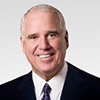 Michael J. Bidart Shernoff Bidart Echeverria LLP
About this program

Course Overview
Proving the Program, Not Just the Adjuster, Decided the Claim
Judge Sheperd's August 20, 2026 order in West v. State Farm, together with the Hursh record, shows how policyholders in property bad faith cases are proving that a denied or underpaid claim reflected an insurer-wide claims-reduction program, not one adjuster's error. Courts in both cases have ordered program documents de-designated. The fight now runs from first-set requests through the punitive damages instruction.
Ask only about your client's claim, and the individual-claim objection shuts the door on benchmark documents. Let a blanket designation stand, and the program record stays sealed. Notice a CEO without a personal-knowledge record, and the apex objection wins. Offer program evidence without tying it to your claim, and Campbell and Williams limit what the jury may punish.
Attendees walk out with sample requests, a motion outline, an exhibit matrix, a multistate chart of punitive caps and privilege rules, and a draft limiting instruction. It is practitioner judgment from a policyholder trial lawyer who has spent decades proving bad faith claims practices to juries.
Key Topics
- Program Vocabulary and First-Set Requests How to turn the carrier's own program and estimating terms into benchmark-targeted requests that survive the individual-claim objection.
- Defeating Blanket Designations How the West and Hursh orders shape protective-order terms and the de-designation motion.
- Executives and Consultants How to build the personal-knowledge record for executive depositions and enforce a subpoena on an out-of-state consultant.
- The Program-to-Claim Tie How an exhibit matrix and locked designee definitions connect program documents to a single claim decision.
- Statistics and Delay How to present program statistics under Rule 702 through party admissions and preserve the delay theory after post-suit payment.
- Punitive Damages Within Campbell How to build a punitive record and limiting instruction under Campbell, Williams, Oklahoma's § 9.1, and Eddy.
Speakers
Michael J. Bidart
Shernoff Bidart Echeverria LLP
Michael J. Bidart is the Managing Partner of Shernoff Bidart Echeverria LLP, where he leads the firm’s HMO Litigation and Property/Casualty Departments and devotes his practice entirely to litigation. Since joining the firm in 1986, he has built its health insurance practice by successfully prosecuting bad faith disputes against insurers and HMOs. He is especially well suited to this program: decades of prosecuting bad faith cases against insurers, including Notrica v. State Compensation Insurance Fund, which produced a $20 million punitive award and an injunction rewriting the insurer’s claims estimating manual, and a landmark $120.5 million verdict against Aetna, bringing the perspective of a policyholder trial lawyer who has proved institutional claims practices to juries.
Full profile
Experience
Mr. Bidart won a landmark $120.5 million verdict against Aetna in Goodrich v. Aetna, then the largest against an HMO, and in Notrica v. State Compensation Insurance Fund secured a $20 million punitive award and an injunction requiring the insurer to change the reserve standard in its claims estimating manual. In State Farm v. Superior Court, he helped establish that California's unfair business practice statute applies to insurers, and he recovered more than $300 million for victims of the 1994 Northridge earthquake. His work has produced dozens of published opinions protecting insureds, including Minkler v. Safeco, and a $28 million verdict in the Rahm trial against Kaiser.Education
Mr. Bidart earned his J.D. from Pepperdine University School of Law in 1974 and his B.S. in Economics from California State Polytechnic University, Pomona, in 1971, receiving the Distinguished Alumnus Award from both. He is admitted before the California Supreme Court, the U.S. Supreme Court, the U.S. Court of Appeals, and all four federal district courts in California.Recognition
Mr. Bidart was named Trial Lawyer of the Year by the Consumer Attorneys Association of Los Angeles (2015) and by CAL ABOTA (2011), and the Los Angeles Daily Journal has named him a Top 25 California Plaintiff Attorney and a Top Healthcare Attorney in California. He has been a Southern California Super Lawyers Top 100 attorney every year since 2004 and a Top 10 attorney since 2018, Best Lawyers' Inland Empire Insurance Law Lawyer of the Year in 2014, 2017, 2021, and 2023 through 2026, and California Lawyer magazine has named him one of California's 100 most influential lawyers.Professional involvement
Mr. Bidart is a Fellow of the American Board of Trial Advocates, the American College of Trial Lawyers, and the International Academy of Trial Lawyers. He has served on the Boards of Governors of the Consumer Attorneys of California and the Consumer Attorneys Association of Los Angeles. A well-known lecturer and keynote speaker on bad faith insurance practices, he has been a featured speaker for The Rutter Group and the California Judges Association.Agenda
-
Discovering the Insurer's Claims-Reduction Program in Policyholder Property Bad Faith Cases
This session walks policyholder-side first-party property bad faith counsel through building discovery around a national carrier’s claims-reduction program, using the West and Hursh State Farm records. Attorneys will learn how to turn the carrier’s own program vocabulary into benchmark-targeted first-set requests, which estimating-platform and adjuster-level records to name, how to negotiate protective-order terms and bring a de-designation motion against blanket confidentiality designations, how to build the personal-knowledge record behind executive and corporate-designee depositions, and how to serve and enforce a non-party subpoena on an out-of-state consultant. Attendees will leave with sample requests, a motion outline, and a clear sense of the wording and timing that move these discovery fights.
Michael J. Bidart
-
Proving Institutional Bad Faith and Punitive Damages with Insurer Program Documents at Trial
This session turns insurer program documents into trial proof that the program decided the client’s claim. Attorneys will learn how to build a program-to-claim exhibit matrix, lock designee definitions against the “accuracy and quality” defense, present statistics under Rule 702 through party admissions rather than industry headlines, preserve the delay theory after post-suit payment, and build a punitive damages record and limiting instruction that withstand State Farm v. Campbell and Philip Morris v. Williams, along with Oklahoma’s § 9.1 framework and the Eddy claim-file privilege limit. Attendees will leave with an exhibit matrix, a multistate chart of punitive caps and privilege rules, and a draft limiting instruction.
Michael J. Bidart
MCLE Credits
-
Alabama
Approved for CLE Credits
2 General
-
Alaska
Approved for CLE Credits
2 General
Our programs are CLE-eligible through Alaska’s recognition of multi-jurisdictional reciprocity.
-
Arizona
Approved for CLE Credits
2 General
-
Arkansas
Approved for CLE Credits
2 General
-
California
Approved for CLE Credits
2 General
-
Colorado
Pending CLE Approval
2 General
-
Connecticut
Approved for CLE Credits
2 General
-
Delaware
Pending CLE Approval
2 General
-
District of Columbia
No MCLE Required
2 CLE Hour(s)
-
Florida
Pending CLE Approval
2 General Hours
Receive CLE credit in Florida via attorney submission.
-
Georgia
Approved for CLE Credits
2 General
-
Hawaii
Approved for CLE Credits
2 General
-
Idaho
Pending CLE Approval
2 General
-
Illinois
Approved for CLE Credits
2 General
-
Indiana
Approved for CLE Credits
2 General
-
Iowa
Pending CLE Approval
2 General
-
Kansas
Pending CLE Approval
2 Substantive
-
Kentucky
Pending CLE Approval
2 General
-
Louisiana
Pending CLE Approval
2 General
-
Maine
Pending CLE Approval
2 General
-
Maryland
No MCLE Required
2 CLE Hour(s)
-
Massachusetts
No MCLE Required
2 CLE Hour(s)
-
Michigan
No MCLE Required
2 CLE Hour(s)
-
Minnesota
Pending CLE Approval
2 General
-
Mississippi
Pending CLE Approval
2 General
-
Missouri
Approved for CLE Credits
2.4 General
-
Montana
Pending CLE Approval
2 General
-
Nebraska
Pending CLE Approval
2 General
myLawCLE reports attendance to Nebraska on each attorney’s behalf for all programs. Please do not self-report.
-
Nevada
Approved for CLE Credits
2 General
-
New Hampshire
Approved for CLE Credits
120 General minutes
As of July 1, 2014, the NHMCLE Board no longer provides pre- or post-approval of courses. Attendees must self-determine whether a program is eligible for credit, and self-report their attendance online at www.nhbar.org, based on qualification provisions of Rule 53.
-
New Jersey
Approved for CLE Credits
2 General
Our programs are CLE-eligible through New Jersey’s recognition of multi-jurisdictional reciprocity, except for the courses required under BCLE Reg. 201:2
-
New Mexico
Approved for CLE Credits
2 General
-
New York
Approved for CLE Credits
2 General
Our programs are CLE-eligible through New York’s Approved Jurisdiction Group “B”.
-
North Carolina
Pending CLE Approval
2 General
-
North Dakota
Approved for CLE Credits
2 General
Our programs are CLE-eligible through North Dakota’s recognition of multi-jurisdictional reciprocity. Section 1, Policy 1.14
-
Ohio
Pending CLE Approval
2 General
-
Oklahoma
Pending CLE Approval
2.5 General
-
Oregon
Pending CLE Approval
2 General
-
Pennsylvania
Approved for CLE Credits
2 General
-
Rhode Island
Pending CLE Approval
2.5 General
-
South Carolina
Pending CLE Approval
2 General
-
South Dakota
No MCLE Required
2 CLE Hour(s)
-
Tennessee
Approved for CLE Credits
2 General
-
Texas
Approved for CLE Credits
2 General
-
Utah
Pending CLE Approval
2 General
-
Vermont
Approved for CLE Credits
2 General
-
Virginia
Not Eligible
2 General Hours
-
Washington
Approved via Attorney Submission
2 Law & Legal Hours
Receive CLE credit in Washington via attorney submission.
-
West Virginia
Pending CLE Approval
2.4 General
-
Wisconsin
Pending CLE Approval
2 General
-
Wyoming
Pending CLE Approval
2 General
No state matches.