Ready to Register?

MyLawCLE All-Access Pass

Best choice

This program is available only with the All-Access Pass — subscribe to unlock it plus 1,000+ live CLE programs every year.


All specialty & ethics credits included
38 practice areas
New sections: AI & the Law, Practice Management
100s of current and trending legal topics
Nationally recognized and highly experienced presenters

$395 / year — this program included
Register with the All-Access Pass

This program + 1,000+ CLE programs, all year

SSD Law in the Federal Courts/Circuits – 2026 Spring National Conference – Track I (Presented by National Organization of Social Security Claimants’ Representatives)

Track the latest federal circuit rulings shaping SSD appeals, master remand strategies, and sharpen your ability to challenge ALJ decisions in federal court.

2026-04-24 09:45:00

1 hours

Program Details

2026-04-24 09:45:00

2026-04-24 09:45:00

1h CLE Credits

2026-04-24 09:45:00

1 hours

Program Details

2026-04-24 09:45:00

Program Details

2026-04-24 09:45:00

Over 1,000+ webinars

2026-04-24 09:45:00

1 hours

Course Overview

Master Federal Circuit SSD Decisions

2026-04-24 09:45:00

Attorneys will examine the most significant federal and circuit court rulings shaping Social Security Disability practice, including evolving standards of review and remand strategies.

Format

CLE Credit

1h CLE Credits

Level

Intermediate

Length

1

Key topics that will be covered

01
ALJ errors
Identify procedural and evidentiary mistakes in ALJ decisions that frequently lead to remand.
02
Circuit precedent
Apply controlling case law effectively when drafting district and appellate court briefs.
03
Medical opinions
Understand how courts assess treating provider opinions under current SSA regulations.
04
Vocational testimony
Develop arguments addressing flawed job-number evidence and vocational expert methodology.
05
Issue preservation
Ensure key legal arguments remain viable for federal judicial review on appeal.
06
Appeal viability
Assess when federal litigation is likely to succeed versus when alternatives are preferable.

Program schedule

clock 9:45 am - 10:45 am EST

SSD Law in the Federal Courts/Circuits

This segment identifies, summarizes, and highlights significant developments and trends in circuit court SSD case law and other relevant federal SSD decisions from the past year, equipping disability attorneys with current appellate insight.

Eligible for up to 1 CLE Credit Hour.

This session was originally submitted for CLE as a live, in-person presentation and a live webcast for the 2026 Spring National Conference and may be eligible for self-study credit. Each state handles self-study credit differently; for questions, please consult your State Bar Association.

Recorded Friday, April 24, 2026.

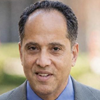
Sarah H. BohrSarah H. Bohr
Jon C. DubinJon C. Dubin
Sarah H. Bohr

Sarah H. Bohr

Bohr & Harrington LLC

Jon C. Dubin

Jon C. Dubin

Rutgers Law School

Sarah H. Bohr

Sarah H. Bohr

Bohr & Harrington LLC

Sarah H. Bohr is an appellate attorney who has specialized in Social Security law for over 40 years and for the past 20 years, has had an appellate practice writing Social Security federal court briefs for lawyers.

Education & Credentials

Sarah earned her B.A. from the College of Wooster in 1974 and her J.D. from the Antioch School of Law in 1977, and was admitted to practice in the District of Columbia and Florida in 1978.

Recognition & Leadership

She is a past president of the NOSSCR and a current representative on the Board from the 11th Circuit and a member of its Executive Committee.

Professional Involvement

Sarah is a frequent speaker at national and regional Social Security conferences. She is the author of five Social Security publications and her new updated 2026 Editions addressing the Appeals Council, Rulings, Overview of Disability Law, and attorneys fees.

Experience

She learned Social Security law while working at Jacksonville Area Legal Aid, Inc. for 21 years. Sarah is most proud of her successful argument before the Supreme Court 25 years ago, in Sims v. Apfel, 530 U.S. 103 (2000).
Jon C. Dubin

Jon C. Dubin

Rutgers Law School

Jon C. Dubin is the Board of Governors Distinguished Service Professor, Distinguished Professor of Law, Paul Robeson Scholar and Director of the Economic Justice and Public Benefits Clinic at Rutgers Law School, Newark Campus where he teaches Administrative Law; Social Security Law; Poverty, Race & Economic Justice; and the Economic Justice & Public Benefits Clinic.

Education & Credentials

He is a graduate of NYU Law School and Dartmouth College.

Recognition & Leadership

He is an elected member of the National Academy of Social Insurance; recipient of the National Organization of Social Security Claimant Representatives (NOSSCR’s) Distinguished Service Award; has supplied solicited testimony to Congress on Social Security Disability Reform; served on the Administrative Conference of the United States (ACUS), Social Security Disability Adjudication Working Group; and served on the Board of Directors of the National Center for Law & Economic Justice/Center for Social Welfare Policy & Law.

Professional Involvement

He has authored or co-authored numerous books on Social Security Law, Policy or Practice including: SOCIAL SECURITY DISABILITY LAW AND THE AMERICAN LABOR MARKET (NEW YORK UNIVERSITY PRESS, 2021); SOCIAL SECURITY LAW AND PRACTICE IN A NUTSHELL (Co-authored with Frank S. Bloch, West Acad. Pub. Co. 2022); ) and SOCIAL SECURITY LAW, POLICY AND PRACTICE: CASES AND MATERIALS (Co-authored with Frank S. Bloch, West Acad. Pub. Co., 2016) His latest forthcoming book is under contract with Cambridge University Press (CUP): THE COLOR OF SOCIAL SECURITY: RACE, RETIREMENT, DISABILITY AND DISPARITY IN THE CROWN JEWEL OF THE WELFARE STATE (CUP, forthcoming 2026).

Experience

His own law school clinical practice for over 35 years has focused on the social security disability programs, including co-counseling the successful appeal and serving as the principal drafter of the Petitioner’s Brief in the U.S. Supreme Court in Sims v. Apfel, 530 U.S. 103 (2000)—a case in which the high court also twice cited Dubin’s National Equal Justice Library award-winning COLUMBIA LAW REVIEW article Torquemada Meets Kafka (1997) and adopted the article’s doctrinal label, “issue exhaustion,” and reasoning in its decision. He was also Counsel of Record for 56 law professors from 40 law schools as Amicus Curiae in the U.S. Supreme Court in Carr v. Saul, 593 U.S. 83 (2021) (extending Sims), and has supervised a dozen successful appeals in the U.S. Courts of Appeal, and countless successful appeals in the district courts and in social security administrative hearings.
Sarah H. Bohr

Sarah H. Bohr

Bohr & Harrington LLC

Sarah H. Bohr is an appellate attorney who has specialized in Social Security law for over 40 years and for the past 20 years, has had an appellate practice writing Social Security federal court briefs for lawyers.

Education & Credentials

Sarah earned her B.A. from the College of Wooster in 1974 and her J.D. from the Antioch School of Law in 1977, and was admitted to practice in the District of Columbia and Florida in 1978.

Recognition & Leadership

She is a past president of the NOSSCR and a current representative on the Board from the 11th Circuit and a member of its Executive Committee.

Professional Involvement

Sarah is a frequent speaker at national and regional Social Security conferences. She is the author of five Social Security publications and her new updated 2026 Editions addressing the Appeals Council, Rulings, Overview of Disability Law, and attorneys fees.

Experience

She learned Social Security law while working at Jacksonville Area Legal Aid, Inc. for 21 years. Sarah is most proud of her successful argument before the Supreme Court 25 years ago, in Sims v. Apfel, 530 U.S. 103 (2000).
Jon C. Dubin

Jon C. Dubin

Rutgers Law School

Jon C. Dubin is the Board of Governors Distinguished Service Professor, Distinguished Professor of Law, Paul Robeson Scholar and Director of the Economic Justice and Public Benefits Clinic at Rutgers Law School, Newark Campus where he teaches Administrative Law; Social Security Law; Poverty, Race & Economic Justice; and the Economic Justice & Public Benefits Clinic.

Education & Credentials

He is a graduate of NYU Law School and Dartmouth College.

Recognition & Leadership

He is an elected member of the National Academy of Social Insurance; recipient of the National Organization of Social Security Claimant Representatives (NOSSCR’s) Distinguished Service Award; has supplied solicited testimony to Congress on Social Security Disability Reform; served on the Administrative Conference of the United States (ACUS), Social Security Disability Adjudication Working Group; and served on the Board of Directors of the National Center for Law & Economic Justice/Center for Social Welfare Policy & Law.

Professional Involvement

He has authored or co-authored numerous books on Social Security Law, Policy or Practice including: SOCIAL SECURITY DISABILITY LAW AND THE AMERICAN LABOR MARKET (NEW YORK UNIVERSITY PRESS, 2021); SOCIAL SECURITY LAW AND PRACTICE IN A NUTSHELL (Co-authored with Frank S. Bloch, West Acad. Pub. Co. 2022); ) and SOCIAL SECURITY LAW, POLICY AND PRACTICE: CASES AND MATERIALS (Co-authored with Frank S. Bloch, West Acad. Pub. Co., 2016) His latest forthcoming book is under contract with Cambridge University Press (CUP): THE COLOR OF SOCIAL SECURITY: RACE, RETIREMENT, DISABILITY AND DISPARITY IN THE CROWN JEWEL OF THE WELFARE STATE (CUP, forthcoming 2026).

Experience

His own law school clinical practice for over 35 years has focused on the social security disability programs, including co-counseling the successful appeal and serving as the principal drafter of the Petitioner’s Brief in the U.S. Supreme Court in Sims v. Apfel, 530 U.S. 103 (2000)—a case in which the high court also twice cited Dubin’s National Equal Justice Library award-winning COLUMBIA LAW REVIEW article Torquemada Meets Kafka (1997) and adopted the article’s doctrinal label, “issue exhaustion,” and reasoning in its decision. He was also Counsel of Record for 56 law professors from 40 law schools as Amicus Curiae in the U.S. Supreme Court in Carr v. Saul, 593 U.S. 83 (2021) (extending Sims), and has supervised a dozen successful appeals in the U.S. Courts of Appeal, and countless successful appeals in the district courts and in social security administrative hearings.

Credits by state

AK1.0
AL1.0
AR1.0
AZ1.0
CA1.0
CO1.0
CT1.0
DC
DE1.0
FL1.0
GA1.0
HI1.0
IA1.0
ID1.0
IL1.0
IN1.0
KS1.0
KY1.0
LA1.0
MA1.0
MD1.0
ME1.0
MI1.0
MN1.0
MO1.2
MS1.0
MT1.0
NC1.0
ND1.0
NE1.0
NH60.0
NJ1.0
NM1.0
NV1.0
NY1.0
OH1.0
OK1.0
OR1.0
PA1.0
RI1.0
SC1.0
SD1.0
TN1.0
TX1.0
UT1.0
VA1.0
VT1.0
WA1.0
WI1.0
WV1.2
WY1.0

Upcoming Live Online CLE Broadcasts

1000+

Live stream programs

24/7

Access to live webinars & recordings

70,000+

Trusted by Legal Professionals

1000+

Live stream programs

24/7

Access to live webinars & recordings

70,000+

Trusted by Legal Professionals

1000+

Live stream programs

24/7

Access to live webinars & recordings

10,000+

Trusted by Legal Professionals

1000+

Live stream programs

24/7

Access to live webinars & recordings

70,000+

Trusted by Legal Professionals

MCLE Credits

Alabama
Approved
Alaska
Approved
Arizona
Approved
Arkansas
Approved
California
Approved
Colorado
Pending
Connecticut
Approved
Delaware
Pending
District of Columbia
No Required
Florida
Approved
Georgia
Approved
Hawaii
Approved
Idaho
Pending
Illinois
Not Eligible
Indiana
Approved
Iowa
Approved
Kansas
Pending
Kentucky
Pending
Louisiana
Pending
Maine
Pending
Maryland
No Required
Massachusetts
No Required
Michigan
No Required
Minnesota
Pending
Mississippi
Pending
Missouri
Approved
Montana
Approved
Nebraska
Pending
Nevada
Approved
New Hampshire
Approved
New Jersey
Approved
New Mexico
Approved
New York
Approved
North Carolina
Pending
North Dakota
Approved
Ohio
Approved
Oklahoma
Pending
Oregon
Approved
Pennsylvania
Approved
Rhode Island
Pending
South Carolina
Approved
South Dakota
No Required
Tennessee
Approved
Texas
Approved
Utah
Pending
Vermont
Approved
Virginia
Not Eligible
Washington
Approved
West Virginia
Pending
Wisconsin
Approved
Wyoming
Pending

Alabama

Requirements

The Alabama State Bar MCLE Commission requires attorneys to complete 12 credits, including 1 ethics, by December 31 of each year. All credits must be reported by February 15 of the following year. A maximum of 12 credits, including 1 ethics credit, may be carried over for 1 year only.  

Formats

  • Attorneys can earn unlimited “live” credit through live seminars, live webcasts, and co-sponsored locations with MyLAWCLE-Alabama approved programs
  • Attorneys are limited to 6 credits per compliance period of “online” programs through MyLAwCLE On-Demand programs