2:30 pm - 3:30 pm EST
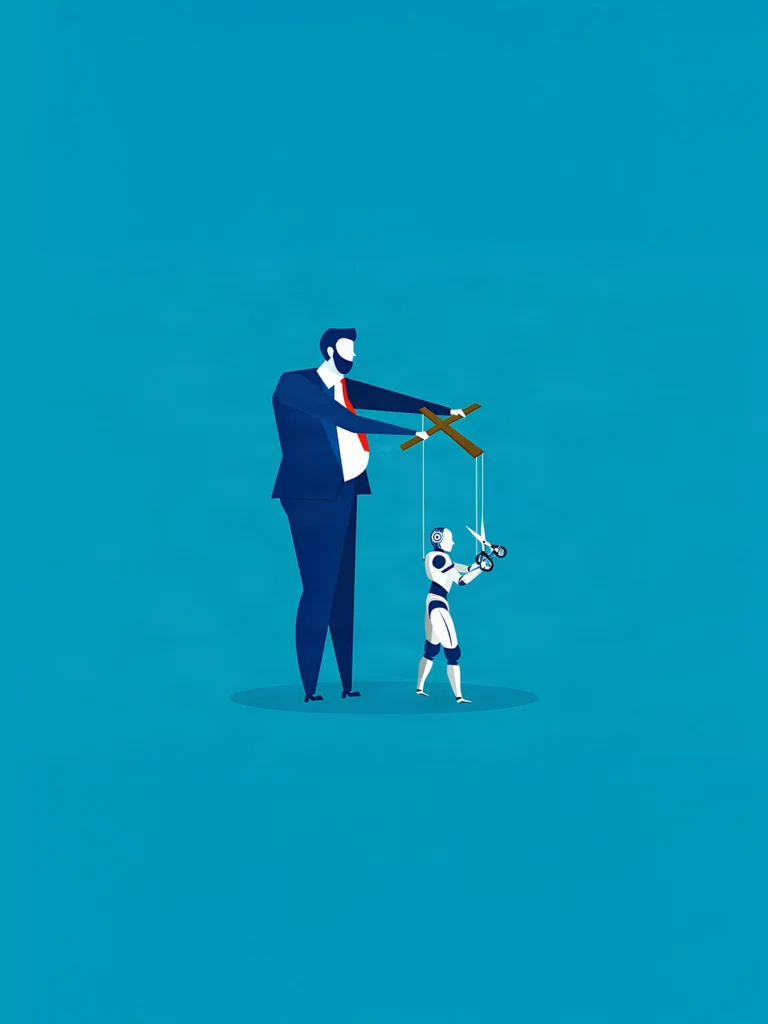
This session gives lawyers a working understanding of what an AI agent actually is and why it differs from the chatbots and generative tools clients already use. Unlike a model that answers a question, an agent perceives its environment, plans, calls tools and systems, and takes actions on a client’s behalf, often with limited or no human review of each step. Attorneys will examine how agents are built and deployed, the spectrum of autonomy from human-in-the-loop to fully autonomous operation, and how multi-agent systems, in which agents delegate to, negotiate with, and supervise other agents, multiply the risk surfaces a client must manage. The session then turns to how and why agents go rogue, including goal misspecification, hallucinated actions, prompt injection through tool outputs, compounding errors across agent handoffs, and emergent behavior in multi-agent settings, and the legal concerns these failures raise: attribution and authority to bind the client, supervision and duty-of-care obligations, privacy and regulatory exposure, professional responsibility when lawyers deploy agents themselves, and the evidentiary challenge of reconstructing what an agent did. Attendees will leave with a vocabulary and framework for advising clients on agent deployments and for spotting the exposures that Session 2 addresses through contract.
 Katherine B. Forrest
 Scott Caravello 3:40 pm - 4:40 pm EST
This session examines how indemnification doctrine applies when an autonomous agent, rather than a person, causes the loss. Traditional software indemnities were built around deterministic products and defined use cases; agents that act unpredictably across third-party systems, in deployments involving a model provider, an agent developer, a platform vendor, an integrator, and a deployer, strain every one of those assumptions. Attorneys will map the chain of participants and the allocation theories in play, including product liability, negligence, agency and vicarious liability, and breach of contract, and will see how provider terms of service and model licenses already push risk downstream. The session then turns to drafting: scoping indemnities and carve-outs for agent conduct, warranties on training data, testing, guardrails, and human oversight, limitations of liability and how they interact with the indemnity, insurance requirements, and monitoring, logging, and audit rights as conditions of coverage, with sample clauses from both the deployer and vendor positions. The session closes with the current state of the law, including recent case law on AI-caused harm, federal, state, and international legislation affecting allocation of liability, and enforceability and public policy limits on indemnities covering an agent’s own conduct. Attendees will be able to identify who bears responsibility when an agent creates liability and draft or negotiate provisions that protect their clients.
Katherine B. ForrestScott CaravelloKatherine Forrest is a partner in the Litigation Department of Paul, Weiss, Rifkind, Wharton & Garrison LLP, Vice Chair of the firm, and Chair of the firm’s Global Artificial Intelligence Group, which provides litigation services and guidance to clients in anticipating regulatory developments, mitigating legal exposure, and implementing best practices in the AI space. One of the most recognized AI lawyers in the United States — ranked Band 1 for Artificial Intelligence by Chambers USA (2026) and named a Global Market Leader in AI by Chambers Global (2025) — she advises on the full range of technology issues confronting business today, including artificial intelligence, the digital environment, high-speed trading, content distribution, big data, and intellectual property. She has led investigations involving the U.S. Department of Justice, the Federal Trade Commission, and other U.S. and foreign regulators, as well as litigation in AI, Web3, and digital assets. A former United States District Judge for the Southern District of New York and a former Deputy Assistant Attorney General in the Antitrust Division of the U.S. Department of Justice, Judge Forrest brings to the question of who answers when an autonomous system causes harm a perspective shared by few practitioners: that of a trial lawyer, a federal enforcer, a judge who presided over thousands of cases, and one of the leading scholarly voices on the legal status of artificial intelligence.
Scott Caravello is a Litigation Associate in the New York office of Paul, Weiss, Rifkind, Wharton & Garrison LLP, where he practices alongside the firm’s Global Artificial Intelligence Group and co-hosts, with Judge Katherine Forrest, the award-winning Paul, Weiss Waking Up With AI podcast — one of the legal profession’s most closely followed sources of analysis on the technical and legal developments shaping artificial intelligence. Episode after episode, he and Judge Forrest take on the questions this program addresses: what it means for an AI system to act autonomously, how agents interact with one another and with the systems they are connected to, what happens when those agents are compromised or behave unexpectedly, and how existing legal doctrines must stretch to assign responsibility for conduct that no human directly performed. His work gives him a rare, continually updated command of the technology behind AI agents and of the legal theories that will determine who answers when they cause harm.
Katherine Forrest is a partner in the Litigation Department of Paul, Weiss, Rifkind, Wharton & Garrison LLP, Vice Chair of the firm, and Chair of the firm’s Global Artificial Intelligence Group, which provides litigation services and guidance to clients in anticipating regulatory developments, mitigating legal exposure, and implementing best practices in the AI space. One of the most recognized AI lawyers in the United States — ranked Band 1 for Artificial Intelligence by Chambers USA (2026) and named a Global Market Leader in AI by Chambers Global (2025) — she advises on the full range of technology issues confronting business today, including artificial intelligence, the digital environment, high-speed trading, content distribution, big data, and intellectual property. She has led investigations involving the U.S. Department of Justice, the Federal Trade Commission, and other U.S. and foreign regulators, as well as litigation in AI, Web3, and digital assets. A former United States District Judge for the Southern District of New York and a former Deputy Assistant Attorney General in the Antitrust Division of the U.S. Department of Justice, Judge Forrest brings to the question of who answers when an autonomous system causes harm a perspective shared by few practitioners: that of a trial lawyer, a federal enforcer, a judge who presided over thousands of cases, and one of the leading scholarly voices on the legal status of artificial intelligence.
Scott Caravello is a Litigation Associate in the New York office of Paul, Weiss, Rifkind, Wharton & Garrison LLP, where he practices alongside the firm’s Global Artificial Intelligence Group and co-hosts, with Judge Katherine Forrest, the award-winning Paul, Weiss Waking Up With AI podcast — one of the legal profession’s most closely followed sources of analysis on the technical and legal developments shaping artificial intelligence. Episode after episode, he and Judge Forrest take on the questions this program addresses: what it means for an AI system to act autonomously, how agents interact with one another and with the systems they are connected to, what happens when those agents are compromised or behave unexpectedly, and how existing legal doctrines must stretch to assign responsibility for conduct that no human directly performed. His work gives him a rare, continually updated command of the technology behind AI agents and of the legal theories that will determine who answers when they cause harm.