2:30 pm - 3:30 pm EST
This session takes stock of the reincorporation landscape after the Delaware Supreme Court’s February 2026 decision in Rutledge v. Clearway Energy Group upheld SB 21 against constitutional attack, leaving boards to compare a stabilized Delaware against two increasingly credible alternatives. Attorneys will learn what Rutledge actually settled about the Section 144 safe harbors and the narrowed books-and-records right, how Maffei v. Palkon frames the standard of review for the decision to leave and where entire fairness still reaches a conversion, what Texas SB 29 and the Texas Business Court deliver in practice, and how Nevada’s AB 239 regime compares for controlled and founder-led issuers. Attendees will leave able to run a defensible domicile comparison for a specific client rather than a general one, and to tell the board which of the advertised advantages of Texas and Nevada would actually change the outcome of the litigation that company is likely to face.
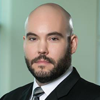 Albert Z. Kovacs 3:40 pm - 4:40 pm EST
This session moves from the domicile comparison to the execution of a reincorporation, treating the board record, the proxy, and the closing mechanics as the places where these transactions are won or lost. Attorneys will learn how to build a board record that earns business judgment deference and when a special committee is worth the cost, how to draft the comparative disclosure that institutional holders and proxy advisors will scrutinize, how to choose among conversion, merger, and holding company structures given tax, contract, and consent constraints, and how to anticipate the pre-closing and post-closing litigation the move invites. Attendees will leave with a sequenced execution plan, a checklist of the charter and bylaw terms that should be rewritten at the moment of the move rather than later, and a realistic account of what changes for the client the day after the certificate is filed.
 Wendy Grasso
Albert Z. Kovacs is a shareholder in the Las Vegas office of Brownstein Hyatt Farber Schreck, where he counsels clients on corporate governance and mergers and acquisitions under Nevada law, in transactions and litigation, as lead or local Nevada counsel. As vice chair of the Executive Committee of the State Bar of Nevada’s Business Law Section, he has had a substantial hand in shaping, and frequently drafting, Nevada’s corporation and LLC statutes and policy in recent years. He is especially well suited to this program: he helps write the Nevada corporate statutes that boards now weigh as an alternative domicile, has co-authored commentary on corporate migration to Nevada and on the state’s move toward a dedicated business court, and advises on Nevada governance issues in deals and disputes, bringing an insider’s view of how Nevada law is built and how it works for companies that choose it.
Wendy Grasso is counsel in the New York office of Fenwick & West LLP, where she practices in the firm’s corporate, corporate governance, and mergers and acquisitions groups. She counsels public and private companies, and their boards, on governance and environmental, social, and governance (ESG) matters, covering everything from policy design and risk assessment to shareholder engagement, activism, and the disclosure, reporting, and compliance obligations that follow. She is especially well suited to this program: she advises boards on governance practice and shareholder engagement, handled SEC reporting, stock exchange compliance, and corporate reorganizations for public companies as a partner at an international firm, and contributes to Fenwick’s publications on proxy season results and SEC proxy rulemaking, bringing the perspective of a governance adviser who understands how a board’s record and disclosures will be read by the stockholders asked to approve them.