


 Adriane Fugh-Berman, MD | Georgetown University Medical Center
Adriane Fugh-Berman, MD is a Professor of Pharmacology and Physiology and the Department of Family Medicine at Georgetown University Medical Center. Dr. Fugh-Berman codirects the M.S. program in Health and the Public Interest and directs PharmedOut, a research and education project at GUMC that promotes rational prescribing and exposes the effect of pharmaceutical marketing on prescribing practices.
Dr. Fugh-Berman has authored many key articles in peer-reviewed literature on the area of industry influence on medicine, including the first studies in the medical literature about how the pharmaceutical industry influences surgeons, pharmacists, basic scientists, and individual patients. Other key articles address industry influence on continuing medical education, studies of messaging in CME on shortacting opioids, fentanyl, binge-eating disorder, and hypoactive sexual desire disorder; a national survey of dentists’ attitudes about opioids, a study that shows that Medicare prescribers who accept industry gifts prescribe more medications (and more expensive medications), a review of how industry uses social psychology to manipulate physicians, an exposé of how ghostwritten articles in the medical literature were used to sell menopausal hormone therapy, an article about how “key opinion leaders” are used to market drugs off-label, an explanation of drug rep tactics, a national survey of industry interactions with family medicine residencies, and a study of the first educational activity that changed physicians’ perceptions about their own individual vulnerability to pharmaceutical marketing. Dr. Fugh-Berman lectures internationally and has appeared on 20/20, Nightline, the 1A, the Diane Rehm show, and every major television network.
Previously, Dr. Fugh-Berman was a medical officer in the Contraception and Reproductive Health Branch of the National Institute for Child Health and Human Development, NIH. She has also worked with the nonprofit Reproductive Toxicology Center and edited an award-winning CME newsletter on women’s health. Dr. Fugh-Berman graduated from Georgetown University School of Medicine and completed a family medicine internship in the Residency Program in Social Medicine at Montefiore Hospital in the Bronx.
 Reuben Guttman | Guttman Buschner PLLC
Reuben Guttman is a founding member of Guttman, Buschner & Brooks, PLLC where his practice involves civil rights, whistleblowers, class actions and complex litigation. The International Business Times has referred to him as “one of the world’s most prominent whistleblower attorneys.” Citing “wins recouping billions of dollars for the federal and state governments,” Boston Globe’s STAT News referred to him as the “The Lawyer Pharma Loves to Hate.”
Guttman has represented workers, unions, and pension funds in complex litigation. For over a decade, he has served as the chief outside counsel to the Oil, Chemical & Atomic Workers International Union, AFLCIO/CLC, in a series of labor and environmental cases that enhanced safety and environmental conditions at Manhattan Project nuclear weapons sites while driving dread disease compensation legislation for nuclear weapons workers across the nation.
In 2020, he served as lead counsel in a federal class action lawsuit against the South Carolina Department of Corrections and secured a consent order mandating Hepatitis C testing and treatment for 17,000 inmates.
Guttman is currently a faculty member of the American University School of Public Affairs where he teaches Equal Protection/Civil Rights, and he has been an Adjunct Professor at Emory Law School and a Senior Fellow at Emory Law’s Center for Advocacy and Dispute Resolution. He is a Founder and Senior Advisor to the Emory Corporate Governance and Accountability Review (ECGAR). He is the 2015 recipient of the Emory Law Alumni Service Award.
He has taught trial advocacy and complex case investigations in the United States, China, and Mexico, and he has co-authored three case files – two published by Emory Law and one published by the National Institute of Trial Advocacy where he is a faculty member.
He is co-author (with J.C. Lore III of Rutgers Law) of the textbook, Pretrial Advocacy (Wolters Kluwer Spring, 2021). He is a chapter co author (with Traci Buschner) and wrote the introduction for Remote Advocacy: A Guide to Survive and Thrive (Wolters Kluwer and National Institute of Trial Advocacy, 2020).
Guttman has written or co-authored more than 100 articles or opinion pieces and multiple book chapters and law review pieces. He is a monthly columnist for Law360 where he writes on litigation and politics. His article, Pharmaceutical Regulation in the United States; a Confluence of Influences, wastranslated and published in Mandarin in the Peking University Public Interest Law Journal, Vol 1, Page 187 (2010).
Guttman is a Fellow of the American Bar Foundation; he is past member of the Board of Directors of the American Constitution Society (ACS) where he is currently a member of the ACS Board of Advisors. Guttman received his JD from Emory University and his BA in American History from the University of Rochester. He is the founder of www.whistleblowerlaws.com. He began his legal career as a Washington, DC counsel for the Service Employees International Union, AFL-CIO, where he served for five years.
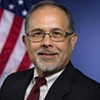 Rick Mountcastle | Guttman Buschner PLLC
Former United States Attorney Rick Mountcastle joined Guttman Buschner LLP as Of Counsel in April 2025, after retiring from the United States Attorney’s Office for the Western District of Virginia and the Virginia Attorney General’s Office.
An award-winning Federal criminal and civil litigator with more than 30 years of experience litigating the most complex and intricate cases, Rick was portrayed by Emmy-nominated actor Peter Sarsgaard in the 2021 awardwinning Hulu miniseries “Dopesick,” which chronicles his leadership of the 2007 prosecution of notorious OxyContin maker Purdue Pharma and its three top executives. He has spoken about the case and the events surrounding the opioid crisis on CBS’s 60 Minutes (aired March 9, 2025), at Law School events, and on numerous podcasts.
Rick’s Federal experience included almost nine years as an award-winning Senior Trial Attorney in DOJ’s Tax Division where he prosecuted complex criminal tax cases across the country. He received several awards, most notably DOJ’s highest honor, the Attorney General’s John Marshall Award for the Trial of Litigation, for leading the prosecution of a Russian mafia leader in the Eastern District of New York for gasoline excise tax fraud conspiracy. In 2007, after more than twenty years and more than 50 jury trials as a criminal prosecutor, Rick moved to the U.S. Attorney’s Office’s Civil Division in Roanoke, Virginia, where he built the office’s False Claims Act and Affirmative Civil Enforcement program while supervising the Financial Litigation Unit and defending the United States in medical malpractice, personal injury, civil rights, and other civil matters. Most notably, he led the False Claims Act and criminal prosecution of Abbott Laboratories for fraudulently marketing Depakote (an anti-epileptic) for off-label treatment of agitation related to dementia in nursing home residents. Working closely with relator’s counsel, Reuben Guttman and Traci Buschner, he secured $1.5 Billion in civil and criminal penalties, at the time the largest single-drug settlement of an off-label pharmaceutical fraud case in the history of the Department of Justice.
Rick also served as the Civil Chief (2010-2016), First Assistant U.S. Attorney (2016-2017, 2018), and Principal Deputy U.S. Attorney (2018). He was appointed the United States Attorney for the Western District of Virginia January 2017 through March 2018. During his tenure he led the Federal response to the August 12, 2017 violence in Charlottesville, initiated the office’s opioid overdose prevention outreach program, directed and oversaw the reorganization of the office’s domestic terrorism and crisis response plan, initiated an anti-gang task force pairing Federal law enforcement with the Danville, Virginia, police department, and initiated a partnership with the Federal Court and the Federal Public Defender to identify and rectify potential discovery issues in a series of dozens of prior criminal prosecutions. Following his retirement from federal service, Rick served three years as an Assistant Attorney General for Virginia’s Medicaid Fraud Control Unit conducting False Claims Act investigations.
Since June 2022, he has partnered with Los Angeles filmmakers Susie Singer Carter and Don Priess to produce the docuseries “No Country for Old People-A Nursing Home Exposé,” which chronicles the plight of our elderly and disabled in nursing homes. The docuseries is currently streaming on Amazon Prime Video, Tubi, and other streaming platforms.
Rick, a graduate of Marquette University and the George Washington University National Law Center, began his career serving four years on active duty in the United States Army Judge Advocate General Corps (JAG) and served an additional 24 years as an U. S. Army Reserve JAG, retiring as a Lieutenant Colonel in 2008.