Ready to Register?

MyLawCLE All-Access Pass

Best choice

Add the All-Access Pass and get this program —
plus 1,000+ live CLE programs every year.


All specialty & ethics credits included
38 practice areas
New sections: AI & the Law, Practice Management
100s of current and trending legal topics
Nationally recognized and highly experienced presenters

$395 / year — this program included
Register with the All-Access Pass

This program + 1,000+ CLE programs, all year

Or register for just this program

Live Video Broadcast

Live webinar of this one program.
$195 Register

On-Demand Video

Recorded access + self-study credit.
$195 Register

Vacating Arbitration Awards After Jules: Jurisdiction, Deadlines, and Practical Strategies

Pick the wrong court or miss the FAA deadline, and your award challenge dies unheard. Choose the forum after Jules, protect the three-month clock, and plead grounds that survive deference.

2026-12-03 12:00:00

Program Details

2026-12-03 12:00:00

2026-12-03 12:00:00

2h CLE Credits

2026-12-03 12:00:00

Program Details

2026-12-03 12:00:00

Program Details

2026-12-03 12:00:00

Over 1,000+ webinars

2026-12-03 12:00:00

Course Overview

A Winning Vacatur Argument Means Nothing in the Wrong Court or After the Deadline

2026-12-03 12:00:00

Challenging an arbitration award now starts with a jurisdiction question. When federal courts can hear post-award motions turns on Badgerow and Smith v. Spizzirri. The Supreme Court’s 2026 decision in Jules v. Andre Balazs Properties then resolved the post-Badgerow circuit split on federal jurisdiction. The dispute’s procedural history now shapes where a challenge can be heard.

Pick the wrong forum, and the motion may never be heard. Miss the FAA Section 12 three-month deadline, and the challenge may be lost. Allege evident partiality, misconduct, or fraud under Section 10 without supporting evidence, and judicial deference wins. Lean on manifest disregard, and you meet its limits and jurisdictional differences. Fail to preserve objections, and the issue may not survive appeal.

You leave able to assess the appropriate forum after Jules and to calculate and protect the three-month deadline. You also learn to evaluate potential vacatur grounds, develop supporting evidence, and build the record. Then you frame a motion that addresses the limits of judicial review. Each step is a judgment call tied to your own dispute’s procedural history and record, which no generic template makes for you.

Format

CLE Credit

2h CLE Credits

Level

Intermediate

Length

2

Key topics that will be covered

01
Choosing the Right Court
How Jules, Badgerow, and Smith v. Spizzirri, applied to the underlying case and its jurisdictional basis, decide whether a federal court can hear your post-award motion.
02
Beating the Three-Month Clock
How to calculate the FAA Section 12 three-month deadline to vacate and protect your challenge from the deadline and filing errors that end it early.
03
Proving Exceeded Arbitrator Authority
How to identify arbitrator decisions that reach beyond the arbitrator’s authority and turn them into a vacatur argument that overcomes judicial deference.
04
Proving Partiality and Misconduct
How to evaluate evident partiality, arbitrator misconduct, and fraud under FAA Section 10 and develop the supporting evidence each ground demands.
05
Testing Manifest Disregard Limits
How the limits of manifest disregard, and its differences from one jurisdiction to the next, should decide whether and how you raise it.
06
Preserving Issues for Appeal
How filing strategy, a well-built record, preserved objections, and a carefully framed motion keep your appellate options open and avoid procedural pitfalls.

Program schedule

clock 12:00 pm - 1:00 pm EST

Selecting the forum and preserving the right to challenge an award

This session examines the procedural steps attorneys must take when seeking to vacate an arbitration award, including the impact of Jules, Badgerow, and Smith v. Spizzirri. Participants will explore how the procedural history of a dispute affects federal jurisdiction, how to assess the appropriate forum, and how to protect a challenge against deadline and filing errors.
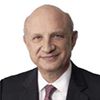
Bruce J. BermanBruce J. Berman
James S. CzodliJames S. Czodli
clock 1:10 pm - 2:10 pm EST

Building a viable challenge under deferential judicial review

This session examines the statutory grounds for vacating arbitration awards and the practical challenges of overcoming judicial deference to an arbitrator’s decision. Participants will explore how to evaluate potential grounds for vacatur, develop supporting evidence, preserve objections, and present arguments that address the limits of judicial review.

Bruce J. BermanBruce J. Berman
James S. CzodliJames S. Czodli
Bruce J. Berman

Bruce J. Berman

Carlton Fields

James S. Czodli

James S. Czodli

Carlton Fields

Bruce J. Berman

Bruce J. Berman

Carlton Fields

Bruce J. Berman serves as an arbitrator, appointed by insurers that write representation and warranty insurance (RWI), and as litigation counsel in RWI disputes arising from M&A deals, which he handles both in court and in arbitration. A Miami-based shareholder at Carlton Fields, he tries, argues, and appeals complex commercial cases for U.S. and international clients in federal and state courts nationwide and before domestic and international arbitral tribunals. He is also the original author, and now co-author, of Berman’s Florida Civil Procedure, a treatise West Group has published every year since 1998.

Education & Credentials

Bruce received his J.D. from Boston University School of Law and his MBA from Columbia University, both in 1972, after earning his B.A. at Williams College in 1968. He is admitted to The Florida Bar and to practice before the U.S. Court of Appeals for the Eleventh Circuit and the U.S. District Courts for the Southern and Middle Districts of Florida and the District of Colorado.

Recognition & Leadership

Chambers USA ranked Bruce from 2007 through 2018, noting his work in domestic and cross-border arbitration alongside M&A-related litigation and complex commercial disputes. He has appeared in The Best Lawyers in America for Commercial Litigation from 2013 through 2027 and has been named a Florida Super Lawyer every year from 2009 through 2026. His other honors include the Miami-Dade Bar's Circle of Excellence Award (2023), the Daily Business Review's Most Effective Lawyers Award in the appellate category (2017), the Lexology Index (formerly WWL) for Transport – Aviation Contentious (2023–2026), The International Who's Who of Aviation Lawyers (2014–2020), Florida Trend's Florida Legal Elite (2011), and Super Lawyers' National Corporate Counsel Edition (2010). In one of its opinions, the Florida Supreme Court described him as a "perceptive observer."

For two decades he chaired The Florida Bar's Civil Procedure Rules Committee (1984–2004), and he chaired its Rules of Judicial Administration Committee from 1988 to 2002.

Professional Involvement

Bruce has written on arbitration developments in the federal courts, including the Eleventh Circuit's 2023 ruling that district courts may equitably toll the FAA's three-month deadline to challenge arbitration awards, 2023 Supreme Court decisions affecting appeals that seek arbitration and the mandatory stay of district court proceedings during those appeals, Section 1782 discovery in aid of foreign arbitration, and the AAA/ICDR optional appellate arbitration rules. As faculty of the Florida Conference of Circuit Judges, he has lectured state trial judges on jurisdiction and venue.

His speaking engagements include "Representations and Warranties Insurance Coverage and Disputes" at the ARIAS-U.S. 2023 Spring Conference, "International Discovery" at The Florida Bar's International Litigation and Arbitration Update (2006), "Civil Procedure" for The Florida Bar's Civil Trial Law Certification Review Course (2009, 2011), and "Departures From the American Rule on Attorney's Fees" at The Federalist Society's Annual Florida Chapters Conference (2018). He has also served on The Florida Bar's Standard Jury Instructions Committee — Civil Cases (2000–2007), the Florida Supreme Court's Workgroup on Public Records (2000–2001) and Court Reporter Certification Planning Committee (1995–1998), and the Miami-Dade County Circuit Court's Ad Hoc Trial Practices and Procedures Committee. In the community, he was President (2008–2010) and a board member (2001–2010) of Feeding South Florida, sits on the Miami-Dade Beacon Council's Aviation Committee, and is a former community board member of the New World Symphony.

Experience

Beyond his RWI appointments and RWI litigation nationwide, Bruce defends national insurers of sellers' financial and business representations and warranties in post-acquisition cases that strategic and investment buyers bring in arbitration and in court. He represents an Italian yacht manufacturer in a dispute with a U.S. purchaser that is proceeding in arbitration in London while a related U.S. federal action remains pending, and he defends the foreign subsidiary of a multinational company in an international arbitration governed by Mexican law. He also represented a major European manufacturer in an international arbitration over a successful joint bid for a $7 billion U.S. government aviation contract, and he coordinated, prosecuted, and defended tens of millions of dollars in payor-provider claims across related proceedings before American Health Lawyers Association and American Arbitration Association tribunals.

His broader commercial and appellate record includes defeating class certification in a $1.5 billion post-merger securities case in Georgia state court and sustaining that ruling through appeal and denial of certiorari in the state Supreme Court; representing the buyer in a suit between two public companies over a $1.2 billion acquisition; and defeating a $30 million negligent appraisal claim while obtaining a seven-figure affirmative recovery against defense costs. He represents Brazilian clients, with Cayman Islands and English counsel, before the Grand Court of the Cayman Islands, and has represented the Federal Deposit Insurance Corp. in the bankruptcy arising from the failure of the largest state bank in Florida. He has also defended a European aircraft manufacturer in product liability litigation across the country and served as co-counsel in a hospital's defense of billion-dollar qui tam litigation over alleged Stark Law violations. He was previously a partner in the Miami offices of McDermott Will & Emery and Weil, Gotshal & Manges.
James S. Czodli

James S. Czodli

Carlton Fields

James S. Czodli, a shareholder in the Miami office of Carlton Fields, litigates complex commercial, real estate, and construction disputes for financial institutions, investment firms, developers, and entrepreneurs. On the commercial side, he both brings and defends breach of contract and business tort claims, including tortious interference, civil RICO, and claims under state unfair practices statutes such as FDUTPA.


Education & Credentials

James earned his J.D., magna cum laude, from the University of Miami School of Law in 2016, where he was President of the Charles C. Papy Jr. Moot Court Board, and his B.A., cum laude, from Boston University in 2012. He is admitted to The Florida Bar and to practice before the U.S. District Court for the Southern District of Florida.

Recognition & Leadership

James has been named to The Best Lawyers in America: Ones to Watch for Commercial Litigation and Construction Litigation (2026–2027) and recognized as a Florida Rising Star by Super Lawyers Magazine (2024–2026). Carlton Fields elected him to its shareholder ranks in 2025.

Professional Involvement

With Aaron Weiss, James co-authored a 2021 Law360 article on a split among Florida courts over FDUTPA's “reasonable consumer” standard. His other writing has addressed cy pres in class action settlements and whether CARES Act economic impact payments are exempt from garnishment in Florida. He takes part in Leadership Miami and mentors law students at his alma mater.

Experience

James real property work covers commercial foreclosures and complex property ownership disputes. Many of his matters connect to the construction industry, where he represents developers in defect claims and in claims involving professional negligence. Before joining Carlton Fields in Miami in 2019, he practiced in the Coral Gables office of a Florida construction and real estate firm. A third-generation attorney, he is originally from Buffalo, New York.
Bruce J. Berman

Bruce J. Berman

Carlton Fields

Bruce J. Berman serves as an arbitrator, appointed by insurers that write representation and warranty insurance (RWI), and as litigation counsel in RWI disputes arising from M&A deals, which he handles both in court and in arbitration. A Miami-based shareholder at Carlton Fields, he tries, argues, and appeals complex commercial cases for U.S. and international clients in federal and state courts nationwide and before domestic and international arbitral tribunals. He is also the original author, and now co-author, of Berman’s Florida Civil Procedure, a treatise West Group has published every year since 1998.

Education & Credentials

Bruce received his J.D. from Boston University School of Law and his MBA from Columbia University, both in 1972, after earning his B.A. at Williams College in 1968. He is admitted to The Florida Bar and to practice before the U.S. Court of Appeals for the Eleventh Circuit and the U.S. District Courts for the Southern and Middle Districts of Florida and the District of Colorado.

Recognition & Leadership

Chambers USA ranked Bruce from 2007 through 2018, noting his work in domestic and cross-border arbitration alongside M&A-related litigation and complex commercial disputes. He has appeared in The Best Lawyers in America for Commercial Litigation from 2013 through 2027 and has been named a Florida Super Lawyer every year from 2009 through 2026. His other honors include the Miami-Dade Bar's Circle of Excellence Award (2023), the Daily Business Review's Most Effective Lawyers Award in the appellate category (2017), the Lexology Index (formerly WWL) for Transport – Aviation Contentious (2023–2026), The International Who's Who of Aviation Lawyers (2014–2020), Florida Trend's Florida Legal Elite (2011), and Super Lawyers' National Corporate Counsel Edition (2010). In one of its opinions, the Florida Supreme Court described him as a "perceptive observer."

For two decades he chaired The Florida Bar's Civil Procedure Rules Committee (1984–2004), and he chaired its Rules of Judicial Administration Committee from 1988 to 2002.

Professional Involvement

Bruce has written on arbitration developments in the federal courts, including the Eleventh Circuit's 2023 ruling that district courts may equitably toll the FAA's three-month deadline to challenge arbitration awards, 2023 Supreme Court decisions affecting appeals that seek arbitration and the mandatory stay of district court proceedings during those appeals, Section 1782 discovery in aid of foreign arbitration, and the AAA/ICDR optional appellate arbitration rules. As faculty of the Florida Conference of Circuit Judges, he has lectured state trial judges on jurisdiction and venue.

His speaking engagements include "Representations and Warranties Insurance Coverage and Disputes" at the ARIAS-U.S. 2023 Spring Conference, "International Discovery" at The Florida Bar's International Litigation and Arbitration Update (2006), "Civil Procedure" for The Florida Bar's Civil Trial Law Certification Review Course (2009, 2011), and "Departures From the American Rule on Attorney's Fees" at The Federalist Society's Annual Florida Chapters Conference (2018). He has also served on The Florida Bar's Standard Jury Instructions Committee — Civil Cases (2000–2007), the Florida Supreme Court's Workgroup on Public Records (2000–2001) and Court Reporter Certification Planning Committee (1995–1998), and the Miami-Dade County Circuit Court's Ad Hoc Trial Practices and Procedures Committee. In the community, he was President (2008–2010) and a board member (2001–2010) of Feeding South Florida, sits on the Miami-Dade Beacon Council's Aviation Committee, and is a former community board member of the New World Symphony.

Experience

Beyond his RWI appointments and RWI litigation nationwide, Bruce defends national insurers of sellers' financial and business representations and warranties in post-acquisition cases that strategic and investment buyers bring in arbitration and in court. He represents an Italian yacht manufacturer in a dispute with a U.S. purchaser that is proceeding in arbitration in London while a related U.S. federal action remains pending, and he defends the foreign subsidiary of a multinational company in an international arbitration governed by Mexican law. He also represented a major European manufacturer in an international arbitration over a successful joint bid for a $7 billion U.S. government aviation contract, and he coordinated, prosecuted, and defended tens of millions of dollars in payor-provider claims across related proceedings before American Health Lawyers Association and American Arbitration Association tribunals.

His broader commercial and appellate record includes defeating class certification in a $1.5 billion post-merger securities case in Georgia state court and sustaining that ruling through appeal and denial of certiorari in the state Supreme Court; representing the buyer in a suit between two public companies over a $1.2 billion acquisition; and defeating a $30 million negligent appraisal claim while obtaining a seven-figure affirmative recovery against defense costs. He represents Brazilian clients, with Cayman Islands and English counsel, before the Grand Court of the Cayman Islands, and has represented the Federal Deposit Insurance Corp. in the bankruptcy arising from the failure of the largest state bank in Florida. He has also defended a European aircraft manufacturer in product liability litigation across the country and served as co-counsel in a hospital's defense of billion-dollar qui tam litigation over alleged Stark Law violations. He was previously a partner in the Miami offices of McDermott Will & Emery and Weil, Gotshal & Manges.
James S. Czodli

James S. Czodli

Carlton Fields

James S. Czodli, a shareholder in the Miami office of Carlton Fields, litigates complex commercial, real estate, and construction disputes for financial institutions, investment firms, developers, and entrepreneurs. On the commercial side, he both brings and defends breach of contract and business tort claims, including tortious interference, civil RICO, and claims under state unfair practices statutes such as FDUTPA.

Education & Credentials

James earned his J.D., magna cum laude, from the University of Miami School of Law in 2016, where he was President of the Charles C. Papy Jr. Moot Court Board, and his B.A., cum laude, from Boston University in 2012. He is admitted to The Florida Bar and to practice before the U.S. District Court for the Southern District of Florida.

Recognition & Leadership

James has been named to The Best Lawyers in America: Ones to Watch for Commercial Litigation and Construction Litigation (2026–2027) and recognized as a Florida Rising Star by Super Lawyers Magazine (2024–2026). Carlton Fields elected him to its shareholder ranks in 2025.

Professional Involvement

With Aaron Weiss, James co-authored a 2021 Law360 article on a split among Florida courts over FDUTPA's “reasonable consumer” standard. His other writing has addressed cy pres in class action settlements and whether CARES Act economic impact payments are exempt from garnishment in Florida. He takes part in Leadership Miami and mentors law students at his alma mater.

Experience

James real property work covers commercial foreclosures and complex property ownership disputes. Many of his matters connect to the construction industry, where he represents developers in defect claims and in claims involving professional negligence. Before joining Carlton Fields in Miami in 2019, he practiced in the Coral Gables office of a Florida construction and real estate firm. A third-generation attorney, he is originally from Buffalo, New York.

Credits by state

AK2.0
AL2.0
AR2.0
AZ2.0
CA2.0
CO2.0
CT2.0
DC2.0
DE2.0
FL2.0
GA2.0
HI2.0
IA2.0
ID2.0
IL2.0
IN2.0
KS2.0
KY2.0
LA2.0
MA2.0
MD2.0
ME2.0
MI2.0
MN2.0
MO2.4
MS2.0
MT2.0
NC2.0
ND2.0
NE2.0
NH120.0
NJ2.0
NM2.0
NV2.0
NY2.0
OH2.0
OK2.5
OR2.0
PA2.0
RI2.5
SC2.0
SD2.0
TN2.0
TX2.0
UT2.0
VA2.0
VT2.0
WA2.0
WI2.0
WV2.4
WY2.0

Upcoming Live Online CLE Broadcasts

1000+

Live stream programs

24/7

Access to live webinars & recordings

70,000+

Trusted by Legal Professionals

1000+

Live stream programs

24/7

Access to live webinars & recordings

70,000+

Trusted by Legal Professionals

1000+

Live stream programs

24/7

Access to live webinars & recordings

10,000+

Trusted by Legal Professionals

1000+

Live stream programs

24/7

Access to live webinars & recordings

70,000+

Trusted by Legal Professionals

MCLE Credits

Alabama
Pending
Alaska
Approved
Arizona
Approved
Arkansas
Approved
California
Approved
Colorado
Pending
Connecticut
Approved
Delaware
Pending
District of Columbia
No Required
Florida
Approved
Georgia
Pending
Hawaii
Approved
Idaho
Pending
Illinois
Pending
Indiana
Pending
Iowa
Pending
Kansas
Pending
Kentucky
Pending
Louisiana
Pending
Maine
Pending
Maryland
No Required
Massachusetts
No Required
Michigan
No Required
Minnesota
Pending
Mississippi
Pending
Missouri
Approved
Montana
Pending
Nebraska
Pending
Nevada
Pending
New Hampshire
Approved
New Jersey
Approved
New Mexico
Approved
New York
Approved
North Carolina
Pending
North Dakota
Approved
Ohio
Pending
Oklahoma
Pending
Oregon
Pending
Pennsylvania
Approved
Rhode Island
Pending
South Carolina
Pending
South Dakota
No Required
Tennessee
Pending
Texas
Approved
Utah
Pending
Vermont
Approved
Virginia
Not Eligible
Washington
Approved
West Virginia
Pending
Wisconsin
Pending
Wyoming
Pending

Alabama

Requirements

The Alabama State Bar MCLE Commission requires attorneys to complete 12 credits, including 1 ethics, by December 31 of each year. All credits must be reported by February 15 of the following year. A maximum of 12 credits, including 1 ethics credit, may be carried over for 1 year only.  

Formats

  • Attorneys can earn unlimited “live” credit through live seminars, live webcasts, and co-sponsored locations with MyLAWCLE-Alabama approved programs
  • Attorneys are limited to 6 credits per compliance period of “online” programs through MyLAwCLE On-Demand programs