


On-Demand · August 27, 2025

New Frontiers in ERISA Litigation: Cunningham’s Impact, Class Action Trends, and Fiduciary Defense Strategies

Expert analysis of the Supreme Court's Cunningham decision and its impact on ERISA fiduciary litigation, compliance strategies, and emerging trends.

About this program

Course Overview

Navigating ERISA Litigation After Cunningham

Participants will learn how the Supreme Court's Cunningham decision reshapes prohibited transaction litigation and fiduciary compliance strategies. Practical guidance addresses emerging issues including ESG proxy voting, AI applications, and digital assets.

  • Pleading Standards Analyze shifted burdens for plaintiffs and defendants.
  • Compliance Strategies Implement fee verification and benchmarking best practices.
  • Emerging Issues Address ESG, AI, and cryptocurrency fiduciary challenges.
  • Defense Mechanisms Deploy procedural tools to manage litigation exposure.

Why Attend

Understanding ERISA fiduciary litigation protects plan sponsors and fiduciaries managing trillions in retirement assets from escalating class actions and significant settlement exposure.

  • 606+ Excessive fee and imprudent investment lawsuits filed against ERISA defined contribution plans since 2016.
  • $665M Total ERISA excessive fee lawsuit settlements since 2023, representing more than 120 class settlements.
  • 156M Workers and beneficiaries covered by approximately 4.1 million ERISA plans in the United States.
  • $10T Total assets held in 401(k) plans alone as of Q3 2025, representing the largest segment of defined contribution retirement assets.

Key Topics

  • Cunningham Decision Supreme Court ruled plaintiffs need only allege Section 1106 elements; exemptions are affirmative defenses.
  • Procedural Defenses Rule 7(a) replies, standing challenges, and cost-shifting provisions remain available defense tools.
  • ESG Litigation Spence case found breach of loyalty duty based on ESG proxy voting practices.
  • AI Compliance Fiduciaries should conduct AI impact evaluations and include AI questions in RFPs.
  • Digital Assets DOL withdrew guidance urging caution on cryptocurrency in ERISA plans.
  • Fee Verification Reconcile fees paid against contracts and benchmark using reputable nationwide plan data.

What You Will Learn and Gain

What you will learn

Attorneys will learn how the Cunningham decision shifts ERISA pleading standards, making Section 1108 exemptions affirmative defenses rather than elements plaintiffs must plead.

What you will gain

Attorneys will gain practical compliance strategies including fee verification, benchmarking, documentation practices, and procedural defense tools to mitigate ERISA litigation risk.

Speakers

William Nelson | Investment Adviser Association

William Nelson is the Public Policy Director and Associate General Counsel at the Investment Adviser Association (IAA). For more than 85 years, the IAA has been advocating for advisers before Congress and U.S. and global regulators, promoting best practices and providing education and resources to empower investment advisers to serve their clients. The IAA’s member firms manage more than $35 trillion in assets for a wide variety of individual and institutional clients.

Prior to joining the IAA, William served as Chief Compliance Officer for Mercer Advisors, one of the largest independent SEC-registered investment advisers in the US, where he served as the subject matter expert on all legal and regulatory compliance issues.

William previously served as Assistant General Counsel and Public Policy Counsel for CFP Board and has held multiple roles as an attorney with both the U.S. Departments of Justice and Veterans Affairs. He currently serves as an Adjunct Professor at the University of Denver Sturm College of Law, teaching securities law, previously taught at George Washington University Law School, currently serves as Chair for the DC Bar’s Corporation, Finance and Securities Law Community, and serves as a member of the North American Securities Administrators Association’s (NASAA’s) Senior Issues Advisory Committee.

William is regularly invited to speak at industry events, has been published in several scholarly and peer-reviewed journals, and his work has been cited in legal treatises and state and federal court decisions. He received his undergraduate degree from the University of Tulsa, his JD with Honors from the University of Tulsa College of Law, and his LLM from the George Washington University Law School.


Joseph C. Faucher | Trucker Huss

Joe Faucher has been litigating ERISA matters and other employee benefit related cases for more than 30 years. He is a fellow of the American College of Employee Benefits Counsel, the highest level of recognition for an ERISA attorney. His ERISA litigation experience includes defending class actions for breach of fiduciary duty against retirement plan sponsors and fiduciaries involving allegations of excessive fees and imprudent investment offerings. He has represented plans and fiduciaries in numerous cases involving claims for benefits against retirement plans, disability insurance plans, health insurance plans and life insurance plans, as well as cases targeting fiduciaries of multiemployer pension plans.

Joe also has significant expertise in representing independent employee stock ownership plan (ESOP) trustees in cases brought by the U.S. Department of Labor and by private plaintiffs. Joe has also represented ESOP fiduciaries during Department of Labor investigations of ESOP transactions. In a recent high-profile ESOP litigation matter brought by the DOL, Joe’s work was instrumental in bringing about a settlement, on the eve of trial, for a fraction of the plaintiff’s original demand.

Joe has also represented numerous employee benefit plan service providers, such as third party administrators, actuaries, registered investment advisers and insurance carriers. In addition to his litigation practice, Joe actively counsels clients regarding risk management and insurance coverage issues, and, in the employee benefit context, helps clients comply with applicable Department of Labor regulations. He has helped numerous service providers draft service agreements for use with their clients.

Joe has been named a Southern California “Super Lawyer” in the area of employee benefits several years running. He is admitted to practice in California, the Supreme Court of the United States, the Courts of Appeals for the Fourth, Seventh and Ninth Circuits, all California U.S. District Courts and the District of Colorado. He has substantial experience in arguing matters before the Ninth Circuit Court of Appeals.

Joe is a frequent speaker on ERISA and employee benefits litigation subjects, and has written numerous articles and white papers on topics of interest to benefit plan sponsors, fiduciaries and service providers.

Because modern-day civil litigation typically involves mediating matters before they proceed to trial, Joe – who has mediated dozens of cases as an advocate on behalf of his clients – also recently completed the prestigious course “Mediating the Litigated Case” offered by the Straus Institute for Dispute Resolution of Pepperdine/Caruso School of Law.

 

Andrew L. Oringer | The Wagner Law Group

Andrew L. Oringer is a partner in and General Counsel of The Wagner Law Group, and head of its New York office. He is a past co-chair of the Employee Benefits Committee of the American Bar Association’s Business Section, Emerging Issues Coordinator of the Employee Benefits Committee of the American Bar Association’s Section of Taxation, a past chair and the current vice-chair of the New York State Bar Association Committee on Attorney Professionalism and a member of the NYSBA’s Committee on Professional Ethics. Mr. Oringer is a charter member of the Practical Law Employee Benefits and Executive Compensation Advisory Board and was a long-standing member of the Advisory Board for the Bloomberg BNA Benefits Resource Practice Center and for the Tax Management Compensation Planning Journal. He is a Fellow of the American College of Employee Benefits Counsel and an adjunct professor at the Fordham University School of Law and the Maurice A. Deane Law School at Hofstra University. He is editor of a leading comprehensive ERISA treatise, author of an Answer Book on welfare benefits and co-editor of a leading treatise on ERISA fiduciary law, and has authored a chapter in a leading treatise on the taxation of nonqualified deferred compensation. Mr. Oringer is highly rated by a number of key ranking organizations, has been repeatedly included in a widely disseminated list of the Top 100 lawyers in New York City across all practice areas and is a member of The Legal 500 Hall of Fame.
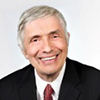
 

Barry Salkin | The Wagner Law Group

Barry Salkin concentrates his practice in ERISA and employee benefits law. He has significant expertise drafting, amending and negotiating various ERISA and employee benefit plans, including defined benefit pension plans, profit sharing plans, 401(k) plans, as well as qualified and non-qualified deferred compensation programs. He also has wide-ranging experience crafting group medical and health plans involving Health Care Reform, HIPAA, and COBRA. In addition, he has represented clients in ERISA litigation and audits. He is co-author of the IRA Answer Book and an editor of the Journal of Pension Planning and Compliance, and the Benefits Law Journal. He is also a member of the American College of Employee Benefits Counsel.

Prior to joining The Wagner Law Group, Barry served as counsel and senior attorney at leading law firms in Manhattan.
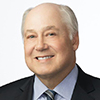
 

Gerald L. Maatman, Jr._ Duane Morris LLP._myLawCLEGerald L. Maatman, Jr. | Duane Morris LLP

Gerald L. Maatman, Jr. is a Chambers-recognized workplace class action defense litigator, an eight-time Law 360 Employment Law MVP, nine-time recipient of BTI Consulting Group’s distinguished Client Service All-Star Award, and a 2021 Legal 500 Hall of Fame inductee. Jerry is a Partner at Duane Morris LLP, where he chairs the firm’s Class Action Defense Group. Among his various cases, Jerry successfully defended the largest EEOC pattern or practice lawsuit ever prosecuted in the history of the Commission, the largest age discrimination collective action ever brought in Illinois, the first sexual harassment class action brought by a State Attorney General in the United States, and the largest wage & hour class actions ever litigated in Florida, Illinois, and New York. A graduate of Washington & Lee University and the Northwestern University School of Law, where he has served as an adjunct professor for 35 years, Jerry is based out of Duane Morris’ Chicago and New York offices. The author of eight books on the law, Jerry is often consulted by major news organizations for his views on significant court rulings and legal issues. He has served as a legal commentator on the Public Broadcasting System (PBS), National Public Radio (NPR), MSNBC, CNBC, and USA Talk Radio, and his comments have appeared in such publications as The Wall Street Journal, The Economist, Business Insurance, USA Today, Fortune, and Forbes. In 2023, Business Today included Jerry in its rankings of the Top 8 Most Influential Labor & Employment Lawyers in the United States. Further, Chambers selected him as one of the leading class action defense lawyers in its 2006 to 2025 rankings of U.S. lawyers. In its Global rankings, Chambers stated that “Maatman is absolutely phenomenal,” and is “one of the top-class action minds in the country.”

Agenda

  1. Session 1 · 1:00 pm - 1:45 pm

    Cunningham Decision Impact on ERISA Fiduciary Litigation

    This session examines the Supreme Court’s unanimous reversal in Cunningham v. Cornell University, which established that Section 1108 exemptions are affirmative defenses rather than elements plaintiffs must plead. Attendees will explore trends in breach of fiduciary duty claims, legislative developments including the EBSA Investigations Transparency Act, and practical compliance strategies such as fee verification and benchmarking.

    Jim Koford, Gerald L. Maatman, Jr.

  2. Session 2 · 1:55 pm - 2:40 pm

    Plaintiff Strategies and Fiduciary Defenses After Cunningham

    This session explores whether the Cunningham decision aligns with Congress’s original vision when enacting ERISA in 1974. Participants will discuss actions plan fiduciaries should take in response to the ruling, including procedural tools like Rule 7(a) replies, standing challenges, and potential guardrails to discourage frivolous litigation.

    Jim Koford, Gerald L. Maatman, Jr.

  3. Session 3 · 2:50 pm - 3:20 pm

    ERISA Class Action Trends and Defense Strategies

    This session covers key trends in ERISA class action filings, including excessive fee cases, plan forfeiture disputes, PBM fee litigation, and emerging ESG proxy voting claims like the Spence decision. Attendees will examine notable rulings on class certification and motions to dismiss, along with best practices for defense strategies in the post-Cunningham landscape.

    Jim Koford, Gerald L. Maatman, Jr.

  4. Session 4 · 3:20 pm - 3:50 pm

    Cunningham Case Scenarios: Before and After Analysis

    This session provides practical case scenarios comparing prohibited transaction claims in excessive fee and ESOP cases before and after the Cunningham ruling. Participants will analyze whether plaintiffs’ attorneys are likely to file streamlined complaints initially and amend to assert broader fiduciary breach claims as litigation proceeds through discovery.

    Jim Koford, Gerald L. Maatman, Jr.

MCLE Credits

  • Alabama

    Pending CLE Approval

    2.5 General

  • Alaska

    Approved for CLE Credits

    2.5 General

    Our programs are CLE-eligible through Alaska’s recognition of multi-jurisdictional reciprocity.

  • Arizona

    Approved for CLE Credits

    2.5 General

  • Arkansas

    Approved for CLE Credits

    2.5 General

  • California

    Approved for CLE Credits

    2.5 General

  • Colorado

    Pending CLE Approval

    2.5 General

  • Connecticut

    Approved for CLE Credits

    2.5 General

  • Delaware

    Pending CLE Approval

    2.5 General

  • District of Columbia

    No MCLE Required

    2.5 CLE Hour(s)

  • Florida

    Pending CLE Approval

    2.5 General Hours

    Receive CLE credit in Florida via Attorney Submission.

  • Georgia

    Approved for CLE Credits

    2.5 General

  • Hawaii

    Approved for CLE Credits

    2.5 General

  • Idaho

    Pending CLE Approval

    2.5 General

  • Illinois

    Approved for Self-Study Credits

    2.5 General

  • Indiana

    Pending CLE Approval

    2.5 General

  • Iowa

    Pending CLE Approval

    2.5 General

  • Kansas

    Pending CLE Approval

    2.5 Substantive

  • Kentucky

    Pending CLE Approval

    2.5 General

  • Louisiana

    Pending CLE Approval

    2.5 General

  • Maine

    Pending CLE Approval

    2.5 General

  • Maryland

    No MCLE Required

    2.5 CLE Hour(s)

  • Massachusetts

    No MCLE Required

    2.5 CLE Hour(s)

  • Michigan

    No MCLE Required

    2.5 CLE Hour(s)

  • Minnesota

    Approved for Self-Study Credits

    2.5 General

  • Mississippi

    Pending CLE Approval

    2.5 General

  • Missouri

    Approved for Self-Study Credits

    3 General

  • Montana

    Pending CLE Approval

    2.5 General

  • Nebraska

    Pending CLE Approval

    2.5 General

    myLawCLE reports attendance to Nebraska on each attorney’s behalf for all programs. Please do not self-report.

  • Nevada

    Pending CLE Approval

    2.5 General

  • New Hampshire

    Approved for CLE Credits

    150 General minutes

    As of July 1, 2014, the NHMCLE Board no longer provides pre- or post-approval of courses. Attendees must self-determine whether a program is eligible for credit, and self-report their attendance online at www.nhbar.org, based on qualification provisions of Rule 53.

  • New Jersey

    Approved for CLE Credits

    2.5 General

    Our programs are CLE-eligible through New Jersey’s recognition of multi-jurisdictional reciprocity, except for the courses required under BCLE Reg. 201:2

  • New Mexico

    Approved for Self-Study Credits

    2.5 General

  • New York

    Approved for CLE Credits

    3 General

    Our programs are CLE-eligible through New York’s Approved Jurisdiction Group “B”.

  • North Carolina

    Pending CLE Approval

    2.5 General

  • North Dakota

    Approved for CLE Credits

    2.5 General

    Our programs are CLE-eligible through North Dakota’s recognition of multi-jurisdictional reciprocity. Section 1, Policy 1.14

  • Ohio

    Approved for Self-Study Credits

    2.5 General

  • Oklahoma

    Pending CLE Approval

    3 General

  • Oregon

    Pending CLE Approval

    2.5 General

  • Pennsylvania

    Approved for Self-Study Credits

    2.5 General

  • Rhode Island

    Pending CLE Approval

    3 General

  • South Carolina

    Pending CLE Approval

    2.5 General

  • South Dakota

    No MCLE Required

    2.5 CLE Hour(s)

  • Tennessee

    Pending CLE Approval

    2.5 General

  • Texas

    Pending CLE Approval

    2.5 General

  • Utah

    Pending CLE Approval

    2.5 General

  • Vermont

    Approved for CLE Credits

    2.5 General

  • Virginia

    Not Eligible

    2.5 General Hours

  • Washington

    Approved via Attorney Submission

    2.5 Law & Legal Hours

    Receive CLE credit in Washington via Attorney Submission. myLawCLE will supply Washington state attorneys with instructions on how to gain credit.

  • West Virginia

    Pending CLE Approval

    3 General

  • Wisconsin

    Approved for Self-Study Credits

    3 General

  • Wyoming

    Pending CLE Approval

    2.5 General