
On-Demand · February 27, 2026
Drafting and Enforcing Indemnification Clauses: Real-World Lessons Every Lawyer Should Know (2026 Edition)
Your indemnity clause holds up fine — until the day someone has to enforce it. Learn to draft enforceable scope, caps, and trigger language, set clean notice and defense rules, and choose between indemnity, escrows, and R&W insurance to fit the deal.


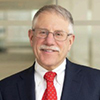 Liane Noble Vinson & ElkinsSteven O. Weise Proskauer RoseEdwin Smith Morgan Lewis & Bockius
About this program

Course Overview
Drafting the Indemnity Clause a Litigator Can Enforce
Indemnification is the most negotiated provision in a deal — and the one most often left to recycled boilerplate. R&W insurance has displaced traditional escrows and reordered how baskets, caps, and survival periods get negotiated. False Claims Act exposure and energy-sector liability push indemnity into settings the old templates were never built for.
The gap surfaces only after closing, when a court reads the clause word for word. Write an ambiguous notice provision, and the trigger fails when the claim lands. Leave scope and caps vague, and the parties learn too late that risk was allocated differently than anyone intended. Both sides are exposed — the drafter who wrote the clause and the litigator who must enforce it.
This program breaks down clause structure, scope limits, exclusions, trigger events, notice obligations, payment mechanics, and covered-party definitions. It weighs indemnity against escrows, offsets, and R&W insurance across commercial, energy, and government-contract matters. You leave able to draft a clause that holds when the claim lands — and to pick the recovery mechanism that fits the deal.
Why Attend
Understanding indemnification is essential for lawyers drafting commercial agreements and managing contract disputes effectively.
- 89% 89% of private target acquisition agreements include indemnification as the exclusive remedy for transaction-related claims, per the ABA 2023 Private Target Deal Points Study.
- 22% Contract litigation cases in federal district courts grew 22% in 2023, reflecting increased reliance on courts to resolve business disputes (U.S. Courts Federal Judicial Caseload Statistics 2023).
- 56% 56% of general counsel report that settling disputes before trial has become moderately or significantly more difficult over the past year, per Norton Rose Fulbright's 2025 Annual Litigation Trends Survey.
- 51% 51% of legal leaders identify disputes and investigations as a primary risk factor, with rising costs attributed to increased complexity and data, per the FTI Consulting General Counsel Report 2025.
Key Topics
- Core Components Structure provisions for enforceability across transaction types, so the clause survives a word-for-word reading in court.
- Scope and Limits Define covered losses, set caps and exclusions, and fix trigger events and notice obligations that hold for both parties.
- Defense Mechanics Run the defense and settlement process for direct and third-party claims, with notice and control provisions that protect your client.
- Valuation Methods Build calculation and payment mechanics that prevent later disputes over indemnity amounts and timing.
- Enforcement Tactics Apply practical levers when the indemnifying party won't defend or pay, including coordination with other remedies and leverage strategies.
- Legal Guardrails Navigate public-policy limits on negligence, gross negligence, and intentional acts, and know when R&W insurance does the work instead.
Speakers
Liane Noble
Vinson & Elkins
Liane Noble is Counsel in the Commercial & Business Litigation practice at Vinson & Elkins LLP, based in the firm’s Austin office. She is a trial lawyer with extensive experience representing clients in complex commercial disputes, breach of contract cases, and business torts in state and federal trial and appellate courts. With a strategic approach to litigation, Liane provides insightful counsel to corporations, organizations, and individuals navigating high-stakes disputes — combining seasoned courtroom advocacy with the strategic perspective gained from years of public service at the highest levels of federal practice.
Full profile
Experience
Before rejoining Vinson & Elkins, Liane served as an Assistant United States Attorney and Civil Rights Coordinator in the Western District of Texas (2019–2025), taking eight cases to trial — including two jury trials — and arguing before the Fifth Circuit in an Administrative Procedure Act matter. Her notable representations include obtaining a $523.8 million summary judgment in a long-term propane purchase dispute, defending Chinese state-owned entities in litigation related to an African oil field dispute, and defending a Fortune 500 life-sciences company against federal and state antitrust claims. Earlier, she clerked for the U.S. District Court for the Western District of Texas (2011–2013).Education
Liane earned her J.D. from Northwestern University Pritzker School of Law (2011) and a Master of Public Leadership from the University of Texas, LBJ School of Public Affairs (2024). She holds a B.S.W. and B.A. from the University of Texas (Plan II Honors). She is admitted in Texas and before the Fifth Circuit and the U.S. District Courts for the Western and Southern Districts of Texas.Recognition
Liane received the Travis County Women Lawyers Association Government Service Award (2024) and the U.S. Department of Justice Civil Rights Division Commendation (2021–2023). She was selected to the Texas Rising Stars list by Super Lawyers (Thomson Reuters) in 2018.Professional involvement
Liane serves as Chair and Board Member of the Civil Litigation Section of the Austin Bar Association and as a Board Member of the Federal Bar Association, Austin Chapter. She previously served on the Steering Committee of the State Bar of Texas Minority Counsel Program and as Board President of Asian Family Support Services of Austin. She is the author of "DOJ's Civil Rights Fraud Initiative Presents New False Claims Act Risks and Considerations for Federal Funding Recipients" (ABA Procurement Lawyer, Fall 2025).
Steven O. Weise
Proskauer Rose LLP
Steven O. Weise is a Partner in the Corporate Department at Proskauer Rose LLP, practicing in its Los Angeles office. He practices in a wide range of commercial law, spending much of his time on matters arising under the Uniform Commercial Code, especially Article 9 – Secured Transactions and is a nationally recognized expert in these matters. Steve is also authoritative on third-party opinion letters and contract law, especially online contracting, plain English drafting, contract drafting, and boilerplate.
Full profile
Experience
Steve is a Lecturer in Law at UCLA Law School, where he teaches Uniform Commercial Code – Secured Transactions. His practice spans secured transactions, online contracting, plain English drafting, contract drafting, and third-party opinion letters, serving as a recognized authority for clients across commercial law matters.Education
Steve earned his J.D. from the University of California, Berkeley, School of Law, and his B.A. from Yale University. He is admitted to the California Bar and the U.S. District Court for the Central District of California.Recognition
Steve received the Distinguished Service Award from the American Law Institute (2022), the Lifetime Achievement Award from the California State Bar Business Law Section, and the Chair's Award from the American Bar Association Business Law Section. He has been ranked in Chambers USA for California Banking & Finance (2010–2023) and named Senior Statesperson (2023–2025), listed in Best Lawyers in America (1995–2024) including Lawyer of the Year honors (2019, 2024), and recognized in Southern California Super Lawyers (2004–2018).Professional involvement
Steve is a member of the Permanent Editorial Board for the Uniform Commercial Code and of the Council of the American Law Institute. For thirty years, he has served on many UCC drafting committees, including the comprehensive revision of UCC Article 9 in 1999 and the 2022 UCC Amendments addressing digital assets as collateral. He was instrumental as an Adviser in the American Law Institute Restatement of the Law, Consumer Contracts, is the former Chair of the American Bar Association's Section of Business Law and its Legal Opinions Committee and has been the Reporter for many TriBar Opinions Committee reports on opinions under the UCC. Edwin Smith
Morgan Lewis & Bockius
Edwin E. Smith is a Senior Consultant at Morgan, Lewis & Bockius LLP. Ed concentrates his practice in commercial law, debt financings, structured financings, workouts, bankruptcies, and international transactions, with particular depth in commercial law and insolvency matters, both domestic and cross-border. His representations have included major bankruptcies such as Refco, Lehman, the City of Detroit, and PG&E. Chambers USA has noted that he “probably knows as much about UCC as anybody in the country.”
Full profile
Experience
Ed advises creditors and counter-parties on commercial and insolvency risks in sales, leasing, financing, investment securities, and derivatives and repo-style transactions. His notable representations include serving as counsel to Exelon Corporation in the Chapter 11 of Pacific Gas & Electric, to UBS AG in the Chapter 9 bankruptcy of the City of Detroit, to various creditors of Lehman Brothers Holdings, and to Chapter 11 plan administrators for Refco Inc. He also advises hedge funds, money center banks, and international custodians on workouts and restructurings, and has counseled investors on cryptocurrency safety and custody risks.Education
Ed earned his J.D. from Harvard Law School (1974) and his B.A. from Yale University (1968). He is admitted in Massachusetts and New York, before the Massachusetts Supreme Judicial Court and the U.S. District Court for the District of Massachusetts.Recognition
Ed has been recognized as a Senior Statesperson in Banking & Finance (USA) by Chambers Global (2024) and in both Banking & Finance and Bankruptcy/Restructuring (Massachusetts) by Chambers USA (2021–2025). He has been named "Lawyer of the Year" multiple times by The Best Lawyers in America. He received the Homer Kripke Achievement Award from the American College of Commercial Finance Lawyers (2012) and the Excellence Award from the UCC Committee of the ABA Business Law Section (2009).Professional involvement
Ed is a Life Member and Uniform Law Commissioner for the Commonwealth of Massachusetts and a Life Member of the American Law Institute. He chaired the Drafting Committee for the 2022 UCC Amendments addressing emerging technologies and the Drafting Committee to Amend the Uniform Fraudulent Transfer Act. He is a member of the Permanent Editorial Board for the UCC, a US Delegate to UNCITRAL working groups, and past president of the American College of Commercial Finance Lawyers. He serves as a faculty lecturer at Harvard Law School, Northeastern, Suffolk, and Boston University Law School.Agenda
-
Critical Elements of Indemnification Clauses: Insights for Emerging Attorneys
Liane Noble shares sharp, real-world perspectives on indemnification drafting and negotiation, focusing on the critical components of indemnification clauses. This session breaks down how courts enforce indemnity provisions, the valuation mechanics at play, and the risks they pose, with key topics covering core components and structure, scope and exclusions, trigger events and notice obligations, valuation and payment mechanisms, and recent case law and enforcement trends.
Liane Noble, Steven O. Weise, Edwin Smith
-
Drafting & Enforcing Complex Indemnification Provisions
Steven Weise and Edwin Smith guide attorneys beyond boilerplate to create indemnification clauses that are clear, targeted, and enforceable. Key topics include defining who is covered with clear definitions, managing direct versus third-party claims with practical notice procedures, comparing indemnity to alternatives like escrows and R&W insurance, understanding public-policy guardrails, and learning enforcement mechanics when the indemnifying party fails to defend or pay.
Liane Noble, Steven O. Weise, Edwin Smith
MCLE Credits
-
Alabama
Approved for Self-Study Credits
2 General
-
Alaska
Approved for CLE Credits
2 General
Our programs are CLE-eligible through Alaska’s recognition of multi-jurisdictional reciprocity.
-
Arizona
Approved for CLE Credits
2 General
-
Arkansas
Pending CLE Approval
2 General
-
California
Approved for CLE Credits
2 General
-
Colorado
Approved for Self-Study Credits
2 General
-
Connecticut
Approved for CLE Credits
2 General
-
Delaware
Approved for CLE Credits
2 General
-
District of Columbia
No MCLE Required
No MCLE Required
-
Florida
Pending CLE Approval
2 General Hours
Receive CLE credit in Florida via Attorney Submission.
-
Georgia
Approved for CLE Credits
2 General
-
Hawaii
Approved for CLE Credits
2 General
-
Idaho
Pending CLE Approval
2 General
-
Illinois
Approved for Self-Study Credits
2 General
-
Indiana
Approved For On-Demand Credits
2 General
-
Iowa
Pending CLE Approval
2 General
-
Kansas
Approved for Self-Study Credits
2 Substantive
-
Kentucky
Pending CLE Approval
2 General
-
Louisiana
Pending CLE Approval
2 General
-
Maine
Pending CLE Approval
2 General
-
Maryland
No MCLE Required
2 CLE Hour(s)
-
Massachusetts
No MCLE Required
2 CLE Hour(s)
-
Michigan
No MCLE Required
2 CLE Hour(s)
-
Minnesota
Approved for Self-Study Credits
2 General
-
Mississippi
Pending CLE Approval
2 General
-
Missouri
Approved for Self-Study Credits
2.4 General
-
Montana
Approved for Self-Study Credits
2 General
-
Nebraska
Pending CLE Approval
2 General
myLawCLE reports attendance to Nebraska on each attorney’s behalf for all programs. Please do not self-report.
-
Nevada
Approved for Self-Study Credits
2 General
-
New Hampshire
Approved for CLE Credits
120 General minutes
As of July 1, 2014, the NHMCLE Board no longer provides pre- or post-approval of courses. Attendees must self-determine whether a program is eligible for credit, and self-report their attendance online at www.nhbar.org, based on qualification provisions of Rule 53.
-
New Jersey
Approved for CLE Credits
2 General
Our programs are CLE-eligible through New Jersey’s recognition of multi-jurisdictional reciprocity, except for the courses required under BCLE Reg. 201:2
-
New Mexico
Approved for Self-Study Credits
2 General
-
New York
Approved for CLE Credits
2 General
Our programs are CLE-eligible through New York’s Approved Jurisdiction Group “B”.
-
North Carolina
Pending CLE Approval
2 General
-
North Dakota
Approved for CLE Credits
2 General
Our programs are CLE-eligible through North Dakota’s recognition of multi-jurisdictional reciprocity. Section 1, Policy 1.14
-
Ohio
Approved for Self-Study Credits
2 General
-
Oklahoma
Approved for Self-Study Credits
2.5 General
-
Oregon
Approved for Self-Study Credits
2 General
-
Pennsylvania
Approved for Self-Study Credits
2 General
-
Rhode Island
Approved for CLE Credits
2 General
-
South Carolina
Approved for Self-Study Credits
2 General
-
South Dakota
No MCLE Required
2 CLE Hour(s)
-
Tennessee
Approved for Self-Study Credits
2 General
-
Texas
Approved for CLE Credits
2 General
-
Utah
Approved for Self-Study Credits
2 General
-
Vermont
Approved for CLE Credits
2 General
-
Virginia
Not Eligible
2 General
-
Washington
Approved via Attorney Submission
2 Law & Legal Hours
Receive CLE credit in Washington via attorney submission.
-
West Virginia
Approved for Self-Study Credits
2.4 General
-
Wisconsin
Approved for Self-Study Credits
2 General
-
Wyoming
Approved for Self-Study Credits
2 General
No state matches.