
On-Demand · September 26, 2025
High-Stakes Drafting Mistakes: Avoiding Errors That Trigger Disputes
Contract drafting essentials: avoiding ambiguity, interpreting key terms, and understanding enforceability limits to prevent costly disputes.
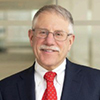
 Edwin E. Smith Morgan, Lewis & Bockius LLPSteven O. Weise Proskauer Rose LLP
About this program


Course Overview
Drafting Contracts That Prevent Costly Disputes
Participants will learn essential drafting techniques to create clear, enforceable contracts while avoiding common errors that trigger litigation. These skills apply immediately to commercial agreements and risk allocation provisions.
- Clarity Techniques Apply active voice and precise word choices.
- Risk Allocation Draft enforceable indemnification and limitation clauses.
- Word Interpretation Understand how courts interpret common contract terms.
- Boilerplate Provisions Structure choice of law and forum clauses.
Why Attend
Mastering contract drafting principles prevents costly disputes, protects client interests, and ensures enforceable agreements that withstand judicial scrutiny.
- $870B Annual global spending on commercial dispute resolution through litigation according to the US Chamber of Commerce study (World Economic Forum).
- 9.2% Average annual revenue lost by companies due to poor contract management practices according to World Commerce & Contracting research.
- 50% Percentage of state court civil caseloads comprised of contract cases in 2024 according to the National Center for State Courts.
- 71% Percentage of companies that cannot locate at least 10% of their contracts according to the Journal of Contract Management.
Key Topics
- Clear Drafting Use active voice, proper punctuation, and avoid legalese to prevent court criticism.
- Word Interpretation Understand how courts interpret terms like shall, material, arising, and relating.
- Risk Allocation Draft indemnification, exculpation, and limitation of liability clauses within legal limits.
- Choice of Law Apply Restatement principles and understand when courts refuse enforcement for public policy.
- Online Formation Ensure valid contract adoption through click-to-agree mechanisms and proper notice requirements.
- Forum Selection Draft precise clauses specifying courts in versus courts of to ensure enforceability.
What You Will Learn and Gain
What you will learn
Attorneys will learn essential contract drafting principles, from fundamental formation requirements to sophisticated boilerplate provisions, addressing clarity in writing and common word interpretation pitfalls.
What you will gain
Attorneys will gain practical knowledge of legal frameworks governing key contract provisions, drawing on extensive case law to avoid errors that trigger disputes.
Speakers
Edwin E. Smith
Morgan Lewis & Bockius LLP
Edwin E. Smith focuses on commercial law and insolvency, both domestic and cross-border, as a Senior Consultant at Morgan, Lewis & Bockius LLP. He advises creditors and counterparties on the insolvency and commercial risks that arise in sales, leasing, financing, investment securities, derivatives, and repo-style transactions, and his work spans workouts, bankruptcies, debt and structured financings, and international transactions. He is also a Uniform Law Commissioner and Life Member for the Commonwealth of Massachusetts.
Full profile
Experience
Mr. Smith’s insolvency experience includes serving as counsel to Exelon Corporation in the Chapter 11 of Pacific Gas & Electric Company, to UBS AG in the Chapter 9 bankruptcy of the City of Detroit, to various creditors of Lehman Brothers Holdings Inc. and its subsidiaries, to Chapter 11 plan administrators for Refco Inc. and the Chapter 11 trustee of Refco Capital Markets Ltd., and to asset purchasers in the Chapter 11 of Sun Edison. Outside of court, he has represented bank syndication agents, syndicate members, and derivative obligation holders in restructurings, and counseled a hedge fund on settling counterparty claims and restructuring investor arrangements toward liquidation.He has taught secured transactions as a faculty lecturer at Harvard Law School, Northeastern University Law School, and Suffolk Law School, and at Boston University Law School’s Morin Center for Banking Law Studies. He speaks regularly for organizations including the American Bankruptcy Institute, the National Conference of Bankruptcy Judges, ALI-CLE, the American Bar Association, and the Practicing Law Institute.
Education
Mr. Smith received his Juris Doctor from Harvard Law School in 1974 and his Bachelor of Arts from Yale University in 1968. He is admitted to practice in Massachusetts and New York, including before the Massachusetts Supreme Judicial Court and the U.S. District Court for the District of Massachusetts.Recognition
Chambers USA has recognized Mr. Smith as a Senior Statesperson in Bankruptcy/Restructuring and in Banking & Finance in Massachusetts (2021–2026), and Lawdragon has named him among the 500 Leading Global Bankruptcy and Restructuring Lawyers (2020, 2024–2026). His honors include the Homer Kripke Achievement Award from the American College of Commercial Finance Lawyers (2012), an Achievement Award from the Boston Bar Association, the Massachusetts Bar Association, and the Uniform Law Foundation (2013), and the Excellence Award of the UCC Committee of the ABA Business Law Section (2009). He has also been listed in The Best Lawyers in America, with Lawyer of the Year designations in 2012, 2013, 2014, and 2020.Professional involvement
Mr. Smith serves as a Board Member and Treasurer of the National Bankruptcy Conference, is a past Board Member of the American College of Bankruptcy, and is a member of the International Insolvency Institute. Within the Uniform Law Commission, he chaired the Drafting Committee to amend the Uniform Fraudulent Transfer Act, now the Uniform Voidable Transactions Act, as well as the drafting committees for the 2022 UCC amendments addressing emerging technologies and the 2002 amendments to UCC Articles 3 and 4, and the Joint Review Committee for the 2010 amendment to UCC Article 9. He is a member of the Permanent Editorial Board for the UCC and a Life Member of the American Law Institute, a past Chair of the UCC Committee of the ABA Business Law Section, a past President of the American College of Commercial Finance Lawyers, and has served as a U.S. Delegate to UNCITRAL working groups on international receivables financing and the secured transactions guide. Steven O. Weise.
Proskauer Rose LLP
Steve Weise is a partner practicing a wide range of commercial law, with particular focus on matters arising under the Uniform Commercial Code, especially Article 9 – Secured Transactions. He is a nationally recognized expert in these matters and is also authoritative on third-party opinion letters, contract law, online contracting, plain English drafting, and boilerplate.
Full profile
Experience
For thirty years, Steve has been on many Uniform Commercial Code drafting committees, including the comprehensive revision of UCC Article 9 in 1999 and the 2022 UCC Amendments addressing digital assets as collateral. He was instrumental as an Adviser in the preparation of the American Law Institute Restatement of the Law, Consumer Contracts.Education
Lecturer in Law at UCLA Law School, where he taught Uniform Commercial Code – Secured Transactions.Recognition
Nationally recognized expert in Uniform Commercial Code matters, especially Article 9 – Secured Transactions.Professional involvement
Member of the Permanent Editorial Board for the Uniform Commercial Code and of the Council of the American Law Institute. Former chair of the American Bar Association's Section of Business Law and its Legal Opinions Committee. Reporter for many TriBar Opinions Committee reports on opinions under the UCC. Long-time member of the board of the Working Group on Legal Opinions. Active in many other Restatement projects.Agenda
-
Fundamentals of Contract Law and Client Focus
This session explores the multiple audiences for contracts—lawyers, clients, and judges—and emphasizes evaluating provisions against actual client needs. Participants will examine how courts enforce contracts between sophisticated parties while recognizing limits around public policy and unconscionability.
Edwin E. Smith, Steven O. Weise.
-
Negotiation Strategies and Effective Contract Formation
Learn why courts criticize dense, jargon-filled drafting and the consequences of overreaching in contract provisions. This session covers how courts may strike broader portions of agreements when drafters push boundaries too far.
Edwin E. Smith, Steven O. Weise.
-
Online Contract Formation and Digital Adoption Methods
Examine how contracts are validly formed online through click-to-agree mechanisms, scroll-wrap approaches, and continued use provisions. The session addresses the totality of circumstances test courts apply to determine whether parties adopted standard terms and conditions.
Edwin E. Smith, Steven O. Weise.
-
Key Contract Provisions and Drafting Best Practices
This session covers essential drafting techniques including active voice, proper punctuation, visual formatting, and conspicuousness requirements. Participants will learn best practices for captions, definitions, conditions, tables, and avoiding ambiguity in contract language.
Edwin E. Smith, Steven O. Weise.
-
Scheduled Break for Participants
A brief intermission allowing participants to refresh before continuing with the remaining program sessions. Use this time to review materials and prepare questions for upcoming topics.
Edwin E. Smith, Steven O. Weise.
-
Legal Considerations and Interpreting Common Contract Terms
Explore how courts interpret critical contract words like ‘a,’ ‘shall,’ ‘material,’ ‘arising,’ and ‘relating to’ with potentially outcome-determinative effects. This session also addresses choice of law provisions, forum selection clauses, and their enforcement limitations.
Edwin E. Smith, Steven O. Weise.
-
Risk Management and Avoiding Common Drafting Errors
Examine risk allocation provisions including indemnification, exculpation, and limitation of liability clauses, along with their enforceability limits. Learn about non-reliance provisions, integration clauses, modification requirements, and the consequences of overreaching in risk-shifting language.
Edwin E. Smith, Steven O. Weise.
-
Enforcing Contracts and Managing Amendments Effectively
This session covers arbitration clauses, statute of limitations modifications, jury trial waivers, and attorney’s fees provisions across jurisdictions. Participants will also learn about force majeure clauses, notice requirements, counting rules, and proper incorporation by reference techniques.
Edwin E. Smith, Steven O. Weise.
MCLE Credits
-
Alabama
Pending CLE Approval
2 General
-
Alaska
Approved for CLE Credits
2 General
Our programs are CLE-eligible through Alaska’s recognition of multi-jurisdictional reciprocity.
-
Arizona
Approved for CLE Credits
2 General
-
Arkansas
Approved for CLE Credits
2 General
-
California
Approved for CLE Credits
2 General
-
Colorado
Approved for Self-Study Credits
2 General
-
Connecticut
Approved for CLE Credits
2 General
-
Delaware
Pending CLE Approval
2 General
-
District of Columbia
No MCLE Required
2 CLE Hour(s)
-
Florida
Pending CLE Approval
2 General Hours
Receive CLE credit in Florida via Attorney Submission.
-
Georgia
Approved for CLE Credits
2 General
-
Hawaii
Approved for CLE Credits
2 General
-
Idaho
Pending CLE Approval
2 General
-
Illinois
Approved for Self-Study Credits
2 General
-
Indiana
Pending CLE Approval
2 General
-
Iowa
Pending CLE Approval
2 General
-
Kansas
Pending CLE Approval
2 Substantive
-
Kentucky
Pending CLE Approval
2 General
-
Louisiana
Pending CLE Approval
2 General
-
Maine
Pending CLE Approval
2 General
-
Maryland
No MCLE Required
2 CLE Hour(s)
-
Massachusetts
No MCLE Required
2 CLE Hour(s)
-
Michigan
No MCLE Required
2 CLE Hour(s)
-
Minnesota
Approved for Self-Study Credits
2 General
-
Mississippi
Pending CLE Approval
2 General
-
Missouri
Approved for Self-Study Credits
2.4 General
-
Montana
Pending CLE Approval
2 General
-
Nebraska
Pending CLE Approval
2 General
myLawCLE reports attendance to Nebraska on each attorney’s behalf for all programs. Please do not self-report.
-
Nevada
Approved for Self-Study Credits
2 General
-
New Hampshire
Approved for CLE Credits
120 General minutes
As of July 1, 2014, the NHMCLE Board no longer provides pre- or post-approval of courses. Attendees must self-determine whether a program is eligible for credit, and self-report their attendance online at www.nhbar.org, based on qualification provisions of Rule 53.
-
New Jersey
Approved for CLE Credits
2 General
Our programs are CLE-eligible through New Jersey’s recognition of multi-jurisdictional reciprocity, except for the courses required under BCLE Reg. 201:2
-
New Mexico
Approved for Self-Study Credits
2 General
-
New York
Approved for CLE Credits
2 General
Our programs are CLE-eligible through New York’s Approved Jurisdiction Group “B”.
-
North Carolina
Pending CLE Approval
2 General
-
North Dakota
Approved for CLE Credits
2 General
Our programs are CLE-eligible through North Dakota’s recognition of multi-jurisdictional reciprocity. Section 1, Policy 1.14
-
Ohio
Approved for Self-Study Credits
2 General
-
Oklahoma
Pending CLE Approval
2.5 General
-
Oregon
Approved for Self-Study Credits
2 General
-
Pennsylvania
Approved for Self-Study Credits
2 General
-
Rhode Island
Pending CLE Approval
2.5 General
-
South Carolina
Pending CLE Approval
2 General
-
South Dakota
No MCLE Required
2 CLE Hour(s)
-
Tennessee
Pending CLE Approval
2 General
-
Texas
Pending CLE Approval
2 General
-
Utah
Pending CLE Approval
2 General
-
Vermont
Approved for CLE Credits
2 General
-
Virginia
Not Eligible
2 General Hours
-
Washington
Approved via Attorney Submission
2 Law & Legal Hours
Receive CLE credit in Washington via Attorney Submission. myLawCLE will supply Washington state attorneys with instructions on how to gain credit.
-
West Virginia
Pending CLE Approval
2.4 General
-
Wisconsin
Approved for Self-Study Credits
2 General
-
Wyoming
Pending CLE Approval
2 General
No state matches.