
On-Demand · September 24, 2025
Creating a Trial Notebook: From A-Z (2025 Edition)
The notebook that proves you're trial-ready is what moves the other side at settlement—and the same system that wins if the case goes the distance. You'll map counsel's binder versus the paralegal's copy, the exhibit and witness systems, and the deployment two retired judges say the bench rewards.
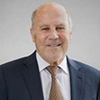

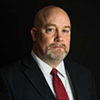
 Hon. Stephen Kaus JAMSJudge Judith H. Ramseyer JAMSSean P. Healy Healy Law Offices P.CHeather Crawford
About this program

Course Overview
Trial-Ready Is the Leverage—At the Table and in the Courtroom
Most cases settle, and the side that looks genuinely ready to try the case is the side that dictates terms. That readiness isn't a posture—it's a system: a trial notebook built from the case's first weeks, not thrown together days before a trial that may never come.
Walk into mediation with your impeachment file indexed and your exhibits organized, and you negotiate from leverage instead of memory. Show up to a deposition able to pull any document in seconds, and the other side recalculates what you'll do at trial. Keep one undivided binder, and you're hunting for the page while the moment passes.
This class builds that system end to end—what goes in counsel's working binder versus the paralegal's copy, how to structure exhibit and witness management, how to pre-mark exhibits and coordinate with court clerks, and when to go digital, paper, or hybrid. Two retired judges then explain the courtroom deployment the bench rewards if the case goes the distance: motions resolved early, schedules kept tight, downtime eliminated. You leave with one retrieval system that gives you leverage at settlement and command at trial.
Why Attend
Mastering trial notebooks and effective trial practice directly impacts case outcomes, juror perceptions, and courtroom efficiency—skills that separate successful litigators from those who struggle under pressure.
- 97% Of civil cases settle before trial, making thorough trial preparation essential for leveraging settlement negotiations. (U.S. Department of Justice)
- 74% Of attorneys practicing in courtrooms now use laptops, up from 50% in 2018, reflecting the shift toward digital trial preparation. (2024 ABA Legal Technology Survey Report)
- 35% Of law firms leveraged outside experts for trial graphics services in 2024, a significant increase from 22.74% in 2023. (U.S. Legal Support Litigation Trends Survey)
- 41% Of attorneys report receiving formal courtroom technology training, revealing significant opportunity for improved trial preparation education. (2024 ABA Legal Technology Survey Report)
Key Topics
- Build it early Assemble and index the notebook from the litigation's first weeks, so it's working for you at deposition and mediation, not just trial.
- Settlement leverage Use a trial-ready, fully indexed notebook to negotiate from strength and move the other side at the table.
- Binder architecture Build counsel's working binder and the paralegal's copy so each role holds exactly what it needs.
- Exhibit and witness systems Organize witness files and pre-marked exhibits for instant retrieval in a deposition, hearing, or trial.
- Courtroom deployment Pull the notebook to win pretrial motions, objections, sidebars, and jury arguments in real time.
- Early motion practice File dispositive and in limine motions early so the judge has time to rule.
What You Will Learn and Gain
What you will learn
Attorneys will learn when to start the notebook, what belongs in counsel's binder versus the paralegal's copy, how to organize exhibits and witnesses for instant retrieval, and how the same system creates leverage in settlement and command at trial.
What you will gain
Attorneys will gain a trial-notebook template, a contents list for the working binder versus the paralegal's copy, exhibit and witness indexes, a pre-marking coordination checklist, and a digital-paper-hybrid decision matrix.
Speakers
Hon. Stephen Kaus
JAMS
Hon. Stephen Kaus (Ret.) brings more than 50 years of legal experience—including 12 years on the Alameda County Superior Court—to his JAMS practice as a mediator, arbitrator, and court-appointed neutral. As a direct calendar judge managing 600 to 800 active cases, he presided over complex multiparty disputes, bench and jury trials, and numerous settlement conferences. His experience as both judge and advocate allows him to analyze legal issues efficiently and facilitate pragmatic resolutions.
Full profile
Experience
Before his judicial appointment, Judge Kaus practiced civil litigation for decades, representing professionals—including engineers, attorneys, and judges—in construction, insurance, and commercial disputes for both plaintiffs and defendants. For twenty years he was a partner at the midsize San Francisco firm Cooper, White & Cooper LLP, representing media, cable TV, and telecom clients in employment, contract, and franchising disputes, and handling construction matters involving major public buildings such as concert halls and hospitals. He chaired the firm's litigation department, served on its Executive Committee, and sat on the First District Court of Appeal mediation panel. He began his career as a Deputy Public Defender in Contra Costa County.Education
Judge Kaus earned his J.D. from UC Berkeley School of Law (formerly Boalt Hall) in 1973 and his B.A. cum laude in Political Science from UCLA in 1970, with additional study at the University of Sussex in England. He is admitted to the bars of the U.S. Supreme Court, the California Supreme Court, the Third and Ninth Circuit Courts of Appeal, all four California federal district courts, the Middle District of Pennsylvania, and the District of Oregon.Recognition
He was named Trial Judge of the Year by the Alameda Contra Costa Trial Lawyers Association in 2021 and received the Bar Association of San Francisco's Award of Merit in 1995 for creating a conflicts-counsel program to strengthen indigent defense. He also received the Clarence Gideon Award for Public Service from the San Francisco Public Defender. On the bench, he co-chaired the court's Information and Technology Committee and served on its Rules and Forms Committee.Professional involvement
Judge Kaus is a member of the Contra Costa County Bar Association, the California Judges' Association Civil Committee, and the Alameda and Los Angeles County Bar Associations. During his long membership in the Bar Association of San Francisco, he served on the Board of Directors and chaired its Special Committee on Conflicts Counsel. He has taught federal civil procedure and criminal trial practice at the University of San Francisco and UC Berkeley, lectured for the Practicing Law Institute and Continuing Education of the Bar, and authored numerous legal publications. Judge Judith H. Ramseyer
JAMS
Judge Judith H. Ramseyer (Ret.) joins JAMS after a 50-year professional career, serving as a mediator, arbitrator, court-appointed neutral, and neutral evaluator. Known for her thorough preparation, attention to detail, and independent thought, she wants all participants to feel respected and heard, and to understand how decisions affecting them are made. Her extensive legal experience helps her quickly identify the issues at the heart of complex problems, and her practical insight and creativity help parties reach equitable resolutions. With a relaxed demeanor, she brings a confident tenacity to her work.
Full profile
Experience
Elected to the King County Superior Court in 2012, Judge Ramseyer presided over the full range of superior court matters—including business and commercial disputes, personal injury, product liability, professional liability, insurance, civil rights, family law, and real property—and conducted settlement conferences. Before the bench, she maintained a solo practice in business and commercial litigation and family law, served as Special Counsel at Heller Ehrman and Of Counsel at K&L Gates, and represented both plaintiffs and defendants at small civil rights and large national firms. She also served seven years as a career law clerk to the Hon. William L. Dwyer of the U.S. District Court for the Western District of Washington.Education
Judge Ramseyer earned her J.D. summa cum laude from Seattle University School of Law in 1987, a Master's in Mental Health Counseling from Seattle University in 1981, and a B.A. in Psychology from Eckerd College in 1971. Having trained as a mental health counselor, she brings a strong commitment to problem-solving to her work.Recognition
She was named Trial Judge of the Year by the Washington Chapter of the American Board of Trial Advocates and received the King County Bar Association's Outstanding Judge of the Year Award, both in 2023. She also received the Key Award from the Washington Coalition for Open Government, the Innovating Justice Award from the Washington Courts, and earlier honors recognizing her work on diversity. She served as President of the Superior Court Judges' Association during 2020–2021, leading the courts through the COVID crisis, and chaired the Bench-Bar-Press Liaison Committee ("The Fire Brigade").Professional involvement
Judge Ramseyer has held numerous leadership roles, including President of the William L. Dwyer Inn of Court, Chief Judge of the Clark Children and Family Justice Center, and Co-Chair of the Board for Judicial Administration's Court Recovery Task Force. She has lectured on civil procedure at the University of Washington, presented for the National Bar Institute and King County Bar Association, and spoken internationally, including a keynote at an international mediation competition in Florence in 2025. Sean P. Healy
Healy Law Offices, P.C.
Sean P. Healy has practiced law in Tyler, Texas for more than twenty-five years. He moved to Texas in 1992 to work for another attorney and established his own practice in 1995, operating his own firm, Healy Law Offices, P.C., for most of his career. His practice centers on litigation—including jury trials and a range of court cases—alongside family law matters such as divorce, child custody, child support, adoption, and CPS cases. He also represents businesses and nonprofit organizations and maintains an active presence in firearms and aviation matters.
Full profile
Experience
Mr. Healy is the lead author of The Legal Guide to NFA Firearms (2016), believed to be the first book on the subject. He served as National Corporate Counsel for American Mensa and, in 2005, testified in support of House Bill 823, which became the Motorist Protection Act.Education
Mr. Healy earned his Bachelor of Arts in psychology and communications studies and his Juris Doctor from the University of Kansas School of Law, where he was a Summerfield/Watkins Berger scholar and National Merit Finalist. In law school he served as an Appellate Advocacy instructor and competed on the National Trial Advocacy Team. He is a licensed Private Pilot and an NRA Training Counselor certified across ten firearms-instruction disciplines.Recognition
He serves as Course Director for the State Bar of Texas Firearms Law Seminar (2012 and 2013) and has contributed to every seminar. The Smith County Bar Foundation and Lone Star Legal Aid named him 2019 Volunteer Attorney of the Year for his pro bono work.Professional involvement
A longtime member of the State Bar College, Mr. Healy has served as a mediator since the mid-1990s and sits on the American Arbitration Association's Panel of Mediators and its Commercial and Construction Arbitrator panels. He serves as General Counsel for the Texas State Rifle Association and appears regularly on television to discuss legal issues and gun laws. Heather Crawford
Heather Crawford is a Minnesota freelance paralegal with 20 years of experience in civil litigation, family law, indigent law, and class actions. She thrives on order, strategy, and a well-organized binder, and is known for her deadline-driven efficiency and no-nonsense approach. She loves document production and any task that lets her organize large volumes of paper. A self-described “storyteller in progress,” she now balances her legal work with creative writing.
Full profile
Experience
Ms. Crawford has supported attorneys at every level of the judicial system, from local municipal court all the way to the United States Supreme Court. Her career spans firms in both Texas and Minnesota, including a Class Action Paralegal role at Chestnut Cambronne PA and Litigation Paralegal positions at Foley Mansfield and Best & Flanagan in Minneapolis. Earlier in Texas, she held paralegal roles at Richie & Gueringer, PC, the Law Office of Becky Beaver, and the Texas Advocacy Project, and served as a Civil Litigation Paralegal at O'Toole Atwell, PC and Moltz Morton O'Toole, LLP.Education
Ms. Crawford earned an Associate's degree in Legal Assistant Studies from Austin Community College in 2006. She is currently pursuing a degree in Creative Writing at Hamline University, where she is a member of the Class of 2027.Recognition
She was awarded a Summer Collaborative Undergraduate Research grant from Hamline University to collaborate with a faculty member on an artist's book of her essays, poetry, and visual and digital art. She was also featured as a storyteller for a special video on the American Dream by The Math podcast.Professional involvement
Ms. Crawford is committed to community and legal service. She served as a Legal Advocate Volunteer with The SAFE Alliance and as a Troop Leader with the Girl Scouts of Central Texas for nearly a decade.Agenda
-
Practical Tips for Creating and Using Trial Notebooks
This session explores the fundamentals of trial notebook creation, examining both physical and digital formats while emphasizing that form follows function. Attendees will learn what materials to include in counsel’s working binder versus paralegal copies, and how to effectively use notebooks during witness questioning, objections, and courtroom arguments.
Hon. Stephen Kaus, Judge Judith H. Ramseyer, Sean P. Healy, Heather Crawford
-
Trial Preparation Techniques and Organization for Paralegals
Paralegals will master essential trial notebook organization including standard tab structures, exhibit management systems, and witness tracking protocols. The session covers pretrial planning workflows, digital versus paper strategies, and practical techniques for maintaining courtroom-ready materials under pressure.
Hon. Stephen Kaus, Judge Judith H. Ramseyer, Sean P. Healy, Heather Crawford
-
Effective Trial Practice from the Judge's Perspective
A retired judge shares insights on what makes trial attorneys effective, emphasizing early preparation, timely motion resolution, and courtroom professionalism. Participants will learn how judicial perspectives on organization, civility, and efficient presentation directly impact jury perception and case outcomes.
Hon. Stephen Kaus, Judge Judith H. Ramseyer, Sean P. Healy, Heather Crawford
MCLE Credits
-
Alabama
Approved for Self-Study Credits
2.8 General
-
Alaska
Approved for CLE Credits
2.75 General
Our programs are CLE-eligible through Alaska’s recognition of multi-jurisdictional reciprocity.
-
Arizona
Approved for CLE Credits
2.75 General
-
Arkansas
Approved for CLE Credits
2.75 General
-
California
Approved for CLE Credits
2.75 General
-
Colorado
Approved for Self-Study Credits
3 General
-
Connecticut
Approved for CLE Credits
2.75 General
-
Delaware
Pending CLE Approval
2.75 General
-
District of Columbia
No MCLE Required
No MCLE Required
-
Florida
Pending CLE Approval
2.75 General Hours
Receive CLE credit in Florida via Attorney Submission.
-
Georgia
Approved for CLE Credits
3 General
-
Hawaii
Approved for CLE Credits
2.75 General
-
Idaho
Pending CLE Approval
2.75 General
-
Illinois
Approved for Self-Study Credits
2.75 General
-
Indiana
Pending CLE Approval
2.75 General
-
Iowa
Pending CLE Approval
2.75 General
-
Kansas
Pending CLE Approval
2.75 Substantive
-
Kentucky
Pending CLE Approval
2.75 General
-
Louisiana
Pending CLE Approval
2.75 General
-
Maine
Pending CLE Approval
2.75 General
-
Maryland
No MCLE Required
2.75 CLE Hour(s)
-
Massachusetts
No MCLE Required
2.75 CLE Hour(s)
-
Michigan
No MCLE Required
2.75 CLE Hour(s)
-
Minnesota
Approved for Self-Study Credits
2.75 General
-
Mississippi
Pending CLE Approval
2.8 General
-
Missouri
Approved for Self-Study Credits
3.3 General
-
Montana
Approved for Self-Study Credits
2.75 General
-
Nebraska
Pending CLE Approval
2.75 General
myLawCLE reports attendance to Nebraska on each attorney’s behalf for all programs. Please do not self-report.
-
Nevada
Approved for Self-Study Credits
3 General
-
New Hampshire
Approved for CLE Credits
165 General minutes
As of July 1, 2014, the NHMCLE Board no longer provides pre- or post-approval of courses. Attendees must self-determine whether a program is eligible for credit, and self-report their attendance online at www.nhbar.org, based on qualification provisions of Rule 53.
-
New Jersey
Approved for CLE Credits
2.75 General
Our programs are CLE-eligible through New Jersey’s recognition of multi-jurisdictional reciprocity, except for the courses required under BCLE Reg. 201:2
-
New Mexico
Approved for Self-Study Credits
2.7 General
-
New York
Approved for CLE Credits
3 General
Our programs are CLE-eligible through New York’s Approved Jurisdiction Group “B”.
-
North Carolina
Approved for Self-Study Credits
2.75 General
-
North Dakota
Approved for CLE Credits
2.75 General
Our programs are CLE-eligible through North Dakota’s recognition of multi-jurisdictional reciprocity. Section 1, Policy 1.14
-
Ohio
Approved for Self-Study Credits
2.75 General
-
Oklahoma
Approved for Self-Study Credits
3.5 General
-
Oregon
Approved for Self-Study Credits
2.75 General
-
Pennsylvania
Approved for Self-Study Credits
3 General
-
Rhode Island
Pending CLE Approval
3 General
-
South Carolina
Approved for Self-Study Credits
2.75 General
-
South Dakota
No MCLE Required
2.75 CLE Hour(s)
-
Tennessee
Pending CLE Approval
2.75 General
-
Texas
Pending CLE Approval
2.75 General
-
Utah
Approved for Self-Study Credits
3 General
-
Vermont
Approved for CLE Credits
2.75 General
-
Virginia
Not Eligible
2.75 General Hours
-
Washington
Approved for Self-Study Credits
2 Law & Legal, 0.75 Law & Legal
-
West Virginia
Pending CLE Approval
3.3 General
-
Wisconsin
Approved for Self-Study Credits
3 General
-
Wyoming
Pending CLE Approval
2.75 General
No state matches.