Ready to Register?

MyLawCLE All-Access Pass

Best choice

This program is available only with the All-Access Pass — subscribe to unlock it plus 1,000+ live CLE programs every year.


All specialty & ethics credits included
38 practice areas
New sections: AI & the Law, Practice Management
100s of current and trending legal topics
Nationally recognized and highly experienced presenters

$395 / year — this program included
Register with the All-Access Pass

This program + 1,000+ CLE programs, all year

Legal Writing: Persuasion Through Clarity, Part II (Presented by The Federal Bar Association Judiciary Division, Federal Judicial Law Clerk Committee)

Enhance legal writing clarity through plain language and strategic information chunking, based on empirical research and practical examples.

2026-02-25 12:00:00

Program Details

2026-02-25 12:00:00

2026-02-25 12:00:00

1h CLE Credits

Program Details

2026-02-25 12:00:00

Program Details

2026-02-25 12:00:00

Over 1,000+ webinars

2026-02-25 12:00:00

Course Overview

Mastering Clarity in Legal Writing

2026-02-25 12:00:00

Participants will learn to enhance legal writing through plain language techniques and strategic information chunking. These evidence-based methods improve readability and strengthen persuasive impact with judicial audiences.

Format

CLE Credit

1h CLE Credits

Level

Intermediate

Length

1

Key topics that will be covered

01
Plain Language
Studies show plain English is more persuasive than legalese in briefs.
02
Word Choice
Using simpler words makes readers perceive authors as more intelligent.
03
Strategic Chunking
Punctuation marks where information chunks begin and end for easier processing.
04
Wrap-Up Effect
Eyes slow at sentence ends, making final positions most impactful.
05
Grammar Rules
Keep subjects near verbs and modifiers close to what they modify.
06
Visual Aids
Diagrams and charts can help when used thoughtfully and sparingly.

Program schedule

clock 12:00 pm - 12:05 pm EST

Fostering Clarity in Legal Writing Through Simplicity

This introductory session establishes clarity as the common denominator in effective legal communication. Judge Bacharach introduces two complementary techniques for enhancing clarity: relaxing diction through plain language and conveying information in manageable chunks.
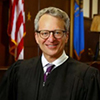
Honorable Robert E BacharachHonorable Robert E Bacharach
clock 12:05 pm - 12:30 pm EST

Empirical Research on Plain Language and Word Choice

This session examines landmark studies by Benson and Kessler on legalese and Oppenheimer’s research on word complexity. Participants will learn that plain English versions of briefs were rated more persuasive, and that simpler vocabulary actually enhances readers’ perceptions of the author’s intelligence.

Honorable Robert E BacharachHonorable Robert E Bacharach
clock 12:30 pm - 12:50 pm EST

Strategic Chunking for Readable Persuasive Legal Writing

Explore how the brain processes information in chunks rather than sentences, and how punctuation signals where chunks begin and end. Using examples from Martin Luther King Jr.’s Letter from Birmingham Jail and appellate briefs, this session demonstrates how clear chunking makes even long sentences easy to read and persuasive.

Honorable Robert E BacharachHonorable Robert E Bacharach
clock 12:50 pm - 1:00 pm EST

Practical Applications and Audience Questions Answered

This interactive session addresses practical questions including the use of AI tools for simplifying legal text, visual aids in opinions, introductory roadmaps, and effective use of emphasis techniques. Participants gain actionable insights on footnotes, parentheticals, timelines, and parallelism in legal writing.

Honorable Robert E BacharachHonorable Robert E Bacharach
Honorable Robert E Bacharach

Honorable Robert E Bacharach

Tenth Circuit Court of Appeals

Honorable Robert E Bacharach

Honorable Robert E Bacharach

Tenth Circuit Court of Appeals

Judge Bacharach has served for over twelve years as a United States Circuit Judge for the Tenth Circuit Court of Appeals, with prior experience as a U.S. Magistrate Judge and civil litigation attorney.

Education & Credentials

B.A. in History with High Honors from the University of Oklahoma (Tom Lottinville Award for Best Essay in History Department); Juris Doctorate from Washington University School of Law in St. Louis (1985), graduating order of the coif with the Breckenridge Scholarship for second highest grade average in senior year.

Recognition & Leadership

National Federal Bar Association's Earl W. Kintner Award; Oklahoma Bar Association's Award of Judicial Excellence; Washington University School of Law Distinguished Alumni Award; Mary Collier Hitchcock Prize for writing the best Note in the law review.

Professional Involvement

Developments Editor of the Washington University Law Quarterly (now Washington University Law Review). Author of 'Legal Writing: A Judge's Perspective on the Science and Rhetoric of the Written Word' (ABA Press) and numerous law review articles including publications in Memphis State University Law Review, Oklahoma Law Review, Oklahoma City University Law Review, Washington University Law Quarterly, and Indiana Law Review.

Experience

Clerked from 1985 to 1987 for Judge William J. Holloway, Jr., then Chief Judge of the Tenth Circuit Court of Appeals. Practiced civil litigation at Crowe & Dunlevy in Oklahoma City from 1987 to 1999. Served as U.S. Magistrate Judge in the Western District of Oklahoma until 2013, when appointed to the Tenth Circuit Court of Appeals.
Honorable Robert E Bacharach

Honorable Robert E Bacharach

Tenth Circuit Court of Appeals

Judge Bacharach has served for over twelve years as a United States Circuit Judge for the Tenth Circuit Court of Appeals, with prior experience as a U.S. Magistrate Judge and civil litigation attorney.

Education & Credentials

B.A. in History with High Honors from the University of Oklahoma (Tom Lottinville Award for Best Essay in History Department); Juris Doctorate from Washington University School of Law in St. Louis (1985), graduating order of the coif with the Breckenridge Scholarship for second highest grade average in senior year.

Recognition & Leadership

National Federal Bar Association's Earl W. Kintner Award; Oklahoma Bar Association's Award of Judicial Excellence; Washington University School of Law Distinguished Alumni Award; Mary Collier Hitchcock Prize for writing the best Note in the law review.

Professional Involvement

Developments Editor of the Washington University Law Quarterly (now Washington University Law Review). Author of 'Legal Writing: A Judge's Perspective on the Science and Rhetoric of the Written Word' (ABA Press) and numerous law review articles including publications in Memphis State University Law Review, Oklahoma Law Review, Oklahoma City University Law Review, Washington University Law Quarterly, and Indiana Law Review.

Experience

Clerked from 1985 to 1987 for Judge William J. Holloway, Jr., then Chief Judge of the Tenth Circuit Court of Appeals. Practiced civil litigation at Crowe & Dunlevy in Oklahoma City from 1987 to 1999. Served as U.S. Magistrate Judge in the Western District of Oklahoma until 2013, when appointed to the Tenth Circuit Court of Appeals.

Credits by state

AK1.0
AL1.0
AR1.0
AZ1.0
CA1.0
CO1.0
CT1.0
DC1.0
DE1.0
FL1.0
GA1.0
HI1.0
IA1.0
ID1.0
IL1.0
IN1.0
KS1.0
KY1.0
LA1.0
MA1.0
MD1.0
ME1.0
MI1.0
MN1.0
MO1.2
MS1.0
MT1.0
NC1.0
ND1.0
NE1.0
NH60.0
NJ1.2
NM1.0
NV1.0
NY1.0
OH1.0
OK1.0
OR1.0
PA1.0
RI1.0
SC1.0
SD1.0
TN1.0
TX1.0
UT1.0
VA1.0
VT1.0
WA1.0
WI1.0
WV1.2
WY1.0

Upcoming Live Online CLE Broadcasts

1000+

Live stream programs

24/7

Access to live webinars & recordings

70,000+

Trusted by Legal Professionals

1000+

Live stream programs

24/7

Access to live webinars & recordings

70,000+

Trusted by Legal Professionals

1000+

Live stream programs

24/7

Access to live webinars & recordings

10,000+

Trusted by Legal Professionals

1000+

Live stream programs

24/7

Access to live webinars & recordings

70,000+

Trusted by Legal Professionals

MCLE Credits

Alabama
Approved
Alaska
Approved
Arizona
Approved
Arkansas
Approved
California
Approved
Colorado
Pending
Connecticut
Approved
Delaware
Pending
District of Columbia
No Required
Florida
Approved
Georgia
Approved
Hawaii
Approved
Idaho
Pending
Illinois
Approved
Indiana
Approved
Iowa
Pending
Kansas
Approved
Kentucky
Pending
Louisiana
Pending
Maine
Pending
Maryland
No Required
Massachusetts
No Required
Michigan
No Required
Minnesota
Approved
Mississippi
Pending
Missouri
Approved
Montana
Approved
Nebraska
Pending
Nevada
Approved
New Hampshire
Approved
New Jersey
Approved
New Mexico
Approved
New York
Approved
North Carolina
Pending
North Dakota
Approved
Ohio
Approved
Oklahoma
Pending
Oregon
Approved
Pennsylvania
Approved
Rhode Island
Pending
South Carolina
Pending
South Dakota
No Required
Tennessee
Approved
Texas
Approved
Utah
Approved
Vermont
Approved
Virginia
Not Eligible
Washington
Approved
West Virginia
Pending
Wisconsin
Approved
Wyoming
Pending

Alabama

Requirements

The Alabama State Bar MCLE Commission requires attorneys to complete 12 credits, including 1 ethics, by December 31 of each year. All credits must be reported by February 15 of the following year. A maximum of 12 credits, including 1 ethics credit, may be carried over for 1 year only.  

Formats

  • Attorneys can earn unlimited “live” credit through live seminars, live webcasts, and co-sponsored locations with MyLAWCLE-Alabama approved programs
  • Attorneys are limited to 6 credits per compliance period of “online” programs through MyLAwCLE On-Demand programs